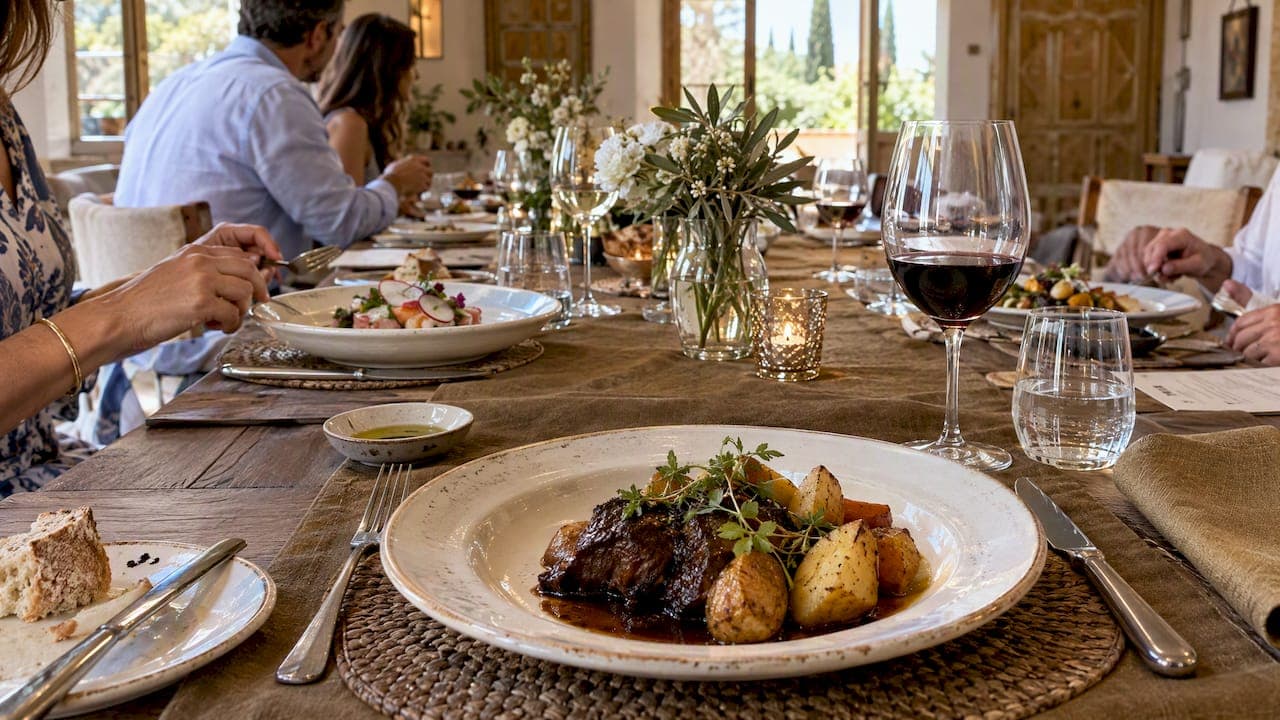
A good gluten-free dinner party menu is built from dishes that are naturally free of gluten, not from substitutes, and it is prepared with the same care for surfaces, utensils and oil as for ingredients. Below you will find a four-course menu you can cook at home, the label rules that apply in Spain, a service plan for the evening and honest advice on when to hand the stove to a private chef.
TL;DR
- Build the menu around fresh fish, meat, vegetables, eggs, rice and fruit, which need no clever substitutes.
- For a coeliac guest, safe ingredients are not enough: cross-contact through boards, oil, toasters and serving spoons is the real risk.
- In Spain, "sin gluten" on a label means no more than 20 mg/kg of gluten. Check stocks, sauces and dressings, which hide gluten most often.
- Ask your guest what they need before you shop, and cook their dishes first, covered and apart.
- If you are hosting in a villa in Granada, the Costa Tropical or Málaga, we can cook the whole dinner for you.
Table of Contents
- Start with the guest, not the recipe
- A four-course gluten-free dinner party menu
- The menu at a glance
- What to check on labels in Spain
- Cross-contact: the part that matters most
- Serving the evening
- Perspective: why we cook this way
- When a private chef is the easier answer
- Eating out in Granada with coeliac disease
- Related menus for mixed tables
- FAQ
- Sources
Start with the guest, not the recipe
The first step in planning is a short conversation. Guidance for hosts from the National Celiac Association is to consult your guest beforehand about safe ingredient choices and to check labels for hidden gluten in condiments, sauces and stocks. Spanish advice in Marca says the same: consult the guest, then read the ingredients and look for the "sin gluten" indication on processed products.
Three questions are worth asking:
- Is this coeliac disease, a medical sensitivity or a preference? The answer decides how strict the kitchen must be.
- Are there other restrictions at the table, such as dairy, nuts, shellfish or a vegetarian diet?
- Is there a brand or product the guest already trusts, for example bread or beer?
If several guests have different needs, one coherent menu that works for everybody is far calmer than parallel menus. Our guide to a chef's allergy protocol for private events shows how we collect this information before an event.
A four-course gluten-free dinner party menu
The aim is a menu in which nobody can tell which dishes were adapted, because none of them were. Here is a structure that works for six to eight guests, with the reasoning for each course.
Starters: light, cold and made ahead
Start with something that can be assembled before the guests arrive. The Spanish coeliac federation, FACE, publishes a gluten-free celebration menu for six that opens with a salmon, avocado and mango tartare on crisp rice wafers, and with mushroom-and-truffled-egg glasses topped with crisp ham. FACE notes that the tartare goes onto the wafers immediately before serving so they stay crisp, which is a useful rule for any canapé.
If you prefer something more Andalusian, these work well:
- Cold tomato soup or salmorejo, served in small glasses. Make it with bread only if the bread is certified gluten-free, or thicken it with extra tomato and a little olive oil.
- Spanish tortilla cut into small squares, with a spoonful of aioli you have made yourself rather than bought.
- Cured ham and good cheese with marinated olives. Check any cured meats, such as chorizo, because the label can reveal added thickeners or other ingredients.
- Prawns with garlic and parsley, cooked in a clean pan with fresh oil.
For a longer evening of small plates, our Tapas Of Andalusia menu starts from €65 per person and can be shaped around gluten-free requirements.
Main course: one slow dish and one fresh one
The best dinner-party mains are those you can finish while guests are still talking. Two routes suit a gluten-free table.
The slow braise. The FACE menu uses slow-braised beef cheeks with chocolate and potatoes, which is deeply savoury and improves when made a day ahead. Thicken sauces by reducing them or with potato, never with a roux of wheat flour. Use a stock you have made or one whose label says "sin gluten".

The fresh fish. Whole sea bream or hake roasted with lemon, fennel and potatoes needs nothing from a packet. On the Granada coast, the fish arrives with a freshness that makes simple cooking the right choice. Our approach to fresh seafood with Mediterranean techniques follows the same logic: very good fish, very little interference.
Paella. Rice is a natural centrepiece for a gluten-free party, and a paella cooked in front of guests turns dinner into theatre. The risk is the stock, the sofrito base if it comes from a jar, and any chorizo. Make a stock from scratch, or check that every component is labelled gluten-free. See our Paella Feast at €130 or the Andalusian Paella Experience, from €75 per person.
Serve with a salad dressed at the last minute with olive oil, sherry vinegar and salt. If a salad has touched croutons, taking them out does not make it safe; Marca advises making a new portion with safe ingredients and clean utensils.
Dessert: fruit, almonds and chocolate
Desserts are where hosts panic, yet many classic Spanish sweets contain no flour at all. FACE's menu ends with individual gluten-free turrón mousse with almond crunch. Other options:
- Almond cake, made with ground almonds and eggs only, and a spoon of orange blossom syrup.
- Dark chocolate pots with sea salt and olive oil.
- Poached figs or peaches with vanilla and a little local sweet wine.
- Sheep's-milk yoghurt with honey and toasted almonds, if dairy is no concern.
Check the chocolate and any baking powder, which sometimes contains wheat starch. A packaged ingredient is the usual culprit, so read it every time.
Drinks: what to pour
FACE's 2025 food classification lists wine, sparkling wines such as cava, and spirits including brandy and rum as generic products, meaning they are not a concern in themselves. Ordinary beer is listed as not suitable, and gluten-free beer appears as a specific product to look for by name. A chilled glass of cava as people arrive therefore suits everyone. For guests who do not drink, our non-alcoholic drinks for dinner gives ten ideas that feel as considered as the wine.
The menu at a glance
| Course | Dish | Made ahead? | Watch for |
|---|---|---|---|
| Starter | Salmon, avocado and mango tartare on rice wafers | Tartare yes, assemble at serving | Soy sauce must be gluten-free |
| Starter | Mushroom and egg glasses with crisp ham | Mostly | Cured ham and any added sauce |
| Main | Slow-braised beef cheeks with potatoes | Yes, a day before | Stock and thickener |
| Main (alternative) | Roast fish with lemon and fennel | Prep only | Shared trays and oil |
| Dessert | Turrón mousse or almond cake | Yes | Chocolate, baking powder |
| Drinks | Cava, wine, gluten-free beer | Yes | Ordinary beer is not suitable |
What to check on labels in Spain
Spain's food-safety agency AESAN explains on its labelling page that "sin gluten" means no more than 20 mg/kg of gluten, while "muy bajo en gluten" means less than 100 mg/kg in the food as sold to the consumer. For a coeliac guest, look for the plain "sin gluten" wording and ask the guest whether they accept the other.
Fresh foods are simpler. FACE's classification lists fresh meat and fish, natural fruit and vegetables, eggs, selected pulses and traditional butter and ghee among its generic foods, though some products still need checking. In practice the dangerous items are those that have been processed:
- stock cubes and ready-made broths
- soy sauce and other sauces
- salad dressings and mustards
- sausages, meatballs and stuffed products
- spice mixes and ready-made sofritos
- desserts, chocolate and ice cream
Keep the packaging until after dinner. If your guest asks, you can show it.
Cross-contact: the part that matters most
FACE is clear that cross-contact can happen through direct contact with gluten or through shared utensils and kitchenware. It recommends separate utensils, clean oven trays, no shared fryer oil, and an exclusive toaster or sandwich maker. A dish made from gluten-free ingredients is not enough for someone with coeliac disease; preparation, equipment, surfaces and frying oil must also be controlled.
A practical kitchen routine:
- Clean first. Wash counters, boards, pans and utensils before you start.
- Cook gluten-free dishes first. Keep them covered and apart, as Marca advises.
- Use separate utensils for each dish, including at the table.
- Give one person one job. BeyondCeliac suggests enlisting help so one person handles the gluten-free dishes.
- Store carefully. The Academy of Nutrition and Dietetics advises dedicated shelves for gluten-free items, with gluten-containing foods on lower shelves so crumbs do not fall into safe products.
The simplest solution, if you can manage it, is to make the whole menu gluten-free so there is nothing to confuse. Put the bread basket away and nobody will miss it.
Serving the evening
A plan removes anxiety. Work backwards from the time guests sit down.
- Two days before: confirm needs with guests, shop, and read every label.
- The day before: make the braise, the dessert and any dressings.
- Morning: clean the kitchen thoroughly, set out serving spoons for each dish.
- One hour before: cook the gluten-free dishes first and cover them.
- At the table: if you serve family-style, BeyondCeliac suggests letting the coeliac guest serve first with a dedicated spoon, so communal dishes cannot carry crumbs from other plates.
Keep the menu small. Three or four starters, one main and one dessert is enough, and everything on the table is safe.
Perspective: why we cook this way
As a deaf chef, I have always cooked through taste, texture, aroma and presentation, and that attention is exactly what a gluten-free menu asks for. Instead of replacing wheat with a weaker version, we begin with what is already beautiful: a ripe tomato, a piece of fish that came from the sea that morning, saffron rice with a crisp base. When a guest has coeliac disease, we ask what they need before the menu exists, we plan the order of preparation around it, and we explain it simply to the host so that the evening feels relaxed rather than clinical. Dietary requirements and allergies are part of how we design every menu, not an afterthought. The result should be a dinner at which nobody feels like the exception.
— Joseph Warner
When a private chef is the easier answer
Hosting a coeliac guest is manageable at home, but it is a lot to hold in your head on the night you also want to enjoy your friends. Villa stays, weddings and anniversaries are where it matters most, because you are cooking in an unfamiliar kitchen with unfamiliar products.
We cook in villas and private homes across Granada, the Costa Tropical, Málaga and Marbella. We shop from local suppliers, prepare the menu around your guests' needs and leave the kitchen clean. A few examples of what is available, with prices as published on our site:
- Tapas Of Andalusia: from €65 per person
- The Sensory Journey tasting menu: from €85 per person
- Celebration Experience: from €110 per person
- Private Dining Experience: €250
- Villa Chef Experience: from €350 per service
Tell us about the gluten-free guest when you enquire and we will shape the menu around them. You can see the full list on our private chef menus page, read how we accommodate dietary needs, or see our gluten-free menu examples for private events.
To book, start from our private chef services in Granada and send us your date, location and number of guests.
Eating out in Granada with coeliac disease
If you would rather dine out than host, the same principle applies: ingredients are one question, preparation is another. FACE runs a restaurant programme in which participating establishments sign an agreement and the logo is displayed on the door or window. Its verification procedure is intended to check compliance with Real Decreto 126/2015, which affects food businesses supplying unpackaged foods.
Before you order, tell the staff you have coeliac disease and ask whether they take cross-contact into account. FACE says gluten-free options are not safe if cross-contact is not controlled. Ask also about the fryer, because shared oil is a common problem with croquetas, chips and fried fish. Granada's coeliac association is the best place to ask for current local recommendations, since venues change.
If you would like to learn to cook this way yourself, our gluten-free cooking workshops in Granada are designed for coeliacs and their families.

Related menus for mixed tables
Most dinner parties include more than one restriction. If you are also feeding vegans or guests who avoid dairy, our guides to vegan event menus at home and event menus for lactose-intolerant guests show how one menu can serve everyone. For inspiration on the Andalusian side, see our Spanish gastronomy examples for private events.
FAQ
What can I serve at a gluten-free dinner party that feels special?
Choose dishes that are gluten-free by nature: a fish tartare on rice wafers, slow-braised beef cheeks, paella, and an almond or chocolate dessert. These feel generous because nothing has been compromised. Add good cava and a cheese board with quince paste.
Is it enough to use gluten-free ingredients for a coeliac guest?
No. FACE stresses that preparation, equipment, surfaces and frying oil must be controlled as well. Use clean boards and pans, separate serving spoons, and cook the guest's dishes first and covered.
How do I know a product is gluten-free in Spain?
Look for "sin gluten" on the label, which AESAN defines as no more than 20 mg/kg. Check stocks, sauces, dressings and processed meats in particular, and ask your guest whether they also accept "muy bajo en gluten".
Can a private chef cook a gluten-free dinner in my villa?
Yes. We design menus around coeliac disease and other allergies and dietary needs, and we cook in villas and homes across Granada, the Costa Tropical, Málaga and Marbella. Tell us about your guests when you enquire so we can plan the menu and the kitchen around them.
Sources
- FACE: gluten-free celebration menu for six
- Marca: inviting a coeliac person to eat
- National Celiac Association: hosting a guest with celiac disease
- FACE: cross-contact and coeliac disease
- FACE: 2025 food classification
- AESAN: allergens and gluten labelling
- BeyondCeliac: entertaining gluten-free guests
- Academy of Nutrition and Dietetics: preventing cross-contact at home
- FACE: gluten-free restaurant programme