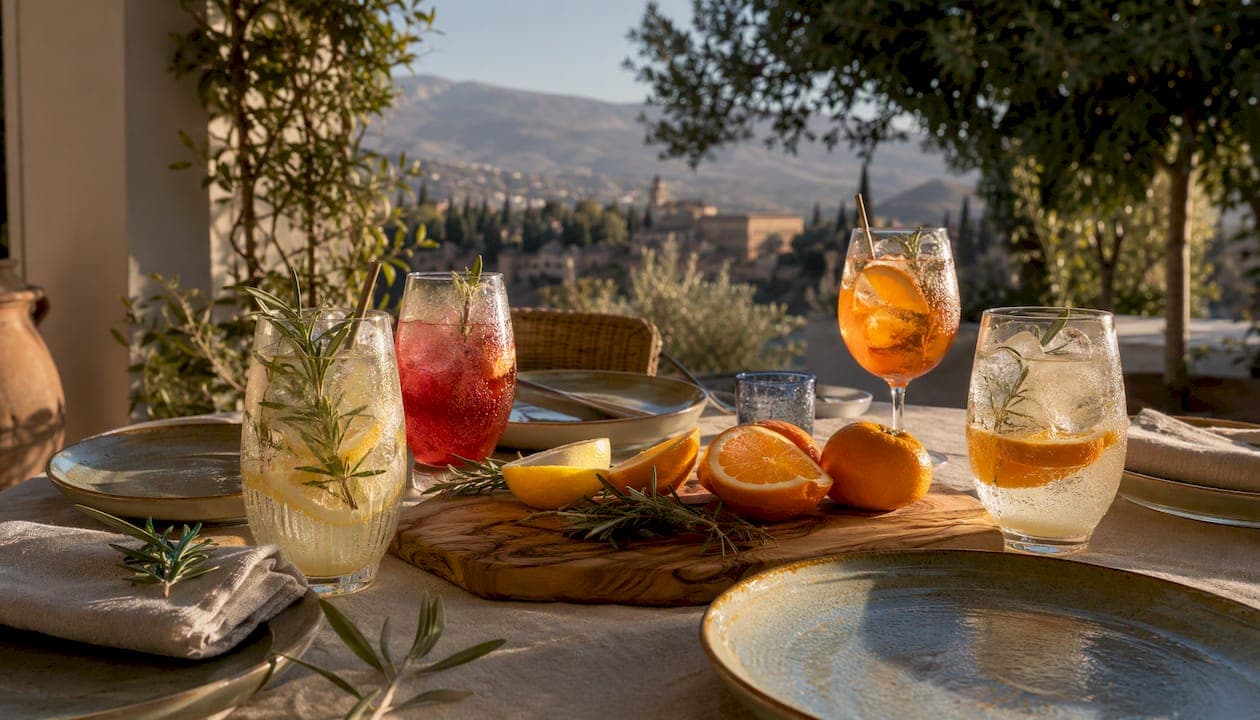
The best non-alcoholic drinks to serve at dinner are herb-led mocktails, sparkling spritzes, fruit shrubs, cold-brew iced teas, and dealcoholised wines. Each category brings something distinct to the table: bitterness to cut through rich tapas, acidity to lift seafood, and aromatic depth to match grilled meats. Mocktails have moved firmly into the mainstream, with dedicated zero-alcohol menus now a standard expectation at quality restaurants and private dinners alike.
Here is a quick shortlist to help you choose a style before diving into the full recipes:
- Rosemary and lemon spritz — bright acidity and herbal lift; pairs with seafood and white-fish tapas
- Hibiscus and orange shrub soda — fruity, tangy, and lightly floral; works beautifully with charcuterie and cheese boards
- Cucumber and mint cooler — clean and refreshing; ideal alongside salads and grilled vegetables
- Spiced apple and ginger mule — warming and complex; a natural match for lamb, pork, or hearty stews
- Cold-brew iced tea with citrus — subtle tannin and depth; pairs with red-meat courses or aged cheese
- Butterfly-pea flower and lime layered mocktail — visually dramatic; perfect for a dinner-party centrepiece
- Dealcoholised sparkling wine — the simplest swap; works across every course from aperitif to dessert
Key takeaways
The most effective non-alcoholic drinks for dinner are built on sensory layering: aroma, acidity, bitterness, and texture working together to complement each course rather than simply filling a glass.
| Point | Details |
|---|---|
| Choose by dish weight | Light sparkling serves suit fish and salads; richer, spiced drinks suit red meat and stews. |
| Batch the base, not the fizz | Prepare syrups and shrubs a day ahead; add sparkling water or tonic per glass at service. |
| Read Spanish labels carefully | "Sin alcohol" can mean up to 0.5% ABV; look for "0,0%" for strictly zero-alcohol options. |
| Use local Andalusian ingredients | Bitter oranges, fennel pollen, and fresh rosemary add genuine complexity at minimal cost. |
| The Sensory Chef | Offers bespoke non-alcoholic beverage menus for private villa dinners across Granada and Andalusia. |
Table of Contents
- Top 10 non-alcoholic drinks for dinner — full recipes with pairing notes
- How to match a non-alcoholic drink to your dinner menu
- Serving, batching, and presenting drinks that feel special at dinner
- What non-alcoholic drinks are available in Spanish shops?
- Chef Joseph Warner's sensory tips for elevating drinks with Mediterranean ingredients
- A chef's perspective on drinks for private dinners in Andalusia
- Bespoke non-alcoholic beverage menus for your private dinner
- Sources
- FAQ
Top 10 non-alcoholic drinks for dinner — full recipes with pairing notes
These ten recipes are written for one serving, with batch multipliers noted where relevant. Each includes a pairing suggestion for Spanish and Mediterranean dinner dishes, based on culinary guidance without specifying exact servings.
1. Rosemary and lemon spritz
A clean, aromatic spritz that behaves like a dry white wine at the table. Combine 30 ml fresh lemon juice, 15 ml rosemary simple syrup (equal parts sugar and water, simmered with two rosemary sprigs for 10 minutes, then cooled), and 120 ml chilled sparkling water. Stir gently over ice in a wine glass. Garnish with a rosemary sprig and a thin lemon wheel.
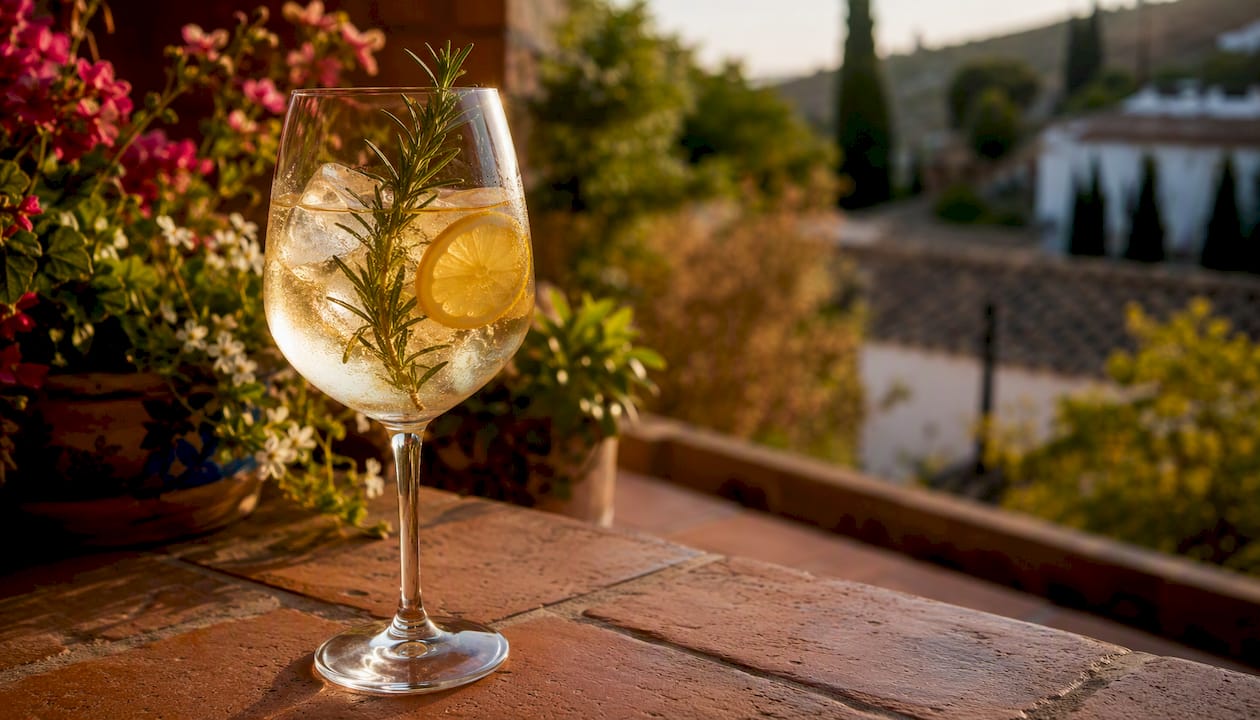
Pairing: Grilled sea bass, gambas al ajillo, or any white-fish tapa. Batch (8 serves): multiply syrup and juice by eight; add sparkling water per glass at service to preserve fizz. Fridge life: syrup keeps for up to one week refrigerated. Vegan, low sugar if syrup is halved.
2. Hibiscus and orange shrub soda
A shrub is a drinking vinegar syrup: tart, complex, and far more interesting than a standard cordial. Shrubs and vinegar-based syrups add the kind of layered acidity that makes a mocktail feel genuinely sophisticated. Combine 20 ml hibiscus shrub (equal parts dried hibiscus, apple cider vinegar, and sugar, steeped overnight then strained), 20 ml fresh orange juice, and 100 ml sparkling water. Serve over ice in a highball glass; garnish with a dried hibiscus flower or orange twist.
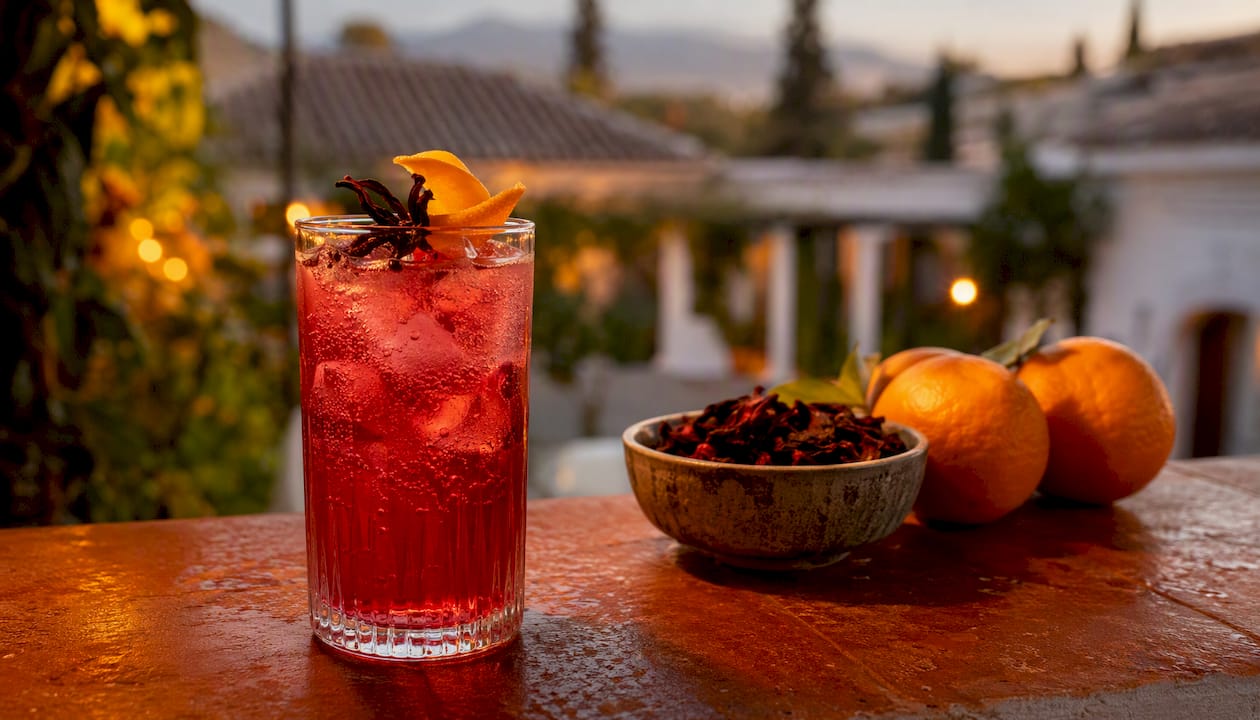
Pairing: Jamón ibérico, manchego, or a mixed charcuterie board. Batch: shrub base keeps refrigerated for up to one month. Vegan.
3. Cucumber, mint, and lime cooler
Blend or muddle half a cucumber (peeled), 6 fresh mint leaves, and the juice of one lime. Fine-strain into a shaker with ice, shake briefly, and pour into a tall glass over fresh ice. Top with 80 ml tonic water. Garnish with a cucumber ribbon and mint sprig.
Pairing: Gazpacho, ensalada mixta, or any vegetable-forward starter. Vegan, caffeine-free.
4. Spiced apple and ginger mule
Combine 80 ml cloudy apple juice, 20 ml fresh lime juice, 10 ml honey syrup (1:1 honey and warm water), and a 2 cm piece of fresh ginger, grated and squeezed for its juice. Shake with ice and strain into a copper mug or highball over crushed ice. Top with 60 ml ginger beer (non-alcoholic). Garnish with a lime wedge and a thin apple slice.
Pairing: Slow-roasted lamb shoulder, pork ribs, or a hearty lentil stew. Batch (6 serves): multiply all ingredients by six; keep the ginger beer separate and add at service. Low sugar if honey is reduced.
5. Cold-brew iced tea with citrus and thyme
Steep 3 teabags of good-quality black tea (or a blend of black and green) in 1 litre of cold water for 8–12 hours in the fridge. Remove bags without squeezing. Per glass: pour 150 ml cold brew over ice, add a squeeze of blood orange or regular orange, and a small thyme sprig. Sweeten lightly with agave syrup if desired.
Pairing: Aged manchego, grilled red meats, or a charcuterie course. Batch: the cold brew itself is a pitcher recipe; yields approximately 6–7 glasses. Keeps refrigerated for up to 3 days. Vegan; contains caffeine — use decaf tea for a caffeine-free version.
6. Butterfly-pea flower and lime layered mocktail
This is the showpiece for a dinner table. Steep 1 teaspoon of dried butterfly-pea flowers in 60 ml hot water for 5 minutes; cool completely. The tea is a vivid blue that turns purple-pink on contact with acid. Pour the cooled tea gently over the back of a spoon into a glass already filled with ice and 80 ml of lemon-lime soda. Add a squeeze of lime at the table to trigger the colour shift. The layered colour effect makes non-alcoholic drinks feel genuinely occasion-worthy.
Pairing: Serve as a conversation-starter aperitif or alongside a light fish course. Vegan, caffeine-free.
7. Andalusian citrus and fennel pollen agua fresca
Agua fresca is a traditional Spanish and Latin American fresh-fruit water, and this version leans into Andalusia's extraordinary citrus. Juice 3 large naranjas de mesa (or blood oranges), add 500 ml cold water, 10 ml agave syrup, and a pinch of fennel pollen. Stir well and serve in a wide-mouthed jug over ice.
Per glass, add a small slice of orange and a fennel frond.
Pairing: Tapas spreads, patatas bravas, or fried fish. Batch: this recipe already yields approximately 4–5 glasses; scale directly. Vegan, low sugar.
8. Preserved-lemon and tonic aperitif
Preserved lemon brings a salted, fermented depth that mimics the complexity of a spirit-based aperitif. Blend a quarter of a preserved lemon (rind only, rinsed) with 30 ml water until smooth; fine-strain. Combine 15 ml of the purée with 10 ml elderflower cordial and 120 ml premium tonic water. Serve in a wine glass over a single large ice cube. Garnish with a thin preserved-lemon slice and a sprig of thyme.
Pairing: Oysters, cured fish, or any briny tapa. Vegan.
9. Virgin colada with coconut and pineapple
Adapted from the bar-inspired zero-alcohol recipes published by the Spanish food press, this is richer and more indulgent than the other serves here. Blend 80 ml pineapple juice, 40 ml coconut cream, a squeeze of lime, and a handful of ice until smooth. Pour into a chilled glass; garnish with a pineapple wedge and toasted coconut flakes.
Pairing: Dessert course, fruit-based puddings, or a cheese board with tropical notes. Vegan.
10. Bitter orange and cardamom non-alcoholic Negroni
The Negroni is one of the most dinner-friendly cocktails ever created, and its zero-alcohol version holds up well. Combine 30 ml non-alcoholic bitter aperitif (such as a botanical bitter available in Spanish specialty shops), 20 ml fresh blood-orange juice, 10 ml cardamom syrup (simmer 5 cardamom pods with equal parts sugar and water for 15 minutes; cool and strain), and 20 ml chilled sparkling water. Stir over ice and strain into a rocks glass over a large ice cube. Garnish with an orange peel twist.
Pairing: Antipasti, cured meats, strong cheeses, or as a pre-dinner aperitif. Vegan.
How to match a non-alcoholic drink to your dinner menu
Three rules cover the vast majority of pairing decisions for alcohol-free drinks at dinner. Follow them and you will rarely put a glass wrong.
- Mirror the weight of the dish. A light, sparkling serve (rosemary spritz, cucumber cooler) belongs next to delicate fish or salads. A richer, more viscous drink (virgin colada, spiced mule) suits heavier proteins and sauces.
- Use acidity to cut fat. Shrubs, citrus-forward mocktails, and tonic-based serves do the same work as a dry white wine: they refresh the palate between bites of oily or fatty food. Spanish hospitality guides consistently recommend matching sweetness carefully to the dish — a drink that is sweeter than the food will flatten both.
- Match bitterness to umami. The bitter orange Negroni and the preserved-lemon aperitif both carry enough bitterness to stand up to jamón, aged cheese, or anything with a pronounced savoury depth.
- Let dessert drinks be sweet, but not cloying. The virgin colada works at dessert because coconut cream has a natural fat that tempers sweetness; a straight fruit juice would feel thin by comparison.
Quick pairing examples:
| Course | Recommended serve |
|---|---|
| Tapas spread | Hibiscus shrub soda or agua fresca |
| Grilled fish | Rosemary and lemon spritz |
| Red meat | Cold-brew iced tea or spiced apple mule |
| Cheese board | Bitter orange Negroni or hibiscus shrub |
| Dessert | Virgin colada or butterfly-pea layered mocktail |
Pro Tip: Balance sweetness and bitterness before service by tasting the drink alongside a small piece of the food it will accompany. If the drink tastes sweeter than the dish, add a few drops of citrus juice or a pinch of salt to sharpen it.
For a deeper look at how pairing logic applies across a full dinner menu, the wine pairing guide for events covers the same principles for both alcoholic and dealcoholised options.
Serving, batching, and presenting drinks that feel special at dinner
Presentation is what separates a thoughtful host from a generous one. A non-alcoholic drink served in the right glass, with a considered garnish, reads as deliberate rather than incidental. Dinner-party menus perform best when sober and boozy options have genuine parity — the non-alcoholic serve should look as considered as its alcoholic counterpart.
Batch yields and fridge life:
Glassware and garnish:
- Wine glasses for spritz-style and aperitif serves — they signal occasion and allow the aroma to collect
- Highball glasses for long, ice-heavy drinks (mule, cooler, agua fresca)
- Rocks glasses for stirred, spirit-style serves (bitter orange Negroni)
- Copper mugs for the spiced mule, if you have them — they keep the drink colder for longer
- Garnishes: fresh herb sprigs (rosemary, thyme, mint), citrus wheels and twists, edible flowers, a pinch of fennel pollen on the rim, or a single large ice cube for clarity and slow dilution
Pro Tip: Prepare all syrups, shrubs, and cold brews the day before. At service, your only task is to pour, top with sparkling water, and garnish. This keeps the host present at the table rather than behind the bar.
What non-alcoholic drinks are available in Spanish shops?
Spain's supermarkets and specialty shops now stock a genuinely useful range of alcohol-free options. Products labelled "non-alcoholic" can legally contain up to 0.5% ABV, so check the label carefully if you need strict zero-alcohol for guests.
Product categories to look for:
- Non-alcoholic beers (cerveza sin alcohol): widely available in every Spanish supermarket; Estrella Damm 0,0 and Mahou Sin are common. Serve chilled alongside tapas.
- Dealcoholised wines: available in Carrefour, El Corte Inglés, and specialty wine shops; look for Spanish producers or imported German and French labels. Quality varies — taste before serving to guests.
- Apéritif-style bottles: botanical bitters and aperitif alternatives are increasingly stocked in specialty food shops and online. Bottled non-alcoholic apéritifs with botanical profiles work well served over ice before dinner, mimicking the role of a Campari or Aperol without the alcohol.
- Tonic and artisan sodas: Fever-Tree, 1724, and Spanish brands such as Vichy Catalán are available nationally. Premium tonic elevates any mocktail.
- Bottled mocktails: a growing category in specialty retailers and online; useful for hosts who want a ready-made option without preparation time.
Low-sugar and caffeine swaps:
- Replace standard sugar syrups with agave syrup (lower glycaemic index) or a reduced-sugar version (1 part sugar to 2 parts water instead of 1:1)
- Use decaf cold-brew tea for the iced tea recipe if caffeine is a concern for evening service
- Shrubs (drinking vinegars) add complexity with very little added sugar compared to cordials
- Kombucha is available in most Spanish health-food shops and adds a natural effervescence and mild acidity
Chef Joseph Warner's sensory tips for elevating drinks with Mediterranean ingredients
The foundation of any great non-alcoholic drink at dinner is sensory layering: aroma arrives first, then temperature, then texture, then the balance of acid, bitter, and sweet on the palate. Get those four elements working together and the absence of alcohol becomes irrelevant.
Techniques worth mastering:
- Herb infusions: steep fresh rosemary, thyme, or basil in warm (not boiling) simple syrup for 10–15 minutes. Boiling destroys the volatile oils that carry aroma. Cool completely before using.
- Quick shrubs: combine equal parts fruit, sugar, and apple cider vinegar; macerate overnight in the fridge, then strain. The result is a concentrated, shelf-stable syrup with genuine complexity.
- Preserved-lemon purée: blend rinsed preserved-lemon rind with a little water; fine-strain. A teaspoon added to any citrus drink introduces a fermented, saline depth that reads as sophisticated rather than sour.
- Saline balance: a pinch of fleur de sel in a sweet drink sharpens every other flavour. This is one of the most underused techniques in home mocktail-making.
- Temperature contrast: serve herb-infused drinks over a single large ice cube rather than crushed ice. The slower dilution keeps the flavour profile intact through a long dinner course.
Sensory checklist before service:
- Does the drink smell of something? (Aroma should be present before the first sip.)
- Is there a moment of bitterness or acidity to refresh the palate?
- Does the texture feel appropriate — light and sparkling, or rich and smooth?
- Is the sweetness level lower than the dish it accompanies?
Pro Tip: Andalusia's naranjas amargas (bitter oranges) from the Seville region are available in local markets from December through February. Their juice is more complex than standard orange and adds a genuine bitter-citrus note to any spritz or aperitif mocktail. Use them whenever they are in season.
Pro Tip: Wild fennel pollen, gathered from the roadsides of the Alpujarras and sold in Granada's Mercado de San Agustín, costs almost nothing and transforms a simple agua fresca into something that tastes as though it came from a professional kitchen. A pinch on the rim or stirred into the drink is enough.
For more on how international flavours and refined non-alcoholic cocktails fit into a private dining menu, The Sensory Chef's approach to bespoke menus covers the full picture.
A chef's perspective on drinks for private dinners in Andalusia
The question of what to drink at dinner without alcohol is, at its core, a question about hospitality. A guest who does not drink alcohol should never feel that their glass is an afterthought. Over more than 13 years of private dining, working from a foundation in French gastronomy and across Mediterranean and Spanish kitchens, the most memorable tables have always been the ones where every element — food, drink, aroma, light — was considered as a whole.
In Andalusia, the ingredients for extraordinary non-alcoholic drinks are already on your doorstep: bitter oranges from Seville, rosemary from the hillsides above Granada, fennel from the Alpujarras, and citrus from the Costa Tropical. The recipes in this article draw on those ingredients deliberately. They are not substitutes for wine or cocktails. They are drinks in their own right, designed to complement the food on the table and the people around it.
For guests at a private villa dinner or a celebration in Granada, a bespoke non-alcoholic beverage programme can be as carefully considered as the food menu itself. If you are planning an event and want drinks that genuinely reflect the place and the occasion, The Sensory Chef's personalised menu service is the place to begin that conversation.
Bespoke non-alcoholic beverage menus for your private dinner
The Sensory Chef offers a fully bespoke private dining experience across Granada, Almuñécar, the Costa Tropical, and Málaga, with non-alcoholic beverage menus developed alongside each food menu rather than as an add-on. Where a standard caterer might offer a soft-drink list, Joseph Warner designs drinks that mirror the flavour arc of the meal: an aromatic aperitif to open, a palate-cleansing spritz mid-course, and a richer, more indulgent serve for dessert.
The service is available for villa dinners, celebrations, anniversary evenings, and family gatherings of any size.
To discuss a bespoke menu for your next dinner, visit The Sensory Chef's private dining experience page and send an enquiry directly.
Sources
The following sources informed the recipes, techniques, and product guidance in this article:
- Mocktail: qué es y 5 recetas de coctel sin alcohol
- Bebidas refrescantes sin alcohol para tapear
- Best mocktail recipes (gallery)
- Frescos y sin alcohol: cócteles clásicos en versión 'sin' para preparar en casa
For bespoke non-alcoholic menus tailored to your private dinner in Granada or Andalusia, visit The Sensory Chef.
FAQ
What are the tastiest non-alcoholic drinks to serve at dinner?
Herb-led mocktails, shrub sodas, and sparkling citrus spritzes are the most dinner-friendly options. They offer the acidity, bitterness, and aroma that make a drink feel considered rather than incidental alongside food.
What is the healthiest non-alcoholic drink to serve with an evening meal?
Cold-brew iced tea (unsweetened or lightly sweetened with agave) and agua fresca made with fresh citrus are among the lowest-sugar options. Shrubs add complexity with minimal added sugar compared to standard cordials.
What should I serve at a dinner party when guests do not drink alcohol?
Plan at least one drink per course: an aromatic aperitif to open, a palate-cleansing spritz or cooler mid-meal, and a richer serve for dessert. Batch the base recipes the day before and add sparkling water at service to keep preparation simple.