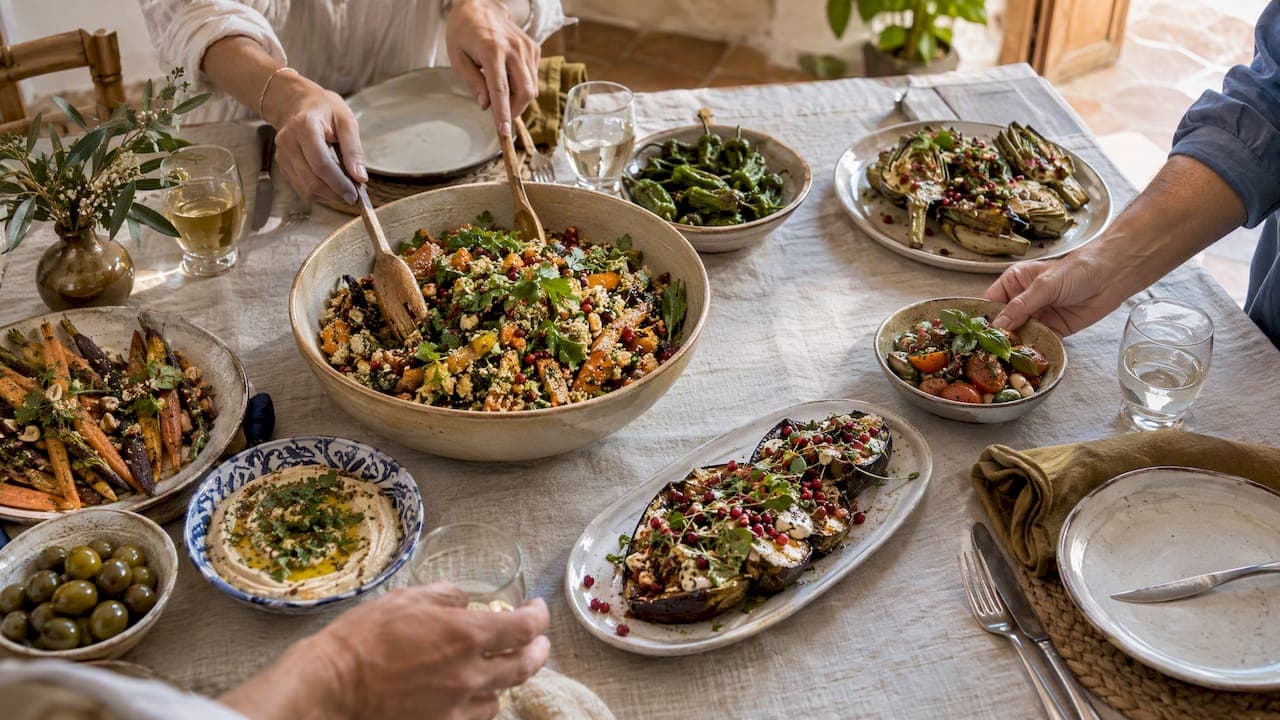
Design your celebration as a fully plant-based menu rather than a vegan side option, and your guests, vegan or not, will leave satisfied. Three templates work for almost any home gathering: a casual shared-plates spread, a formal plated dinner, and a tapas-and-paella celebration built for larger groups. For hosts who would rather hand the whole evening to a professional, we design and cook bespoke menus through The Sensory Chef.
TL;DR:
- Choose the format around service: shared plates let guests serve themselves, plated protein mains fit seated dinners, and tapas or paella suit larger groups.
- For mains, serve paella, stews, or vegetable bakes at buffets; choose lentil, soy, or seitan proteins for plated dinners, with miso adding savory depth.
- Label each dish’s main allergens in writing, ask guests about dietary needs ahead of time, and keep a written record of who needs what.
- Make sauces, dressings, and freezable desserts ahead; chop vegetables and prepare undressed grain salads the day before, leaving only dishes requiring final cooking for service.
- Calculate starter bites and main portions per guest, increase the main slightly when it is the meal’s sole centerpiece, and include a small dessert buffer.
Table of Contents
- Three ready-to-use vegan menus for your event
- What starters work best for a plant-based gathering?
- Mains that satisfy every guest at the table
- Sides and accompaniments that round out the menu
- Celebration desserts that feel festive
- Finger food and grazing boards for a relaxed gathering
- Drinks that pair naturally with plant-based menus
- How much to cook and what to buy beforehand
- Allergens and labelling for home-hosted events
- A make-ahead timeline for stress-free service
- Why a sensory, chef-led approach changes plant-based entertaining
- Let us design and cook your vegan celebration menu
- FAQ
- Sources
Three ready-to-use vegan menus for your event
Choosing a template first makes every other decision, from shopping list to timing, far simpler. Each of these can be adapted from an intimate dinner to a larger house party.
- Casual shared plates: a selection of dips (hummus, romesco, white bean and herb), a tray of roasted seasonal vegetables, a large-format grain salad, and a chilled dessert such as a citrus and olive oil cake. Guests serve themselves, which suits gatherings of different sizes.
- Formal plated dinner: a small amuse-bouche, a composed starter (think charred leeks with a walnut vinaigrette), a protein-forward main such as a mushroom and lentil Wellington, and a plated dessert. This suits small sit-down dinners where pacing and presentation matter.
- Tapas and paella celebration: a rotating selection of tapas (patatas bravas, marinated olives, crisp croquetas), a showpiece vegetable paella as the centrepiece, and petit fours or small glasses of dessert. This format thrives at larger, more sociable events where guests move between stations.
Designing the whole menu as plant-based from the outset, rather than adding a single vegan dish for a handful of guests, keeps vegan diners from feeling like an afterthought and tends to win over the rest of the table too, according to plant-forward catering guidance. The same principle holds whether you are feeding close friends or a larger group for a milestone birthday.
What starters work best for a plant-based gathering?
Starters set the tone for the evening, and a mix of cold and warm options keeps the table interesting without tying you to the stove. Cold dishes can be plated well ahead of time, which matters when you are also managing drinks and greeting guests.
- Cold, batch-friendly options: marinated courgette or aubergine ribbons, crostini topped with whipped cannellini beans and roasted tomato, or a chilled gazpacho shot for warmer evenings.
- Warm, finish-at-service options: small mushroom and caramelised onion tartlets, or a warm white bean dip with toasted bread, both of which need only a short time in the oven before guests arrive.
- Portioning: plan the number of starter bites per guest according to whether they precede a substantial main or double as the meal's centrepiece.
Pro Tip: Build indulgence through texture and umami rather than richness: a scattering of toasted nuts, a spoon of miso-based dressing or a few drops of good olive oil can make a simple vegetable dish taste considerably more complex.
Mains that satisfy every guest at the table

The main course carries the most weight at any celebration, and it is where plant-based menus most often fall short if they lean on vegetables alone without enough protein or texture. Large-format dishes simplify service considerably.
A vegetable paella, a hearty casserole, or a whole roasted squash stuffed with grains all work well for buffet-style events because they hold their temperature and can be served straight from the pan. For a seated dinner, a plated main built around a dense protein, such as a seitan roast, a lentil and walnut loaf, or a composed dish of pan-seared tofu with a mushroom jus, gives guests the same sense of occasion as a meat-based centrepiece.
- Large-format mains: paella, tagine-style stews, or layered vegetable bakes suit larger groups.
- Plated mains: legume or soy-based proteins, seitan, or a composed vegetable main work best for small and medium-sized sit-down dinners.
- Texture and umami: miso, tamari, roasted mushrooms, nutritional yeast and toasted nuts add the savoury depth that keeps plant-based mains from tasting thin.
As a rough guide, plan the amount of the main dish per guest according to the buffet format and the role of the dish in the meal, scaling up slightly when it is the clear focal point.
Sides and accompaniments that round out the menu
Good sides do more than fill the plate: they add colour, temperature contrast and a sense of generosity to the table. Grain salads, such as a herbed freekeh or a lemony couscous, hold well at room temperature and travel easily if you are assembling a buffet in another room.
- Grain salads and roasted vegetables: both can be dressed and finished ahead of time before guests arrive without losing texture.
- Finishing sauces: a romesco, a tahini and lemon dressing, or a quick chimichurri add brightness and tie disparate dishes together.
- Make-ahead tips: dress grain salads just before serving to avoid sogginess, and reheat roasted vegetables briefly in a hot oven rather than a microwave to keep their edges crisp.
Pair a bright grain salad with the tapas and paella menu, and a warm roasted vegetable side with the formal plated dinner, so each course feels deliberate rather than repetitive.
Celebration desserts that feel festive
Dessert is where a vegan menu can genuinely surprise guests, since good plant-based baking rarely tastes like a compromise. A citrus and almond cake, a dark chocolate and avocado mousse, or a seasonal fruit tart all work as showstoppers for a plated dinner, while small bites such as chocolate truffles or mini fruit galettes suit a grazing table.
- Showstoppers and petit fours: a whole cake for plated service, or bite-sized truffles and tartlets for buffets, allow you to match the dessert to the format of the rest of the menu.
- Make-ahead and freezing: most cakes and truffles freeze well, which takes real pressure off the final day.
- Dietary notes: many plant-based desserts are naturally dairy-free, and a simple swap of ground almonds for wheat flour covers gluten-free guests without a second dessert menu.
Finger food and grazing boards for a relaxed gathering
A well-stocked grazing table does much of the hosting for you, letting guests serve themselves while you focus on conversation rather than the kitchen.
- Build a board around olives, marinated artichokes, roasted peppers and a selection of plant-based cheeses or cashew-based dips.
- Add crunch with toasted nuts, breadsticks and raw vegetable batons for colour and contrast.
- Elevate shop-bought hummus or tapenade with a swirl of good olive oil, a scatter of smoked paprika or fresh herbs on top.
- Plan the number of small bites per guest to suit the length of the gathering, and refresh the board regularly to keep it looking abundant.
Drinks that pair naturally with plant-based menus
Most plant-based dishes lean towards bright, herbal and umami-rich flavours, which makes them easy to pair without overthinking the wine list. A dry cava or a light, chilled red such as a young Rioja works across most of the menus above, from tapas to a formal main.
- Wine: sparkling wine suits starters and tapas, while a light-bodied red complements richer mains like mushroom or lentil dishes.
- Signature drinks: a rosemary and grapefruit spritz makes an easy signature cocktail, and a hibiscus and lime cooler works well as the non-alcoholic option.
- Quantities: plan drink quantities according to the length of the event and the number of guests who will be drinking each option.
How much to cook and what to buy beforehand
Getting quantities right is the difference between a relaxed host and a stressed one, so build your shopping list around per-guest multipliers rather than guesswork.
- Starters: bites per guest; multiply by the number of guests in your group.
- Mains: an appropriate amount per guest for buffet-style service, slightly more for a single plated main.
- Desserts: a generous portion per guest, plus a small buffer for seconds.
- Pantry staples to stock ahead: olive oil, tahini, miso, canned beans and good stock, since these underpin most of the recipes above.
Pro Tip: For larger groups, consider asking a friend to help with service or hiring a private chef for the day, since cooking and hosting simultaneously can become difficult.
Allergens and labelling for home-hosted events
Spanish food-labelling rules under Real Decreto 126/2015 require that allergen information be made available for non-packaged food served by an establishment, and the same principle of clear, written information is the safest approach for a private home event, as set out in official allergen guidance.
- Label each dish with a small card listing its main allergens rather than relying on verbal reassurance during service.
- Ask guests about dietary needs in advance and keep a simple written note of who needs what.
- A private chef can manage allergen documentation and cross-contamination controls as part of the service, which removes this responsibility from the host entirely.
A make-ahead timeline for stress-free service
- Ahead of time: make sauces, dressings and anything that freezes well, such as truffles or tartlet bases.
- The day before: chop vegetables, prepare grain salads without dressing, and marinate anything that benefits from time.
- On the day: roast vegetables, finish warm starters, and plate desserts shortly before guests arrive.
- Keep last-minute cooking to dishes that genuinely need it, such as a paella finished to order, and prepare everything else in advance so you are not tied to the kitchen during the event.
A little choreography here, deciding who plates what and when the oven is free, keeps the kitchen calm even when the guest list grows.
Why a sensory, chef-led approach changes plant-based entertaining
After more than 13 years cooking professionally, trained in French technique and now focused on private events across Andalusia, I find that plant-based menus succeed or fail on texture and presentation as much as flavour. A dish built with contrasting textures, a crisp element against something soft, a warm plate against a cold garnish, reads as considered rather than restrictive. Hiring a private chef makes the most sense for complex guest lists, layered allergy requirements, or when you simply want a turnkey evening rather than a managed one.
— Joseph Warner
Let us design and cook your vegan celebration menu
If you would rather hand the planning to someone else, we design personalised menus for private dining, villa celebrations and family gatherings across Granada and Andalusia, drawing on French technique and a focus on flavour, texture and presentation. We also run hands-on cooking classes for hosts who want to learn a few dishes themselves before the big day.
Whether you need a full villa dining experience or a tailored tasting menu, we accommodate dietary requirements and allergies as standard practice, not as a special request. Browse our personalised menu options or view the full range of private chef services to book a consultation for your next celebration.
FAQ
What vegan food can I serve at a home party?
A mix of marinated vegetables, grain salads, a plant-based protein main such as lentil loaf or paella, and a fruit-based dessert covers most tastes. Building the whole menu around these components, rather than adding one vegan dish, keeps the spread feeling complete for every guest.
What are good ideas for a vegan menu?
A strong vegan menu pairs a vibrant starter, such as marinated vegetables or a chilled soup, with a substantial main like a mushroom Wellington or vegetable paella, and finishes with a citrus or chocolate-based dessert. Matching the format, plated or shared, to your guest list makes the menu easier to execute.
What finger food ideas work for a vegan gathering?
Olives, roasted pepper crostini, patatas bravas and a grazing board with hummus, nuts and raw vegetables all work well as vegan finger food. Plan the number of small bites per guest according to the length of the gathering.
What can I serve as a vegetarian dinner for guests?
A composed main such as stuffed squash, a hearty casserole or a plated lentil dish works well as a vegetarian or vegan dinner centrepiece. Pairing it with a grain salad and a seasonal dessert rounds out the meal without needing a separate menu for different diets.