
Play a low-volume, instrumental-led playlist for your private dinner, think gentle jazz, bossa nova or solo piano at a steady 60 to 80 BPM, and keep the volume just below conversation level. Acoustic research on dining spaces backs this up consistently. Start with one of the curated playlists below, set your device volume so that you can still talk across the table without raising your voice, and adjust from there.
TL;DR:
- Volume is more critical than genre, with ideal levels around 62 to 67 dBA to ensure a pleasurable dining experience.
- Starting music at a slightly livelier pace during arrival and gradually softening creates a natural flow that matches meal progression.
- Instrumental and simple playlists work best for formal or unfamiliar company, while lyrics can enhance intimacy during romantic dinners if carefully previewed.
- Running a full playlist sequence during the initial setup helps judge how sound interacts with the room, preventing disruptions during service.
- Coordinating music pacing with menu timing, possibly with a professional chef, enhances the overall atmosphere and ensures seamless transitions.
Table of Contents
- Música para cena privada: choosing the right genre and mood
- Volume, tempo and acoustics: keeping conversation comfortable
- How to build and sequence a dinner playlist
- Ready-to-play playlists and songs for every mood
- Checklist and quick fixes for the night itself
- A chef's perspective on pairing music with the menu
- The overrated advice and the one thing that actually matters
- An alternative: let someone else manage the food, timing and music
- Sources
- FAQ
Música para cena privada: choosing the right genre and mood
The right genre depends on what you want the evening to feel like, not just what sounds nice in isolation. For an elegant, restaurant-style atmosphere, instrumental jazz and lounge tracks work because they fill silences without demanding attention, which is exactly what curated collections like Jazz instrumental de restaurante elegante are built around.
For a romantic private dinner, the calculation changes slightly. You can afford songs with lyrics because the emotional content adds to the mood rather than competing with it, but the lyrics themselves need scrutiny. A track with a jarring or explicit theme can undo twenty minutes of careful pacing in a few seconds, which is why it pays to preview any romantic playlist before your guests arrive.
Here is a quick guide to matching genre with occasion:
- Instrumental jazz or solo piano: best for formal dinners, business entertaining, or when guests are meeting for the first time.
- Bossa nova and soft soul: relaxed but still polished, ideal for warm evenings on a terrace.
- Boleros and acoustic pop: suited to romantic dinners for two, where lyrics add warmth rather than distraction.
- String-led or classical pieces: a good fit for anniversaries or milestone celebrations where the tone should feel a little more ceremonial.
Lean towards instrumentals whenever guests do not know each other well. Lyrics with heavy narrative content can pull attention away from the table exactly when you want it focused there.
Volume, tempo and acoustics: keeping conversation comfortable
Volume matters more than genre. A restaurant study measuring sound pressure levels found that diners reported greater pleasure and stronger intent to return when combined music and ambient noise sat around 62 to 67 dBA, roughly the level of a quiet conversation, compared with rooms where music was absent or judged too loud.
Quick note: Diners in that study rated their experience most favourably when total sound levels were close to the level of a quiet conversation, neither silent nor intrusive.
Tempo plays a smaller but real role. Controlled experiments on tempo and volume found that tracks around 70 BPM played near 60 dB produced the best acoustic comfort under moderate background noise, with volume having a stronger effect on comfort than tempo alone.
Run this simple test before guests arrive: sit at the table, have someone speak at a normal volume from the opposite chair, and adjust the music until you can hear them clearly without leaning in. That is your working level. Terraces need slightly more volume than enclosed dining rooms because sound disperses outdoors, while small rooms amplify quickly, so start lower than you think you need.
Pro Tip: Place the speaker so sound reaches the table before it bounces off walls or hard floors. Test from a seated position, not standing next to the speaker, since that is where the difference actually shows up.

How to build and sequence a dinner playlist
A private dinner has phases, and your music should move through them the way the meal does. Treat it as four blocks rather than one long shuffle.
- Arrival (20 to 30 minutes): something warm and welcoming, slightly livelier than the rest of the evening, to ease guests in as they settle.
- Main conversation block: your quietest, most consistent stretch, instrumental-heavy, low volume, minimal surprises in tempo or mood.
- Dessert: a gentle lift, a touch more melodic interest, without breaking the calm you have built.
- Close: something reflective as the evening winds down, often the same register as arrival but softer.
To put this together in practice:
- Choose two or three core playlists that match each phase rather than one long list for the whole night.
- Trim or reorder tracks manually where the energy jumps unexpectedly. Do not trust shuffle to respect the mood you have planned.
- Turn shuffle off entirely once you have sequenced a block, since a random jazz standard after a slow ballad breaks the flow instantly.
- Download playlists offline in advance. A dropped connection mid-dinner is one of the easiest things to avoid and one of the most disruptive when it happens.
Run the full sequence once while setting the table. Listen for ads, an unexpectedly explicit lyric, or a tempo change that would jar against your menu's pacing. Fix it now, not during service.
Ready-to-play playlists and songs for every mood
You do not need to build anything from scratch tonight. Several curated collections already do the sequencing work.
- Elegant and instrumental: Jazz instrumental de restaurante elegante suits the main conversation block of a formal dinner, heavy on piano and understated horns.
- Romantic with lyrics: Cena Romántica mixes modern ballads with classic romantic tracks, though playlist content varies, so preview it for anything too explicit before guests arrive.
- Relaxed lounge: Cena & Lounge blends soft pop and lounge remixes, a good fit for arrival or dessert when you want something a little warmer than pure jazz.
- Spanish and Latin romantic: San Valentín 2026 gathers Spanish-language love songs alongside international tracks, useful for guests who want music in their own language.
For mixed company or family gatherings, lean towards the instrumental options at welcome and dessert, and save anything with lyrics for the main block once the table has settled into conversation.
Checklist and quick fixes for the night itself
Run through this before guests arrive:
- Device charged and playlist downloaded offline.
- Shuffle switched off.
- Phone notifications silenced, ideally on aeroplane mode with the playlist already loaded.
- Speaker placement checked from a seated position at the table.
If something goes wrong mid-service, keep a short instrumental fallback playlist ready on a second device. Pause the music entirely for toasts or speeches rather than fighting to be heard over it, and mute any ad breaks the moment they start.
Pro Tip: Play your full sequence once while plating the first course. It reveals how the music sits against clinking cutlery and kitchen noise, which is very different from how it sounds in a silent room.
A chef's perspective on pairing music with the menu
The pace of the menu should set the pace of the music. A tapas selection invites livelier, slightly faster tracks between courses, since the meal itself moves in short, sociable bursts. A tasting menu needs the opposite: slower, sparser music that gives each course room to be noticed, particularly across the quieter middle courses.
Paella changes the rhythm again. It is usually served as a centrepiece rather than in courses, so the music around it can afford to hold steadier, more sustained instrumental textures rather than shifting every few minutes.
In villa settings, timing the transition between courses and the transition between playlist blocks matters more than either alone. When the kitchen and the ambience move together, service feels effortless rather than managed. That coordination, more than any single track choice, is where a personalised menu built around your guests earns its keep.
The overrated advice and the one thing that actually matters
Most guides on this topic obsess over song selection, debating jazz versus lounge versus acoustic pop as if the genre were the decisive factor. The research says otherwise. Volume and consistency do more work than genre ever will. A beautifully chosen playlist at the wrong level, too loud during the main course, too quiet at arrival, will undercut the evening far more than a slightly generic track list at the right level.

Where I think most hosts go wrong is treating the playlist as a single decision made once before guests arrive. It is not. It is a sequence that needs to breathe with the meal, quieter through the courses that need attention, warmer at the edges. That is the same principle that shapes how I build a menu: pacing matters more than any individual dish or track.
If you take one thing from this, prioritise the volume test over the song list. Get that right first, then worry about whether it is bossa nova or piano.
— Joseph Warner
An alternative: let someone else manage the food, timing and music
Building the right playlist is only one part of hosting a private dinner well. The other part, getting each course out at the right moment, keeping the room at ease, and making sure the sensory details actually land, is harder to do alone while also playing host. The Sensory Chef offers a different route to the same evening you are trying to create with a playlist and a speaker: a bespoke menu, timed courses, and an experience shaped around flavour, texture, aroma and atmosphere together, without you having to manage any of it mid-service.
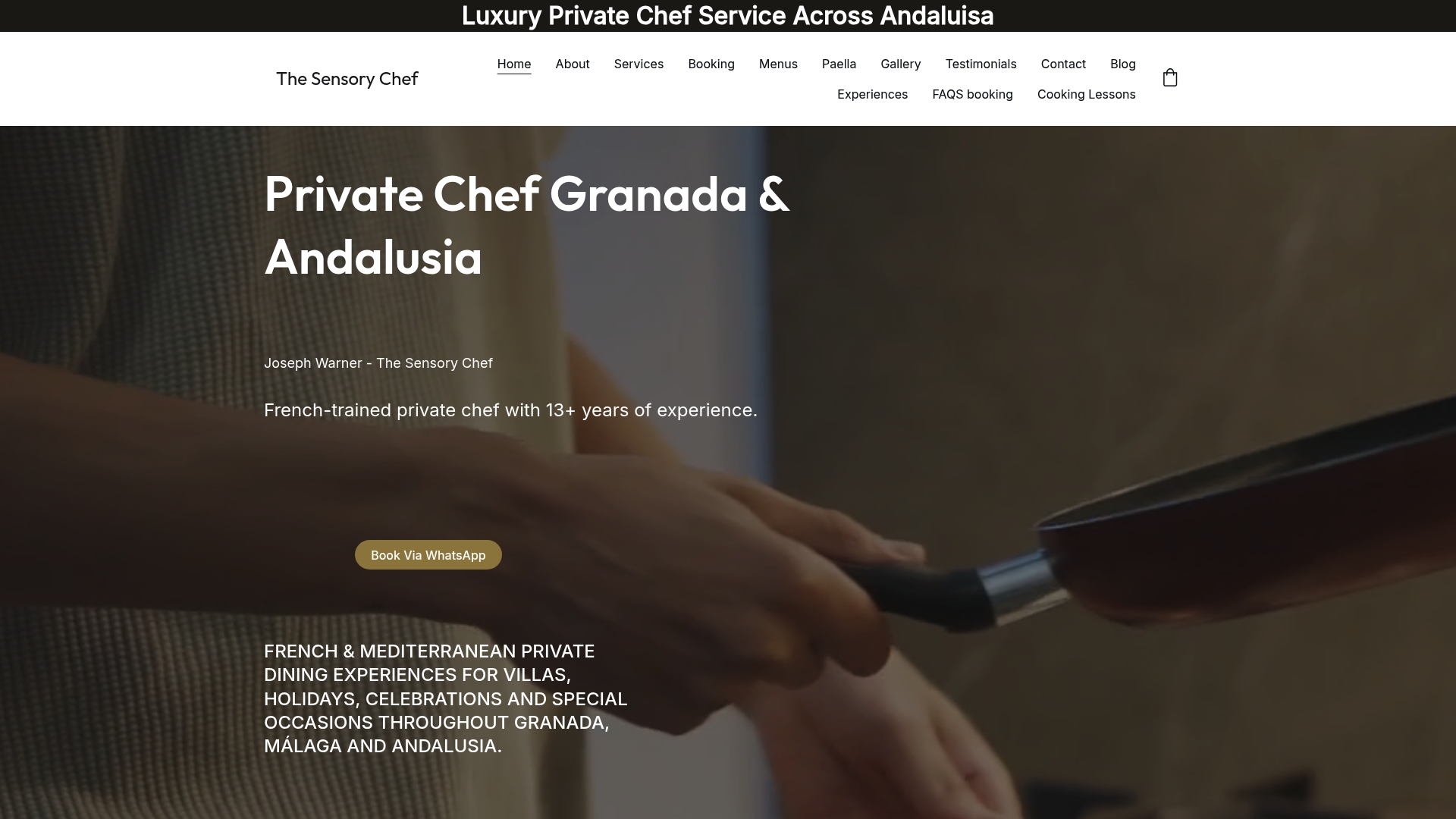
Menus are built around your guests, whether that is a tasting-style Private Dining Experience or a full Celebration Menu for an anniversary or birthday, and dietary requirements and allergies are accommodated as part of the planning, not an afterthought. Villa dinners across Granada, Almuñécar, the Costa Tropical and Málaga are Joseph Warner's regular ground, drawing on more than 13 years of professional kitchen experience and French culinary training. If you would rather hand over the timing and let the evening flow on its own, visit the booking page to check dates and enquire.
Sources
- Música para cenar 🍷 Jazz instrumental de restaurante elegante - playlist by Pura Vibra | Spotify
- Study on restaurant sound pressure level and dining satisfaction (2010) — DOI:10.1080/15428052.2010.535756
- The effect of music tempo and volume on acoustic perceptions under the noise environment — ResearchGate
FAQ
What songs work best to set the mood for a dinner?
Instrumental jazz, bossa nova and solo piano work reliably because they support conversation instead of competing with it. Playlists like Jazz instrumental de restaurante elegante are built specifically for this purpose.
What is the ideal volume for background music at a private dinner?
Aim for combined music and ambient noise around 62 to 67 dBA, roughly the level of a relaxed conversation. A restaurant study found diners rated their experience most positively within that range, both above and below it scored worse.
Which songs suit a romantic dinner specifically?
Boleros, soft ballads and acoustic pop tend to fit best, and playlists such as Cena Romántica or San Valentín 2026 offer ready Spanish and international options. Always preview the tracklist first, since romantic playlists occasionally include explicit or mismatched songs.
What music suits a restaurant-style atmosphere at home?
Lounge and soft jazz collections, such as Cena & Lounge, replicate the calm, low-key sound of a good restaurant. Keep tempo around 70 BPM and volume low enough that guests never have to raise their voices.
Can a private chef help coordinate music with the meal?
Yes. The Sensory Chef designs menus with course timing and pacing in mind, and can advise on how music should shift alongside a tasting-style dinner or celebration menu so the two move together rather than working against each other.