Considered wine pairing genuinely improves guest satisfaction at multi-course and private events. The first action is always the same: fix your menu and event brief before you touch a wine list. Food-led planning, as event caterer Jacquie Bols emphasises, means the food’s weight, texture and dominant flavours drive every wine choice, not the reverse. Master Sommelier Evan Goldstein frames it well: a successful pairing functions like a conversation, where one element speaks and the other listens. When both compete, the result is a muddle. And as Jancis Robinson has long argued, body and weight are the single most useful matching factors, often more reliable than colour alone.
The role of wine pairing in events goes beyond taste. It shapes pacing, signals care, and lifts the perceived quality of every course. Whether you are planning a villa dinner in Granada, a corporate dinner in Málaga, or a celebration in a private home, the principles are the same.
Pro Tip: Before selecting a single bottle, write down the menu anchor (the dominant protein or main flavour), the event’s formality level, and any dietary restrictions. Those three details will eliminate half the wine list immediately.
Table of Contents
Why does wine pairing improve the event experience?
The mechanics are straightforward. Pairing works through two complementary mechanisms: reinforcing shared flavours, or creating balanced tension through contrast. A creamy dish paired with an oaked Chardonnay is complementary; a salty blue cheese with sweet Port is contrast. Both are valid. Both work because they resolve rather than compete.
At an event, the benefits extend well beyond flavour. A well-chosen wine signals to guests that the host has thought carefully about their experience. It creates natural punctuation between courses, giving conversation a rhythm. Toasts feel more considered when the glass in hand is appropriate to the moment.
Curated pairings also raise perceived event value in a way that is difficult to replicate with food alone. Guests may not articulate why the evening felt special, but the coherence of food and wine together is often what they remember.
Pro Tip: For large events, brief front-of-house staff on each wine’s pairing rationale in one sentence per course. Staff who can explain a pairing confidently add perceived value without adding cost.
What should you establish before choosing any wine?
The event brief comes first. Without it, wine selection is guesswork. These are the core questions to answer before approaching a wine list:
-
Guest count and demographics (age range, cultural backgrounds, wine familiarity)
-
Dietary restrictions and allergies (vegan, coeliac, sulphite sensitivity)
-
Budget per head, with a realistic wine allocation
-
Event formality and flow (seated dinner, standing reception, mixed)
-
Theme or cuisine style (Mediterranean, French, international)
-
Any must-avoid grapes or styles (heavy tannins, high alcohol, oaked wines)
Once those are confirmed, the menu becomes the anchor. The science of pairing maps interactions of acidity, sweetness, tannins, alcohol, body and food elements such as fat, salt and spice. Knowing your dominant dish ingredient tells you which of those interactions to prioritise.
Non-wine drinkers deserve equal thought. A curated non-alcoholic pairing, sparkling water with citrus, or a house shrub or cordial served in the same glassware maintains the ritual without exclusion. Plan one non-alcoholic option per course alongside the wine.
Pro Tip: Ask guests about wine preferences at the RSVP stage, not on the night. A simple “red, white, rosé, or non-alcoholic” question prevents waste and shapes your order.
How do you match wine to your menu, course by course?
Body and weight are the primary matching factors, and the sauce often matters more than the protein. A chicken breast in a rich mushroom cream sauce calls for a fuller white or a light red, not a delicate Chablis.
Starters and light bites
Light, high-acid wines work best here. The goal is to open the palate, not overwhelm it.
-
Seafood canapés: Fino Sherry, Albariño, or Champagne
-
Charcuterie and cured meats: unoaked Grenache, light Tempranillo, or dry rosé
-
Vegetable-based starters: Sauvignon Blanc, Verdejo, or Grüner Veltliner
-
Soups: match the weight; a light gazpacho suits a dry Manzanilla
Main courses
Tannins bind with protein and soften against fat; acidity cuts through richness. These interactions are the engine of most successful main-course pairings.
-
Red meat (roasted or grilled): Rioja Reserva, Ribera del Duero, or Cabernet Sauvignon
-
Poultry in cream sauce: oaked Chardonnay, white Burgundy, or Viognier
-
Fish (grilled or baked): Albariño, Picpoul de Pinet, or unoaked Chardonnay
-
Vegetarian (mushroom, lentil, aubergine): Pinot Noir, Garnacha, or aged Rioja Blanco
Cheese and dessert
The salt-sweet principle governs cheese pairings. Salty cheeses (Manchego, Roquefort) pair with sweet or fortified wines. Fresh cheeses suit crisp whites. For dessert, the wine must always be at least as sweet as the dish, or it will taste thin and bitter.
| Course | Dish example | Recommended wine | Vegan/vegetarian swap |
|---|---|---|---|
| Starter | Grilled prawns | Albariño | Roasted pepper salad + Verdejo |
| Main | Lamb shoulder | Rioja Reserva | Mushroom Wellington + Pinot Noir |
| Cheese | Manchego | Pedro Ximénez | Aged Manchego (vegetarian-friendly) |
| Dessert | Chocolate fondant | Tawny Port | Dark chocolate tart + same |
Pro Tip: Serve wines in ascending order of body and sweetness. A heavy red before a delicate white will kill the white’s subtlety entirely.
Which wines work hardest across an entire event?
Sparkling wine and dry rosé are the two most versatile choices for event planning. Both work as aperitifs, pair broadly across starters and light mains, and hold up during toasts without feeling out of place. A good Cava or Crémant is more cost-effective than Champagne for large groups and loses nothing in the glass.
Beyond those, four crowd-pleasing styles cover most event scenarios:
-
Off-dry Riesling: bridges spiced dishes, Asian-influenced menus and vegetarian courses
-
Unoaked Chardonnay: neutral enough for fish, poultry and creamy vegetarian dishes
-
Light Tempranillo or Pinot Noir: approachable for guests who prefer red without the tannin weight
-
Dry rosé (Provence or Spanish): genuinely food-neutral and visually appealing on a table
Service considerations
Temperature is where many events go wrong. Even a great pairing fails if the wine is served at the wrong temperature or overpoured. Whites and sparkling wines are routinely served too warm; reds are often served too warm as well, particularly in summer villa settings.
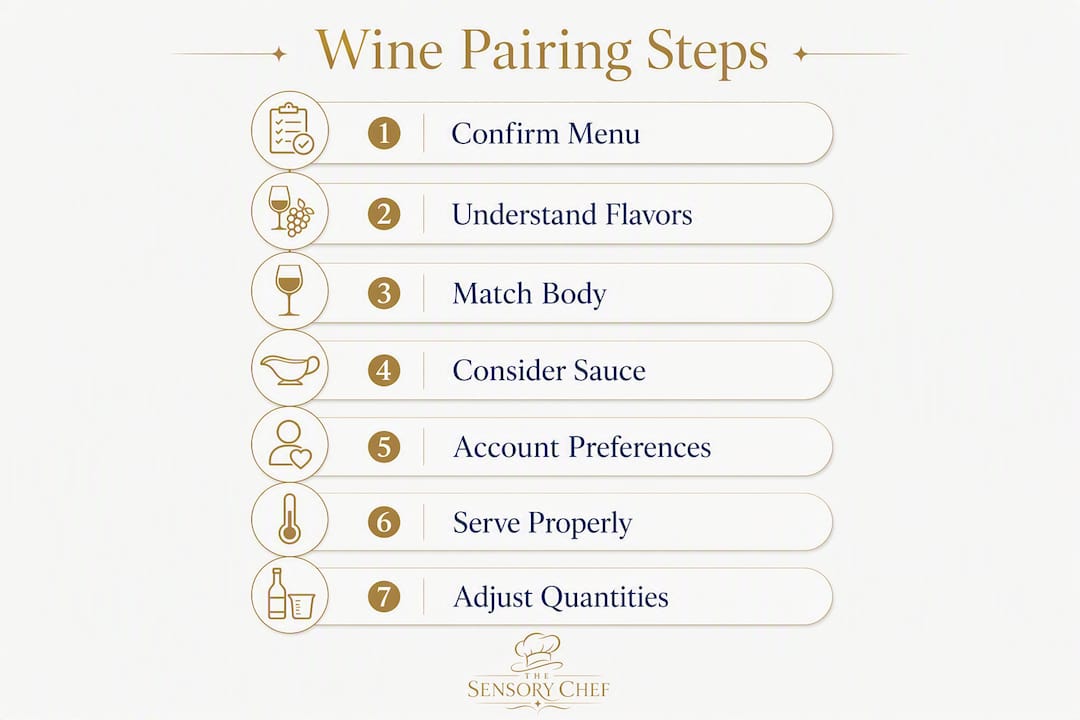
Practical temperature targets typically recommend serving sparkling and light whites chilled, full-bodied whites and rosé slightly warmer, light reds at a moderate cool temperature, and full-bodied reds closer to room temperature.
Decanting is worth doing for tannic reds at dinner events. Allow 30–45 minutes for a young Rioja Reserva or Ribera del Duero. Glassware matters too: a universal 400–450ml tulip glass works for most wines and simplifies logistics for large events.
Pro Tip: Brief your service team on pour sizes before the event. A modest tasting pour per course can help prevent palate fatigue and optimize bottle usage throughout the event.
How do you plan quantities, pacing and budget?
A common guideline for quantity planning is one bottle per two guests for a three-course dinner, with a separate sparkling allocation for toasts. For longer events extending beyond three hours, an additional half-bottle per person is a sensible allowance.
Budget allocation varies by event type, but a practical guide is to invest a significant portion of the per-head food-and-drink budget to wine, with Spanish and southern French bottles generally available in affordable retail ranges.
When working with a venue, negotiate corkage terms early. Some UK venues charge corkage fees per bottle, and bringing your own wine at a thoughtful retail price can often provide better value than the venue’s wine list.
-
Confirm final guest numbers 72 hours before the event
-
Chill whites and sparkling wines the night before
-
Set reds at room temperature at least two hours before service
-
Decant tannic reds 30–45 minutes before the relevant course
-
Assign one staff member per 10–12 guests for wine service
Pro Tip: Order 10–15% more wine than your calculation suggests. Breakage, spillage and the occasional generous pour are predictable costs, not surprises.
How does a chef approach pairing as a sensory conversation?
Food-led planning is the professional default. The menu anchor, whether a slow-roasted lamb, a delicate sea bass, or a rich mushroom risotto, determines the wine’s body, acidity and tannin profile before a single label is considered. What grows together tends to go together: Andalusian dishes built on olive oil, saffron and fresh seafood find natural partners in the region’s own whites and sherries.
Joseph Warner’s practical checklist for pairing decisions:
-
Identify the menu anchor (dominant protein or flavour)
-
Assess the sauce or cooking method (cream, acid, char, spice)
-
Match body to body: light dish, light wine; rich dish, fuller wine
-
Check acidity and tannin against fat and protein content
-
Confirm serving temperature and glassware before service
-
Plan the sequence from lightest to fullest
Sample 4-course private-dining menu with wine categories
| Course | Dish | Wine category | Dietary swap |
|---|---|---|---|
| Amuse-bouche | Gazpacho shot | Fino Sherry or Manzanilla | Vegan-friendly as standard |
| Starter | Grilled Málaga prawns | Albariño or Verdejo | Roasted courgette + same wine |
| Main | Slow-roasted lamb shoulder | Rioja Reserva or Ribera del Duero | Mushroom and walnut Wellington + Garnacha |
| Dessert | Almond tart with Pedro Ximénez ice cream | Pedro Ximénez or Tawny Port | Dark chocolate and orange tart + same |
This structure reflects Thesensorychef’s approach to private dining in Granada and Andalusia: each course is designed as part of a sensory sequence, with wine chosen to complement texture, aroma and weight rather than simply match colour.
Pro Tip: For villa events in warm climates, keep a small ice bucket beside each table for whites and sparkling wines. Andalusian summer evenings warm bottles faster than most planners expect.
Key takeaways
Wine pairing at events works best when the menu leads and the wine responds, with body and weight as the primary matching criteria across every course.
| Point | Details |
|---|---|
| Menu leads, wine follows | Fix the menu and event brief before selecting any wine; food weight and texture drive every choice. |
| Pick 2–4 workhorse wines | Sparkling, dry rosé, unoaked Chardonnay and a light red cover most courses and guest preferences. |
| Temperature and glassware matter | Serve whites at 6–12°C and reds at 14–18°C; a universal 400–450ml tulip glass simplifies service. |
| Plan bottle quantities carefully | Allow one bottle per two guests for a three-course dinner, plus a separate sparkling allocation for toasts. For events running beyond three hours, plan an additional half-bottle per person. |
| Thesensorychef applies this approach | Joseph Warner’s private-dining menus in Granada and Andalusia are built on food-led pairing and sensory sequencing. |
Wine pairing is about the guest, not the label
The most common mistake I see at private events is planning the wine list before the menu is confirmed. It seems logical to lock in the wines early, but it inverts the process entirely. A guest eating a delicate sea bass with a heavy Rioja is not having a worse version of a good experience; they are having a fundamentally different one, and not in a good way.
What I find more interesting, and what genuinely separates a memorable dinner from a pleasant one, is the sensory sequence. At a villa dinner in Granada or along the Costa Tropical, the local wines, Albariño from Galicia, a good Manzanilla from Sanlúcar, a Garnacha from Priorat, carry the character of the landscape into the glass. Pairing them with dishes built on local Andalusian ingredients creates a coherence that guests feel even when they cannot name it.
The other thing worth saying plainly: non-wine drinkers deserve the same thought as wine drinkers. A beautifully presented non-alcoholic pairing, a chilled citrus shrub alongside a prawn starter, a spiced elderflower with the lamb, honours every guest at the table. That is what celebration menus that truly honour guests actually look like in practice.
Bespoke wine pairing for your next private event
Thesensorychef brings more than 13 years of French-trained culinary expertise to private villa dining, celebrations and corporate dinners across Granada, Málaga and the Costa Tropical. Where most event caterers hand you a wine list and leave the pairing to chance, Joseph Warner designs each menu as a sensory sequence, with wine categories chosen to complement every course from amuse-bouche to dessert.
Every booking includes a consultation on menu design, dietary accommodation and wine recommendations, whether you are hosting an intimate anniversary dinner for two or a seated celebration for thirty. Joseph handles the full sequence: course structure, flavour balance, serving temperatures and briefing for your front-of-house team.
To view sample menus and check availability for your event, visit the private dining experience page or explore the signature tasting experience for a fully curated evening with matched wines.
Useful sources
The following resources are worth consulting for deeper study on pairing science, event logistics and menu design:
-
Why does food and wine pairing work? — EHL Culinary Arts: Accessible explanation of the sensory and chemical principles behind pairing, grounded in hospitality education.
-
Wine and food pairing — Wikipedia: A broad overview of pairing history, principles and the conversational model attributed to Evan Goldstein.
-
Matching wine and food — Jancis Robinson: The authoritative reference for body-led matching; Robinson’s weight principle is the most practical single rule for event planners.
-
The science of food and wine pairing — WineMaker Magazine: Technical breakdown of tannin, acidity and fat interactions; useful for understanding why specific pairings work.
-
Food and drink pairing tips for events — VenueNow: Event-specific guidance on complementary and contrasting pairing strategies and perceived value.
-
Private dining menus — Thesensorychef Granada: Sample menus for Granada events, useful for planners seeking concrete menu-and-wine pairing examples in an Andalusian context.
FAQ
Why does wine pairing matter at a catered event?
Considered pairing raises the perceived quality of every course and gives the meal a natural rhythm. Curated wine pairings create conversation, structure and a higher perceived event value that food alone rarely achieves.
What are the core rules for pairing wine with food?
Match body to body (light dish, light wine; rich dish, fuller wine), use acidity to cut fat, and let tannins balance protein. Jancis Robinson identifies body and weight as the single most useful matching factors, more reliable than colour.
What is the 20-minute rule for wine at events?
The principle refers to allowing red wines, particularly tannic styles, to breathe before service. For structured event wines such as a young Rioja Reserva, 30–45 minutes of decanting is more effective.
How much wine should you plan per guest for a dinner event?
A reliable rule of thumb is one bottle per two guests for a three-course dinner, plus a separate sparkling allocation of one glass per guest for toasts. For events exceeding three hours, allow an additional half-bottle per person.
Can Thesensorychef handle wine pairing as part of a private dining booking?
Yes. Joseph Warner designs each menu as a sensory sequence with wine categories matched to every course, and includes wine recommendations and serving guidance as part of every private dining consultation.