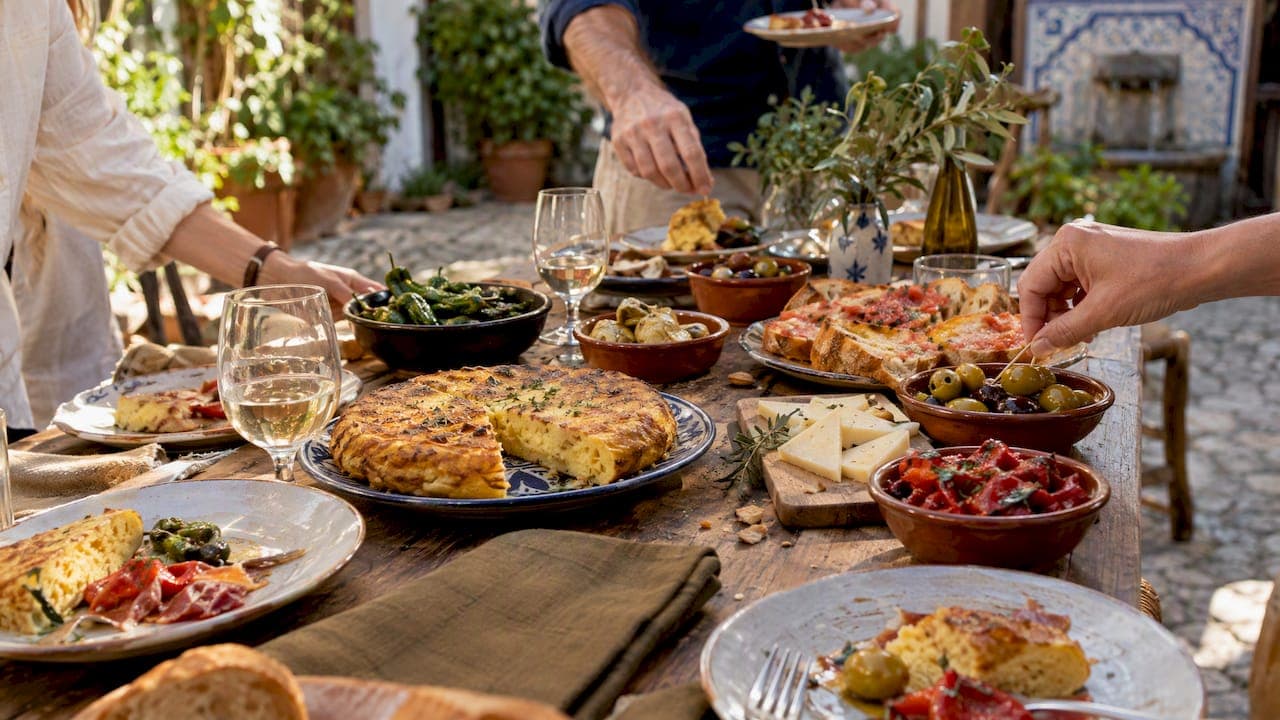
The best tapas evening for a crowd is built in waves. Start with cold and room-temperature plates, follow with dishes made the day before, and keep last-minute cooking to two or three items. Plan around two or three portions per guest, balance textures and temperatures, and ask about allergies early. If you would rather enjoy your own party, a private chef can cook it in your kitchen or villa.
This guide is for hosts in Granada, the Costa Tropical, Málaga and the Costa del Sol. They may be gathering eight friends or twenty-five family members. It covers quantities, timing, a sample menu, safe handling in an Andalusian summer and the point where hiring help makes sense.
TL;DR
- Serve in waves: cured meats, cheese, olives and bread first, then cold dishes made ahead, then one or two hot items cooked at the last moment.
- Plan two to three tapas per person, and choose variety over volume.
- Do the shopping and heavy preparation one to three days before, so you are not stuck in the kitchen.
- Keep food out of the fridge for no more than two hours in warm weather, and ask guests about allergies well in advance.
- For larger groups, villa stays or celebrations, we can cook the whole evening for you. See the options below.
Table of Contents
- Why tapas suit a group so well
- How much to serve
- Build the menu in waves
- Balance textures and temperatures
- Allergies and dietary requirements
- Food safety in an Andalusian summer
- A realistic timeline
- Our perspective: the host should taste the evening too
- When it makes sense to hire a private chef
- Frequently asked questions
- Sources
Why tapas suit a group so well
Tapas are less a recipe than a way of eating: small plates, shared, with something cold to drink. That format works for groups because nobody waits for a single main course, and guests with different tastes can each find something. A vegetarian, a coeliac and a cheerful carnivore can share one table without three separate menus.
It also fits how Spanish households live. The Ministry of Agriculture's 2025 household consumption report notes that convenience is a main motivation in one in four home meals. Traditional dishes remain central, but hosts increasingly mix home cooking with good ready-prepared items to save time. For a party, that is sensible. Nobody needs to make the jamón or the olives.
How much to serve
The most common mistake is over-preparing. One home tapas guide suggests four to six different tapas for a group of four, or two to three items per person, with variety valued over volume. Here is how that scales in practice, as a starting point rather than a rule.
| Group size | Different dishes | Approximate pieces per guest | Last-minute cooking |
|---|---|---|---|
| 6 to 8 | 6 to 7 | 8 to 10 small bites | 2 items |
| 10 to 14 | 7 to 9 | 8 to 10 small bites | 2 to 3 items |
| 16 to 25 | 8 to 10 | 10 to 12 small bites | 2 items, cooked in batches |
These figures are our own working guidance, not a published standard. Adjust them upwards if tapas are the whole dinner rather than a prelude, if your guests are hungry after a day at the beach, or if the party is long. Adjust downwards if you are also serving a paella.
A bigger group does not need more dishes, it needs bigger quantities of the same dishes. Eight well-chosen plates feel generous. Fifteen mediocre ones exhaust the cook.
Build the menu in waves
The idea of serving in waves comes from a French guide to tapas at home, and it matches how a good Spanish evening unfolds. Guests arrive, drift, graze and settle. You do not want a hot course landing the minute the doorbell rings.
Wave one: on the table when guests arrive
Room-temperature items that need no attention:
- Sliced cured ham, chorizo or lomo, and two or three cheeses, such as a Manchego and a goat's cheese.
- Marinated olives and almonds.
- Pan con tomate: good bread, ripe grated tomato, olive oil, a little salt.
- Fresh vegetable sticks with a romesco or a Granada-style olive oil and herb dip.
These buy you the first hour. Guests settle in, drinks flow and you are standing with them, not at the hob.
Wave two: cold dishes made ahead
This is where the preparation of the previous day pays off. Spanish tortilla can be made up to three days ahead and served at room temperature. Add:
- Ensaladilla, made the day before and kept cold until the moment of serving.
- Gazpacho or salmorejo in small glasses, a natural fit for summer in Andalusia.
- Marinated roasted peppers with anchovy or tuna.
- A vegetable escalivada on toasted bread.
Hosts who share their experience tend to agree that dishes served at room temperature give you freedom to socialise, and that shopping and heavy prep should happen one to three days earlier.
Wave three: a little heat
Keep this to two or three items, and choose ones that are fast at the end: croquetas fried straight from the freezer or the fridge, gambas al ajillo, patatas bravas with the sauce made ahead, or pimientos de Padrón. If you cook for twenty, fry croquetas in two batches rather than trying to produce a hundred at once.
If you want something more substantial, a paella works as a finale rather than a competitor to the tapas. Plan smaller tapas quantities when you do.
Something sweet
Finish with something light: seasonal fruit, a small almond cake or a few churros if someone is enthusiastic. After a grazing meal, a heavy dessert is rarely needed.
Balance textures and temperatures
Avoid the all-fried trap. A table of croquetas, calamares, bravas and fried cheese is heavy by the third plate. Aim for a mix of crisp, creamy and fresh, and of cold, warm and room temperature. That is the same advice the tapas-at-home guides give, and it is also how a chef thinks about a tasting menu: contrast keeps the palate interested.
A sample menu for twelve guests that follows these rules:
- Ham, two cheeses, olives, almonds (room temperature, crisp, salty).
- Pan con tomate (fresh, simple).
- Spanish tortilla (soft, served at room temperature).
- Salmorejo in glasses (cold, smooth).
- Roasted pepper and anchovy tostas (smoky, fresh).
- Croquetas de jamón (creamy inside, crisp outside, hot).
- Gambas al ajillo (hot, aromatic).
- Seasonal fruit with a little cheese (cool, sweet).
Only two dishes need attention once guests are there.
Allergies and dietary requirements
Ask before you shop, not on the day. Ask each guest about vegetarian, vegan, gluten-free, shellfish, nut and egg requirements, and note them in one place. Tapas make this easier than a plated dinner because most guests simply skip what does not suit them, but a person with a serious allergy needs more than that.
Three practical habits help:
- Label dishes with a small card, particularly those containing nuts, shellfish, egg, gluten or dairy.
- Keep separate serving utensils for allergen-free dishes, and prepare them first on clean surfaces.
- Make at least two substantial dishes that suit everyone, such as tortilla, roasted vegetables, olives and cheese, so nobody is left with only the bread.
Coeliac guests need particular care, because flour hides in sauces, croquetas and fried coatings. If a guest has a medical diagnosis, ask them what they are comfortable eating rather than guessing. We cover this in more detail in our guide to accommodating dietary needs at private dinners and our gluten-free menu examples.
Food safety in an Andalusian summer
A tapas spread is the kind of food that sits out for hours, and Andalusia is hot. The Spanish food safety agency AESAN advises that cooked food should not stay at room temperature for more than two hours. Otherwise refrigerate promptly, at around 4ºC, or keep it hot above 63ºC.
What that means on the day:
- Put out cold dishes in smaller bowls and refill from the fridge, rather than leaving one large platter on the terrace all evening.
- Keep mayonnaise-based dishes such as ensaladilla chilled until the moment they are served.
- Keep hot dishes hot, or serve them in small batches straight from the pan.
- Cook meat and poultry through. AESAN's scientific committee report on time-temperature combinations lists 70ºC at the centre for meat, 74ºC for poultry, and 74ºC for 15 seconds when reheating previously cooked food.
- Fish served raw or lightly cured, such as boquerones en vinagre, must be frozen first. The same AESAN report gives -20ºC or lower for at least five days to guard against anisakiasis.
Leftovers deserve a particular warning. Some toxins, including the emetic toxin of Bacillus cereus, are not destroyed by reheating, which is why cooling and storing food correctly the first time matters more than reheating. Rice dishes are the classic case, so if you serve paella, do not leave it on the table all afternoon. If a guest is pregnant, elderly, or has a weakened immune system, ask their doctor or midwife about foods to avoid.
A realistic timeline
Three days before. Confirm numbers and dietary needs. Order ham, cheese and fish from your market or deli. Make tortilla if you like it fully set.
Two days before. Shop for fresh ingredients. Make sauces such as romesco, alioli and the bravas sauce. Freeze fish that will be served cured.
The day before. Make ensaladilla, salmorejo and croquette mixture. Roll and crumb the croquetas and keep them cold. Chill drinks and check glasses.
On the day, morning. Prepare the vegetables, slice the bread, marinate the prawns. Set out plates and serving spoons.
An hour before. Arrange the first wave. Take cold dishes out only when guests arrive.
During the evening. Cook the hot items in two moments, about 45 minutes apart.

If you want a formal framework for a more elegant, standing-style gathering, our guide to cocktail menu planning for villa hosts in Spain goes into canapé quantities per guest.
Our perspective: the host should taste the evening too
We have cooked for villa gatherings, anniversaries and family celebrations across Granada and Andalusia, and the pattern is always the same. The hosts who enjoy the night are not the ones with the most elaborate menu. They are the ones who decided early what could be done ahead and then trusted the plan.
As a French-trained chef with more than 13 years in professional kitchens, I tend to cook tapas the way I would a tasting menu: contrast, rhythm and a clear sense of what comes next. Being deaf has shaped how I cook. I rely on flavour, texture, aroma and presentation, and I think of those four things when planning any table. A crisp bite beside a creamy one, a bright acidic note after something rich, a warm aroma arriving as the first plates empty. That is what makes a tapas evening feel generous rather than just busy.
My advice is simple. Cook fewer things, and cook them well. Buy the best ham and olive oil you can afford. Make one dish you are proud of. And if the group is large, or the occasion matters, do not be shy about asking a chef to take over the stove.
— Joseph Warner
When it makes sense to hire a private chef
Cooking for six friends is a pleasure. Cooking for twenty while greeting guests, pouring drinks and watching the clock is a job. A private chef makes sense when:
- You are hosting a villa party, birthday, anniversary or wedding-related dinner.
- The group is large, or includes several dietary requirements.
- You are on holiday and do not want to spend the evening shopping and washing up.
- You want a menu that goes beyond the usual list of bravas and croquetas.
We cook in your villa or home, bring the ingredients, and leave the kitchen clean. Menus are personalised and built around fresh local produce. Here are the options most relevant to a group tapas evening, with the prices published on our site:
| Option | Price |
|---|---|
| Tapas Of Andalusia | from €65 per person |
| Tapas Selection | €90 |
| Tapas Masterclass, hands-on | €75 |
| Private Dining Experience | €250 |
| Villa Chef Experience | from €350 per service |
If your group would rather cook than watch, a hands-on class is a lively way to spend an afternoon. See our Tapas Masterclass, or read about our at-home tapas class in Marbella. For ideas on what we cook, look at our Spanish gastronomy examples for private events.
To plan your evening, tell us your date, location, number of guests and any allergies, and we will propose a menu. You can start from our menus and services or visit The Sensory Chef to book.
Frequently asked questions
How many tapas should I make per person?
Plan two to three tapas per person if the tapas come before a main meal, and more if they are the whole dinner. As a guide, four to six different dishes suit a group of four. Variety matters more than volume, so add dishes only up to about eight or ten, then increase quantities.
Which tapas can I make the day before?
Tortilla, ensaladilla, salmorejo, romesco, marinated peppers and croquette mixture all work well. Tortilla can be made up to three days ahead and served at room temperature. Keep anything with mayonnaise, egg or fish in the fridge until serving.
How long can tapas sit out at a party?
AESAN advises no more than two hours at room temperature for cooked food, and less on a hot terrace. Serve cold dishes in smaller bowls and refill from the fridge. Keep hot food above 63ºC or serve it in small batches.
How do I cater for allergies and vegetarians?
Ask every guest well before the party, and note requirements in one list. Label dishes, use separate utensils for allergen-free food, and include a few dishes that suit everyone, such as tortilla, roasted vegetables, olives and cheese. For serious allergies, ask the guest what they are comfortable with.
Can a private chef cook tapas in my villa?
Yes. We cook in villas and homes across Granada, the Costa Tropical, Málaga and the Costa del Sol, with menus built around your group and any dietary requirements. Tell us the date, place and number of guests, and we will suggest a menu.
Sources
- Ministry of Agriculture, Fisheries and Food: household food consumption report 2025
- Cata de tapas en casa (Solo de Croquetas)
- Tapas maison (Apéronomie)
- How to host a tapas night at home (Simply Sophisticated Cooking)
- AESAN: summer food safety campaign
- AESAN: report on time-temperature combinations for safe cooking
- AESAN: Bacillus cereus