
Yes, you can genuinely learn to make tapas at home through a workshop or online class. Chef-led sessions, whether in a studio, in your own kitchen, or streamed live, teach the knife work, timing and seasoning behind three to six dishes you can repeat with confidence. Expect recipes, a shopping list, and a few finishing touches that turn simple ingredients into something worth serving to guests.
TL;DR:
- Most tapas classes focus on foundational skills like sourcing ingredients and balancing flavors, suitable for complete beginners seeking confidence.
- Online classes require basic utensils and internet, but private and studio options include ingredients and often feature tasting opportunities.
- Typical dishes include pan con tomate, tortilla española, patatas bravas, gambas al ajillo, and marinated vegetables, emphasizing transferable techniques.
- Private workshops can be customized for dietary needs and special occasions, offering personalized menus and flexible scheduling.
- Attention to small details, such as timing and finishing touches, makes the difference between a good and memorable tapas dish.
Table of Contents
- What a taller de tapas en casa actually teaches you
- Studio class, private session or live online: which format suits you?
- Sample tapas menu: what you'll actually cook and eat
- How to choose the right tapas cooking course or private class
- An expert note on sensory finishing and dietary care
- Why tapas workshops are as much about hosting as cooking
- Book a private tapas workshop with The Sensory Chef
- Sources
- FAQ
What a taller de tapas en casa actually teaches you
A good tapas workshop is not a cookery demonstration you watch from a stool. It puts a knife in your hand and asks you to slice, fry and season under supervision, which is where the real learning happens. Workshops built for home cooks tend to prioritise foundational skills over showmanship: how to source decent ingredients, how to balance acidity against fat, and how to plate something that looks generous on a small board. That grounding is deliberate, because tapas classes designed for beginners assume no prior kitchen experience and build confidence from the first knife cut.
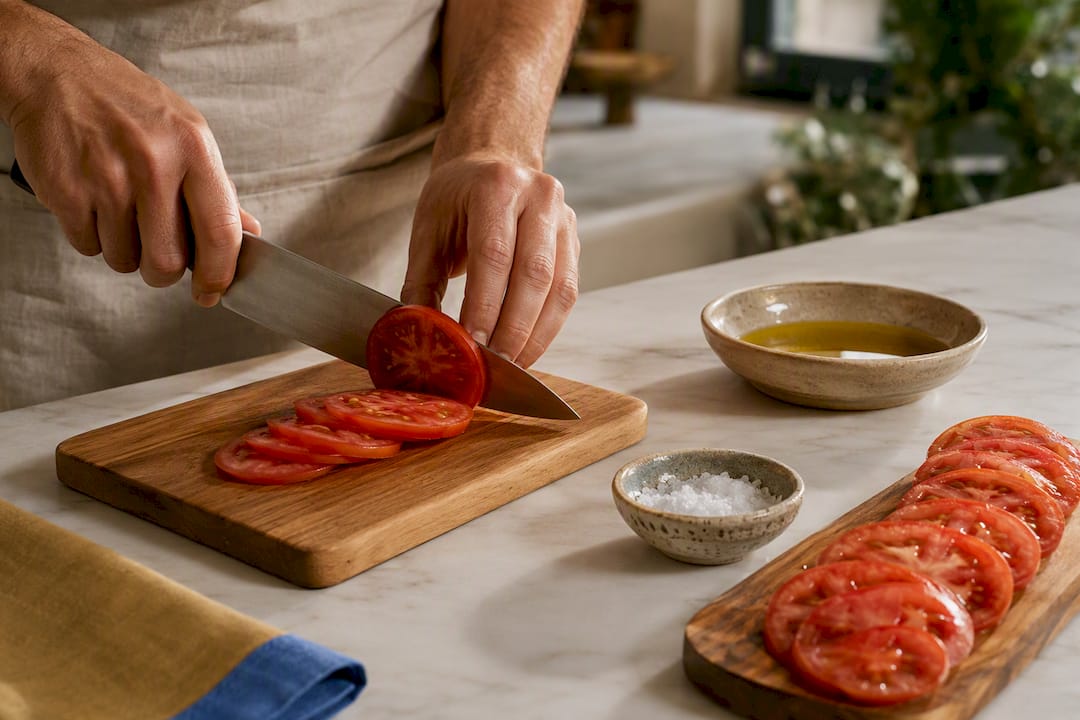
By the end of a session, most participants walk away with several tapas they can cook again without notes, from pan con tomate to a simple gambas al ajillo, a working shopping list and timeline for hosting a group of guests, confidence frying, sautéing and seasoning hot dishes without overcooking them, and a sense of which elements can wait and which need last-minute attention.
The hands-on part matters because timing is the real skill on show. Anyone can follow a recipe for patatas bravas alone in a quiet kitchen. Doing it while also plating a tortilla and chatting to six guests is a different exercise entirely, and it's the one a workshop actually rehearses.
Studio class, private session or live online: which format suits you?
Formats vary more than most people expect, and the right one depends on how much control and privacy you want over the experience. Studio classes usually run for a few hours in groups with shared workstations and a set menu. Private in-home workshops are more flexible on timing and scale to fit the size of your group. Live online classes tend to run about an hour and work well for smaller households or remote groups wanting to cook together from separate kitchens.
What's included differs by format too:
- Studio sessions almost always supply ingredients, utensils and a printed recipe pack, plus a tasting at the end
- Private workshops bring the chef and ingredients to your kitchen, adapting the menu to your space and equipment
- Live online classes commonly send an ingredient list in advance, and some offer an optional pre-packed kit for a set price per person
- You'll usually need your own basic pans, a chopping board and a stable internet connection for the online format
The trade-off is straightforward: studio classes are the most sociable and least expensive, private sessions give you the most personalisation, and online classes are the most convenient if travel or scheduling is tight.
Sample tapas menu: what you'll actually cook and eat
Workshops tend to draw from the same shortlist of dishes because they teach transferable technique without demanding professional equipment. On the cold side, expect pan con tomate, marinated vegetables such as pickled peppers or olives, and pintxos built around anchovy or cured fish. On the hot side, patatas bravas, tortilla española and gambas al ajillo appear constantly, alongside croquetas or small grilled pinchitos when time allows.
A practical five-dish menu for a home evening might run like this:
- Pan con tomate, prepared and lightly toasted an hour ahead
- Marinated olives and vegetables, made the day before so the flavours settle
- Tortilla española, cooked and rested, then served just warm rather than hot
- Patatas bravas, fried in batches shortly before guests arrive
- Gambas al ajillo, cooked in the final ten minutes so the garlic and oil are still sizzling
Pro Tip: Cook everything that improves with rest first, and save anything that needs to sizzle for the last ten minutes. Guests remember the dish that arrived hot far more than the one that arrived early.
How to choose the right tapas cooking course or private class
Start by deciding whether you want a group setting or a private class built around your own guests. A studio session suits someone building general skills; a private workshop suits a specific occasion, dietary need or group size. From there, think about skill level, whether the menu focus matches what you actually want to cook, and whether instruction is offered in a language you're comfortable with.
Before booking, ask:
- Which specific tapas will I learn, and do I get a printed or digital recipe pack to take home?
- What's the cancellation policy, and is there a minimum group size?
- Does the price include tasting, wine pairing or just the cooking instruction?
- Can the menu adapt to allergies or dietary preferences?
Price is driven by more than the ingredients. A private chef's travel time, bespoke menu planning and any wine pairing all add to the cost, which is why private in-home sessions sit at a different price point to a shared studio slot. Organiser guidance on group cooking class pricing in Spain is useful if you're booking for a larger party and want to understand where the budget typically goes. Longer courses that build in a communal tasting and wine pairing tend to sit at the higher end, but they also give you the fullest learning experience.
An expert note on sensory finishing and dietary care
An experienced chef brings more than a decade of professional kitchen experience to tapas workshops, trained originally in French gastronomy and also working across Spanish, Mediterranean and international cuisine. His workshops focus less on volume and more on the small decisions that separate a decent tapa from a memorable one.
A drizzle of good olive oil, a squeeze of lemon at the right moment, or a contrast of something crisp against something soft is often the difference between a plate that's fine and one guests talk about. It's not about complexity. It's about paying attention to texture, aroma and balance at the point of serving.
Private workshops also allow for genuine dietary flexibility. Whether a guest avoids gluten, shellfish or dairy, recipes can be adjusted in advance rather than left to a last-minute substitution, which matters when you're cooking for a mixed group of family or villa guests.
Why tapas workshops are as much about hosting as cooking
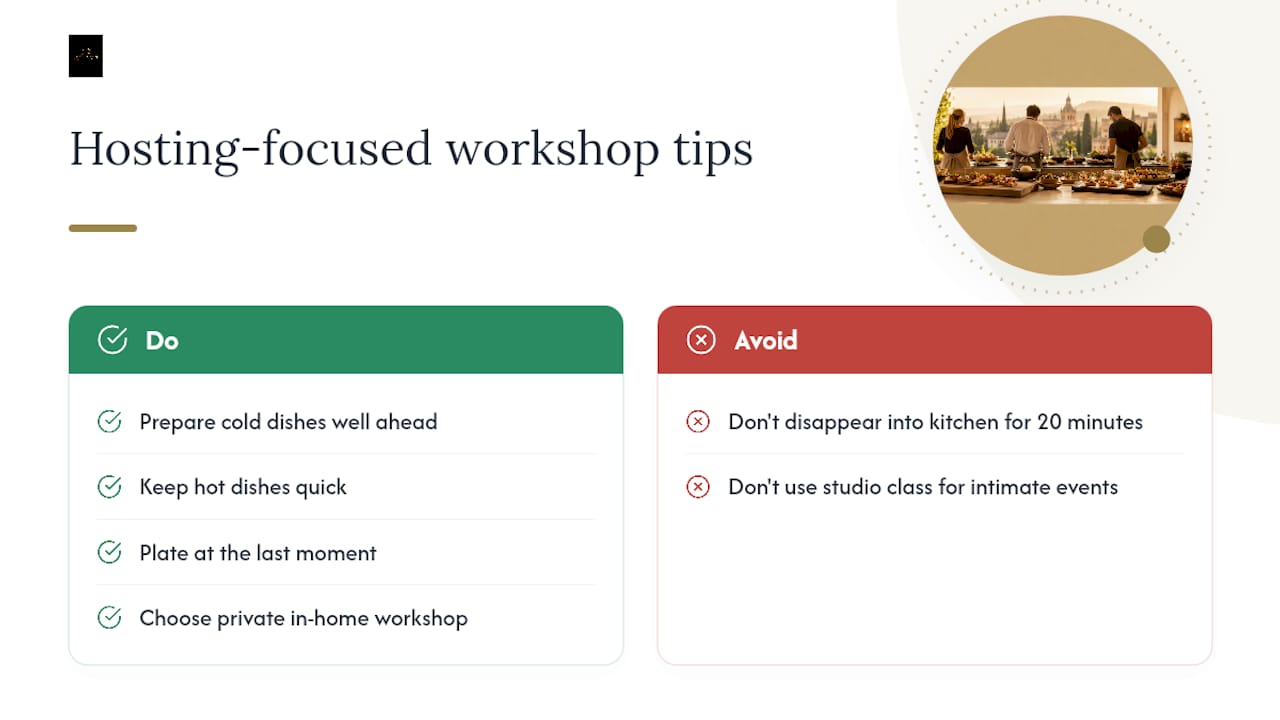
Tapas is built for sharing, and a good workshop teaches pacing as much as technique. You learn to prepare cold dishes well ahead, keep hot dishes quick, and finish plates at the last moment without disappearing into the kitchen for twenty minutes. That structure is what lets a host stay at the table with guests rather than missing their own evening.
For a birthday, anniversary or small villa celebration, a private in-home workshop tends to suit the occasion better than a studio class, since the menu and pace can be built entirely around the people you're hosting.
— Joseph Warner
Book a private tapas workshop with The Sensory Chef
A studio class teaches you technique in a room full of strangers; a private workshop with The Sensory Chef teaches the same technique in your own kitchen, built entirely around your guests, your dietary needs and your occasion.
Sessions include chef-led instruction, take-home recipes, guidance on sourcing good ingredients locally, and a final tasting once the cooking is done. It's a natural fit for villa stays, anniversaries, birthdays and small family celebrations across Granada, Almuñécar, the Costa Tropical, Málaga and Andalucía, particularly where guests have allergies or specific dietary requirements that need proper attention rather than a rushed workaround. Menus can also draw on Joseph Warner's French and Mediterranean training if you'd like the evening to move beyond tapas alone.
Booking is straightforward: enquire with your preferred dates, group size and any dietary notes, and allow a little lead time so the menu and ingredient sourcing can be planned properly. Full details on what's included and how sessions run are on the private tapas workshop page, and you can check availability directly through The Sensory Chef's booking page.
Sources
- Authentic Spanish Tapas Cooking Class in Barcelona — Viator
- Make a Spanish tapas party spread at home — ClassBento
- Curso de Tapas in Valencia — Food&Fun
FAQ
What simple tapas can I make at home?
Pan con tomate, marinated olives, tortilla española and patatas bravas are among the easiest starting points, since each teaches one core technique without requiring specialist equipment.
What are Spain's most typical tapas?
Patatas bravas, tortilla española, gambas al ajillo and pan con tomate are consistently among the dishes taught in tapas classes because they combine simple technique with strong flavour and presentation.
Do I need cooking experience to join a tapas workshop?
No. Most tapas workshops are built for complete beginners and provide step-by-step recipes you can repeat at home afterwards.
Is a private tapas workshop worth it for a small celebration?
For anniversaries, birthdays or villa gatherings, a private workshop tends to suit the occasion better than a group studio class, since the menu, pace and dietary accommodations can be tailored entirely around your guests.