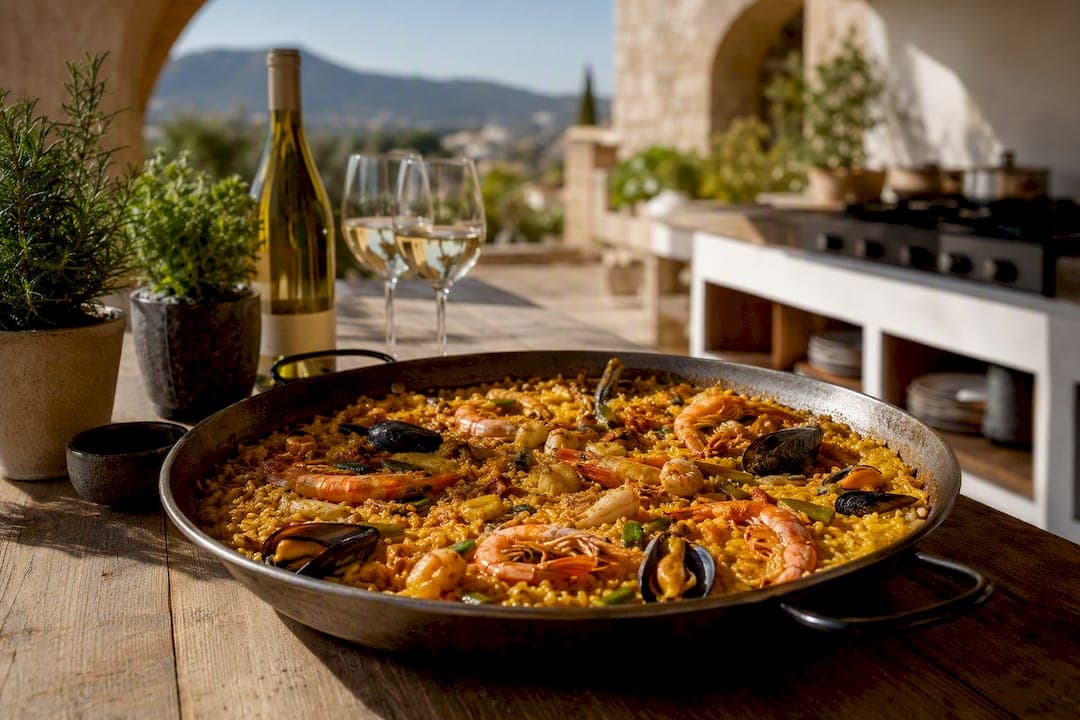
Spanish Mediterranean cooking distinguishes itself through Iberian cured pork, local short-grain rice, and saffron, layered onto techniques such as sofrito and shared through tapas culture. That combination sets Spain apart from other Mediterranean kitchens, even though all of them draw from the same well of olive oil, wine and seasonal vegetables. The Mediterranean diet itself carries UNESCO recognition as an Intangible Cultural Heritage. Spain’s olive groves produce a significant portion of the world’s olive oil, so the raw materials are shared property across the region. What Spain does with them, from jamón-laced tapas to saffron-scented rice, is where the real differences begin. As a French-trained chef who has spent years designing menus for villa guests across Andalusia, Joseph Warner of The Sensory Chef builds every tasting menu around exactly these distinctions.
The fastest way to spot the difference on a plate:
-
Fats and seasoning: olive oil dominates, with garlic doing far more work than dairy or butter
-
Carbohydrates: rice (bomba, calasparra) rivals bread as the everyday staple, especially along the coast
-
Protein: cured pork and fresh seafood take priority over lamb-heavy traditions found elsewhere
-
Spices: smoked paprika (pimentón) and saffron appear far more often than in neighbouring cuisines
-
Format: tapas and shared plates replace the strict starter-main-dessert sequence common further north
Key Takeaways
Spanish Mediterranean cooking differs from its neighbours through cured pork, rice-centred dishes, saffron and smoked paprika, and a tapas-led eating culture.
| Point | Details |
|---|---|
| Protein sets Spain apart | Cured pork and seafood take priority over the lamb-heavy traditions common elsewhere in the Mediterranean. |
| Rice is a main course | Paella and fideuà use an absorption method that produces a crisp base, unlike risotto’s creamy texture. |
| Spice profile is distinct | Smoked paprika and saffron appear far more often here than cumin or sumac used further east. |
| Regions each have a signature | Andalusia leans on cold soups, Valencia on rice, Catalonia on sofrito and mar i muntanya pairings. |
| Format shapes the flavour | Tapas encourage small, varied dishes rather than a single plated main course. |
Table of Contents
What counts as Spanish Mediterranean cuisine?
Spanish Mediterranean cooking refers to the coastal food traditions running from Andalusia up through Murcia, Valencia, Catalonia and the Balearic Islands, all rooted in the same principles that define the wider Mediterranean diet: abundant olive oil, seasonal vegetables, regular seafood, and meat eaten in moderation rather than as the default. Spanish cooking sits inside that broader pattern, but it adds a few ingredients other Mediterranean countries use more sparingly, most notably cured pork.
A handful of traits mark this style out clearly:
-
Olive oil as the near-universal cooking fat, used for frying, dressing and finishing
-
Heavy reliance on whatever the local market has that week, rather than imported staples
-
Rice and seafood dishes that dominate menus from Valencia to the Costa Tropical
-
Meat consumption that stays moderate overall, except for pork, which punches above its weight
-
Cured ham and sausage as a distinctly Spanish contribution to an otherwise plant-forward diet
The Mediterranean diet’s UNESCO status matters beyond ceremony. It formally acknowledges that the way people shop, cook and eat together, not just the ingredients themselves, carries cultural value worth protecting. For anyone planning a menu, that recognition is a useful shorthand: it confirms that seasonality and freshness aren’t marketing language but the actual backbone of the cuisine.
This is also why local markets shape Spanish Mediterranean menus more than fixed recipes do. A private chef working along the coast will build a June menu around tomatoes and courgettes at their peak, then shift toward artichokes and citrus by December. Recipes stay flexible because the produce dictates the plan, not the other way round.
How does Spanish food differ from other Mediterranean cuisines?
Compare a Spanish coastal menu against Italian, Provençal French, Greek or Levantine cooking, and several concrete differences emerge fast. Across the wider Mediterranean, olive oil, bread, wine and stewed vegetables recur everywhere, but the details diverge sharply once you look at protein, carbohydrate and spice choices. Spanish food tends to run bolder on smoked paprika and cured pork, and considerably more rice-forward than most of its Mediterranean neighbours, which changes both the flavour and the structure of a meal.
| Dimension | Spanish Mediterranean style |
|---|---|
| Primary fats and seasoning | Olive oil with heavy garlic use; dairy plays a minor role |
| Staple carbohydrates | Short-grain rice (bomba, calasparra) alongside bread |
| Protein emphasis | Cured pork (jamón, chorizo) and seafood over lamb |
| Herbs and spices | Smoked paprika and saffron feature more than elsewhere |
| Dominant cooking techniques | Rice absorption cooking, grilling, and slow stewing |
| Meal format and social eating | Tapas and shared plates alongside plated courses |
Three differences do most of the work in setting Spain apart:
-
Cured pork’s central role. Jamón ibérico and jamón serrano anchor tapas boards and flavour bases across the country in a way pork rarely does in Greek or Levantine kitchens, where lamb and yoghurt dominate instead.
-
Rice as a main event, not a side. Paella and fideuà turn rice or noodles into the centrepiece dish, cooked in a shallow pan with stock, saffron and whatever protein suits the region, rather than served as a bed under a sauce.
-
Smoked paprika and saffron replace other spice profiles. Where Levantine cooking leans on cumin and sumac, and Provençal food favours herbes de Provence, Spain reaches for pimentón and saffron threads.
Each of those differences maps onto a specific dish. Cured pork shows up in croquetas and cold tapas boards. Saffron and rice combine in paella. Smoked paprika defines the character of a good romesco or a bowl of patatas bravas. None of these are exotic outliers; they are the everyday building blocks of Spanish coastal cooking.
How do regional styles vary along the Spanish coast?
Spain’s Mediterranean coastline stretches across five distinct culinary regions, and each one puts its own stamp on the shared repertoire of olive oil, rice and seafood.
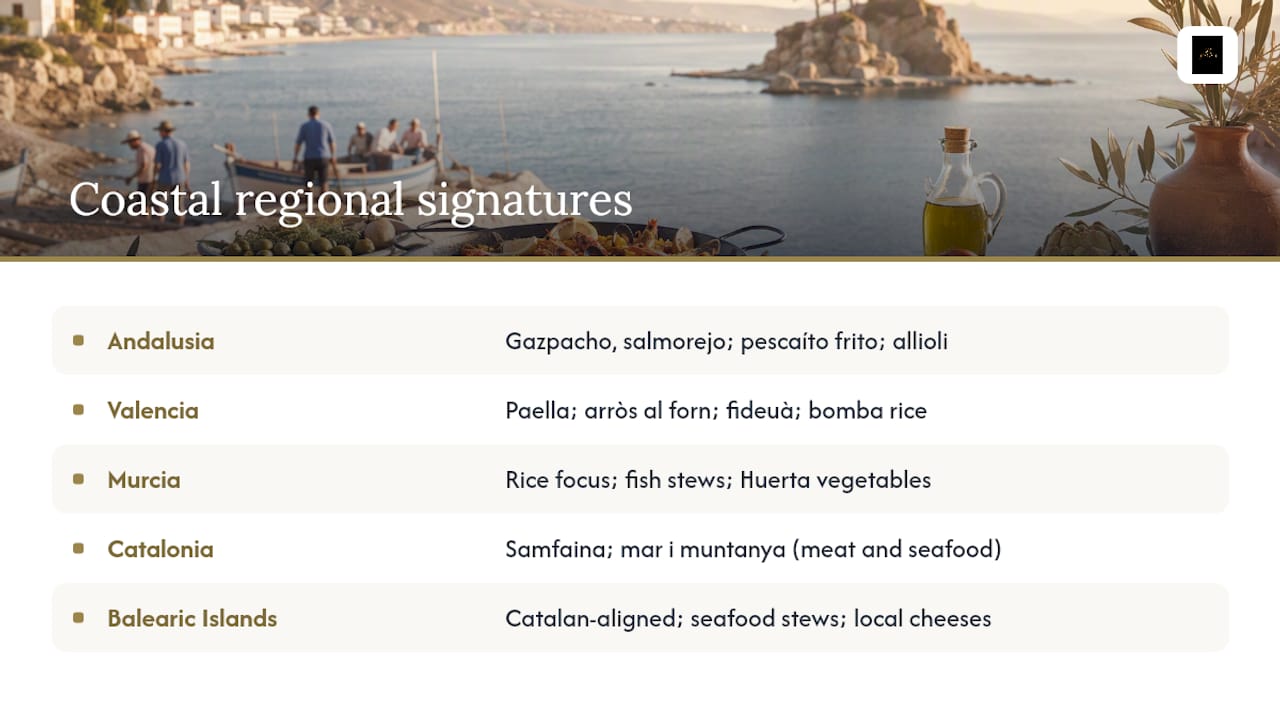
Andalusia built its reputation on cold soups and fried fish. Gazpacho and salmorejo dominate summer tables, both built from ripe tomatoes and stale bread, while pescaíto frito (small fried fish) and allioli show up constantly at coastal restaurants from Málaga to Almuñécar.
Valencia is rice country, plain and simple. Paella originated here, alongside arròs al forn (baked rice) and fideuà, which swaps rice for short noodles. The region’s calasparra and bomba rice varieties absorb liquid without turning mushy, which is precisely why they suit the slow absorption method paella demands.
Murcia shares Valencia’s rice obsession but leans harder into fish stews and market-garden vegetables, thanks to the fertile Segura river basin known locally as the Huerta.
Catalonia brings its own version of the onion-tomato base, called samfaina, and the distinctive mar i muntanya tradition. Pairing chicken or meatballs with prawns or cuttlefish demands careful timing and restrained seasoning so neither the meat nor the seafood gets lost, which is a technically demanding balance most other Mediterranean cuisines don’t attempt.
The Balearic Islands stay closely aligned with Catalan cooking but push further into seafood stews, sobrassada (a spreadable cured sausage), and local cheeses. Vegetables, legumes and cereals feature heavily, with olive oil remaining the constant fat across every island dish.
For anyone hosting a private dinner, these regional signals are genuinely useful planning tools. A summer villa lunch on the Costa Tropical calls for Andalusian cold soups and grilled fish, light enough for midday heat. A celebratory evening tasting menu might lean toward a Valencian-style paella as the centrepiece, timed for guests happy to linger over a slow-cooked rice dish. Matching the region’s own logic to the occasion, rather than importing a generic “Spanish” menu, is what separates a memorable private-dining experience from a forgettable one.
What ingredients and techniques define the flavour?
A short list of pantry staples does most of the heavy lifting in Spanish Mediterranean cooking:
-
Extra virgin olive oil, used for frying, dressing and finishing dishes alike
-
Garlic and tomatoes, the backbone of nearly every sauce and stew
-
Ñora pepper, a dried, mild red pepper essential to romesco and many rice dishes
-
Saffron, used sparingly but decisively in paella and some fish stews
-
Bomba or calasparra rice, chosen specifically for its ability to absorb stock without splitting
-
Jamón ibérico or serrano, adding salt, fat and depth to everything from tapas to broths
-
Smoked paprika (pimentón), the defining spice in chorizo, stews and grilled meats
-
Almonds, ground into romesco and other sauces for body and richness
-
Legumes and market vegetables, the base of dishes like pisto, Spain’s answer to ratatouille
Technique matters as much as ingredient lists. A proper sofrito, the slow-cooked onion, garlic and tomato base known regionally as sofregit or samfaina, underpins most Catalan and Valencian dishes. Caramelising it properly takes patience: rushing the onions produces a thin, sharp sauce rather than the deep, sweet base a good paella or romesco needs. Paella itself relies on a specific absorption method, where rice cooks directly in stock without stirring, allowing the prized socarrat (the crisp, caramelised layer at the pan’s base) to form. Grilling a la brasa, slow stewing for dishes like cocido, and whisking together allioli or romesco by hand round out the core techniques.
Pro Tip: When building a sofrito at home, resist adding the tomato until the onions have properly softened and turned translucent, usually 15 to 20 minutes on low heat. Adding it too early stops the onions from caramelising and leaves the whole sauce tasting flat.
What do the canonical Spanish dishes reveal?
Eight dishes do more to explain Spanish Mediterranean cooking than any list of ingredients ever could.
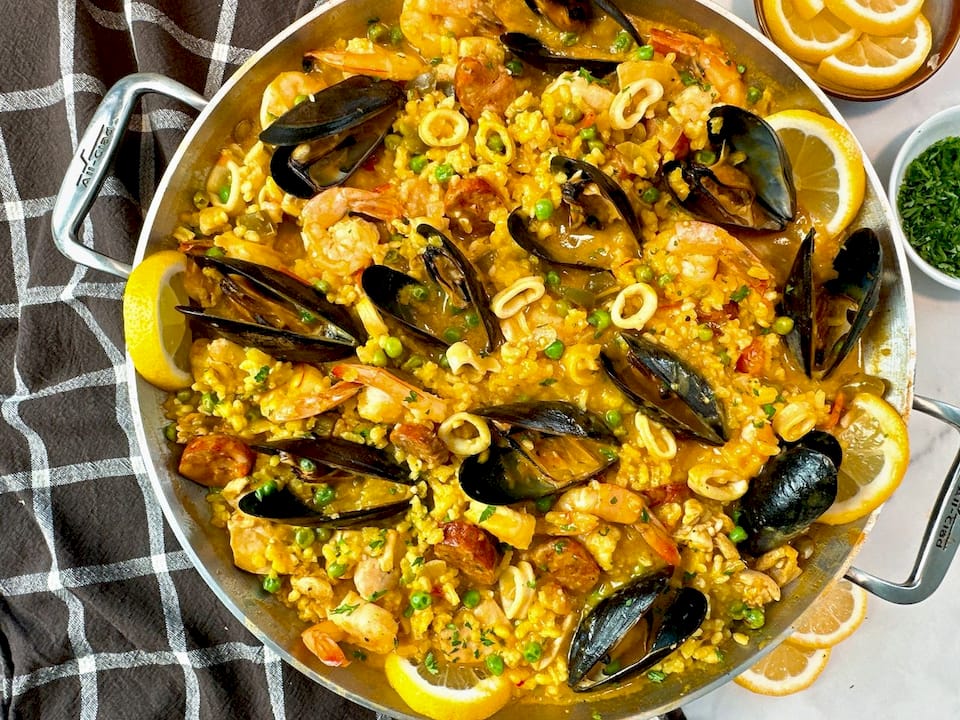
Paella began as a Valencian farmhouse dish, cooked over an open fire with rice, saffron, rabbit or chicken, and whatever vegetables were to hand. Coastal versions swap in seafood. What sets it apart from other Mediterranean rice dishes is the absorption technique itself, cooking uncovered and unstirred so the rice develops its crust rather than turning creamy like an Italian risotto.
Tortilla española (tortilla de patatas) is Spain’s everyday potato omelette, built from little more than eggs, potatoes, onion and olive oil. Its simplicity is the point: it appears on tapas menus, packed lunches and dinner tables in equal measure, and the debate over onion or no onion remains genuinely unresolved after generations of argument.
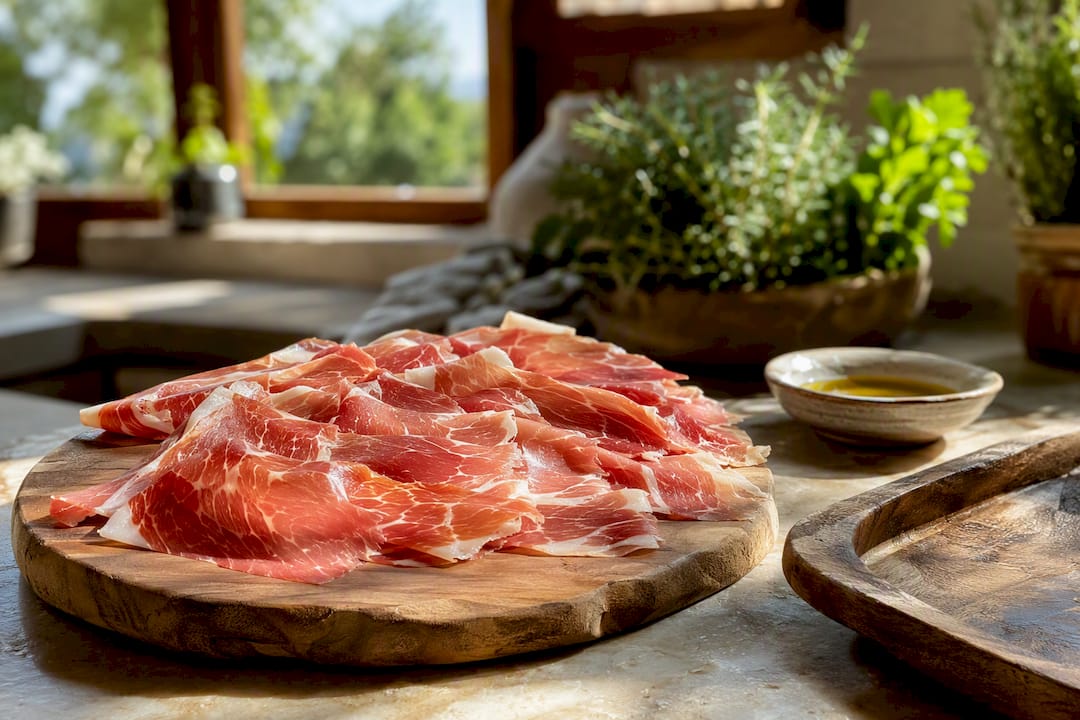
Jamón ibérico and jamón serrano represent Spain’s cured-pork tradition at its most refined. The flavour and texture come from specific breeding, diet and slow curing that can run to years rather than months, and thin-sliced jamón served at room temperature remains one of the simplest, most telling tapas on any Spanish table.
Gazpacho and salmorejo both showcase how New World tomatoes reshaped Andalusian cooking after their introduction from the Americas. Gazpacho stays thinner and more vegetable-forward, while salmorejo, thickened heavily with bread, is closer to a chilled soup you’d eat with a spoon rather than sip.
Fideuà takes the paella concept and swaps rice for short toasted noodles, a Valencian fishing-village invention built around whatever seafood came off the boat that day.
Romesco, built from ñora peppers, almonds and garlic, brings texture and gentle heat to grilled vegetables and fish across Catalonia.
Pisto, Spain’s version of ratatouille, stews down peppers, courgette, onion and tomato into a dish that works equally well warm or at room temperature.
Serving notes matter for hosts. Gazpacho and salmorejo want to be properly chilled, jamón wants to sit at room temperature to release its fat, and a good paella deserves fino or manzanilla sherry alongside it rather than a heavier red.
How does tapas culture shape the way Spaniards eat?
Meal times and formats in Spain differ noticeably from much of Northern Europe, and that rhythm shapes the food itself.
-
Lunch typically runs from 2pm to 4pm and remains the main meal of the day in many households
-
Dinner rarely starts before 9pm, often later in summer along the coast
-
Tapas culture turns eating into a social, grazing activity rather than a fixed sequence of courses
-
Small plates encourage experimentation, since diners can try five dishes instead of committing to one
-
Sunday lunches, especially cocido (a hearty chickpea stew), remain a family fixture in much of the country
Occasions vary the format further. Beach lunches favour light, shareable plates; family Sundays call for slow-cooked stews; evening tapas crawls turn dinner into a moving conversation across two or three bars. For a private tasting menu, this culture translates well into a tapas-led sequence, five or six small courses rather than three large ones, giving villa guests the same grazing pleasure without needing to leave the table. Pacing matters here: spacing courses 15 to 20 minutes apart keeps the evening feeling social rather than rushed.
How did history shape today’s Spanish flavours?
Three waves of influence explain most of what sits on a modern Spanish plate.
-
Roman rule introduced olive cultivation and viticulture, both of which remain central to Spanish cooking today
-
Moorish rule, lasting nearly 800 years in parts of the peninsula, brought rice cultivation, saffron, irrigation systems and sophisticated spice use
-
The Age of Discovery delivered tomatoes, peppers and potatoes from the Americas, ingredients now so embedded in Spanish cooking it’s hard to imagine gazpacho or the tortilla without them
Paella’s rice culture traces directly back to Al-Andalus irrigation systems that made large-scale rice farming possible in Valencia in the first place. Modern regional identities still carry these fingerprints: Andalusia’s cold soups depend on tomatoes that didn’t exist there before the 16th century, and Valencia’s rice fields owe their existence to medieval Moorish engineering.
A chef’s perspective on cooking Spanish Mediterranean menus
Designing a private-dining menu along the Costa Tropical means reading the season and the guest list before touching a single ingredient. Joseph Warner, founder of The Sensory Chef, trained in traditional French gastronomy before spending more than 13 years working across professional kitchens, and now builds bespoke Spanish, Mediterranean and French menus for villa guests across Granada and Andalusia.
In practice, that means visiting local markets the same week as the dinner, balancing a cured pork course against a lighter seafood dish so the meal doesn’t feel heavy, and adjusting tapas formats for guests with allergies or dietary preferences without losing the character of the dish. A summer villa dinner might open with chilled salmorejo, move through a jamón and manchego board, and finish with a seafood paella built around whatever the morning’s catch offered. Briefing a private chef well simply means sharing your guest count, any dietary needs, and how formal or relaxed you want the evening to feel; the rest is a conversation about seasonality and taste.
Anyone planning a celebration, a romantic dinner, or a family gathering along the coast can book a private dining experience directly through The Sensory Chef.
What a private chef actually prioritises when it counts
The conventional advice on Spanish cooking tends to flatten everything into “olive oil, tomatoes, seafood” and stop there, which misses the ingredient doing the most distinctive work: cured pork. Jamón isn’t a garnish in Spanish cooking, it’s a flavour foundation, used in stocks, tapas and slow-cooked dishes in a way that has no real equivalent in Greek or Levantine kitchens. Anyone trying to recreate Spanish Mediterranean flavour at home while skipping good jamón or chorizo is missing the ingredient that actually signals the difference.
The other overlooked point is technique over ingredient lists. A rushed sofrito or a paella stirred too often will taste flat regardless of how authentic the shopping list looks. Patience with the onions, restraint with the saffron, and confidence to leave the rice alone in the pan matter more than sourcing the rarest pimentón. If there’s one thing worth prioritising first, it’s understanding the region you’re cooking from, since Andalusian, Valencian and Catalan techniques genuinely diverge, not just decoratively but in method.
Sources
Consult the Wikipedia entries for cultural history and regional definitions; the TasteAtlas and Turisme de Catalunya links are better suited to technique and dish-specific detail.
FAQ
What is Spanish Mediterranean food?
It’s the coastal cooking tradition of Spain’s Mediterranean regions, built on olive oil, seasonal produce and seafood, distinguished from other Mediterranean cuisines by its heavy use of cured pork, rice and saffron.
What are the top three foods in Spain?
Paella, tortilla de patatas and jamón ibérico are the three staples most often cited as representative of Spanish culinary tradition.
Is Spanish food part of the Mediterranean diet?
Yes. Spanish cooking is a recognised branch of the Mediterranean diet, sharing its focus on olive oil, seasonal vegetables and moderate meat consumption, a pattern that carries UNESCO Intangible Cultural Heritage status.
What is the healthiest food in Spain?
Dishes built on vegetables and olive oil, such as gazpacho, salmorejo and pisto, sit closest to the core Mediterranean diet principles, though moderate portions of jamón and seafood also fit comfortably within that pattern.