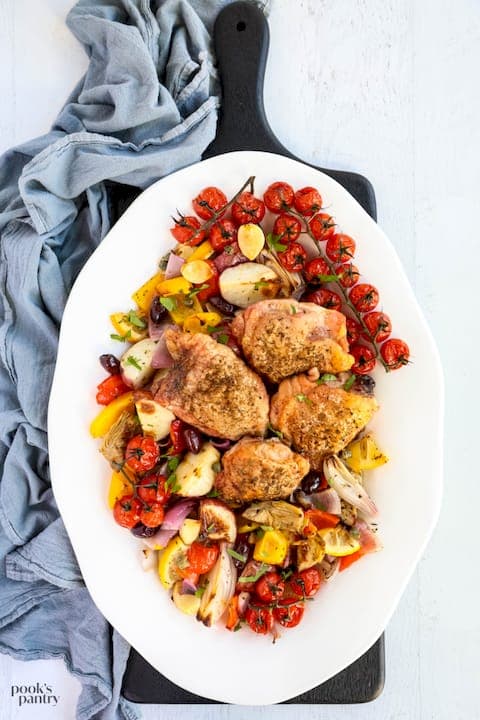
Mediterranean cuisine fundamentals are defined by three non-negotiable pillars: quality ingredients, restrained technique, and a deep respect for balance between fat, acid, and freshness. This is not a rigid culinary school. It is a living philosophy shared across the coastlines of Southern Europe, North Africa, and the Middle East, built on pantry staples like extra-virgin olive oil, chickpeas, lentils, bulgur, and seasonal vegetables. The British Heart Foundation recognises the Mediterranean diet as a long-term cultural eating pattern rather than a restrictive regime. Master these foundations and you gain the ability to cook thousands of satisfying, nourishing meals without ever following a strict recipe.
What are the essential Mediterranean cuisine fundamentals in your pantry?
The backbone of Mediterranean cooking is a well-stocked pantry. Core staples include extra-virgin olive oil, dried chickpeas, lentils, brown rice, bulgur wheat, canned tomatoes, garlic, onions, and dried herbs such as oregano and thyme. These ingredients are not decorative. They are the building blocks from which every meal is assembled.
Fresh produce sits alongside the pantry in equal importance. Seasonal vegetables, citrus fruit, and fresh herbs like flat-leaf parsley, basil, and mint add brightness and texture that dried goods cannot replicate. The principle here is simple: buy what is in season locally, and it will taste better than anything imported out of season.
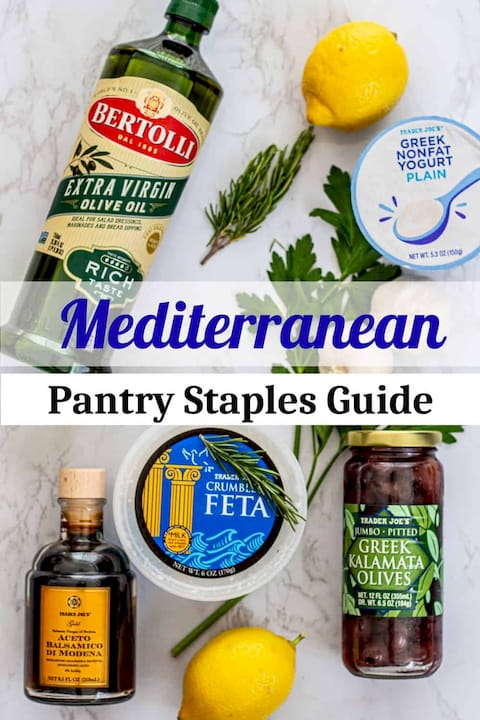
Ingredient quality matters more in Mediterranean cooking than in almost any other culinary tradition. A dish of grilled courgette with olive oil, lemon, and sea salt has nowhere to hide. Every element must earn its place. This is why sourcing good extra-virgin olive oil is the single most impactful change a home cook can make.
| Pantry staple | Category | Primary use |
|---|---|---|
| Extra-virgin olive oil | Fat | Cooking, dressing, finishing |
| Chickpeas and lentils | Legumes | Soups, stews, salads |
| Brown rice and bulgur | Grains | Base for bowls and sides |
| Canned tomatoes | Preserved produce | Sauces, braises, soups |
| Garlic and onions | Aromatics | Flavour foundation for most dishes |
| Dried oregano and thyme | Herbs | Seasoning throughout cooking |
| Lemons | Acid | Finishing brightener and dressing |
Pro Tip: Stock these seven categories and you can assemble a complete Mediterranean meal in 30–40 minutes without a recipe. The pantry does the planning for you.
Which fundamental cooking techniques create authentic Mediterranean flavours?
Mediterranean cooking techniques are defined by simplicity and control. Sautéing, roasting, gentle simmering, and high-heat grilling are the four methods that appear across every regional tradition. None of them require specialist equipment. All of them reward attention and patience.
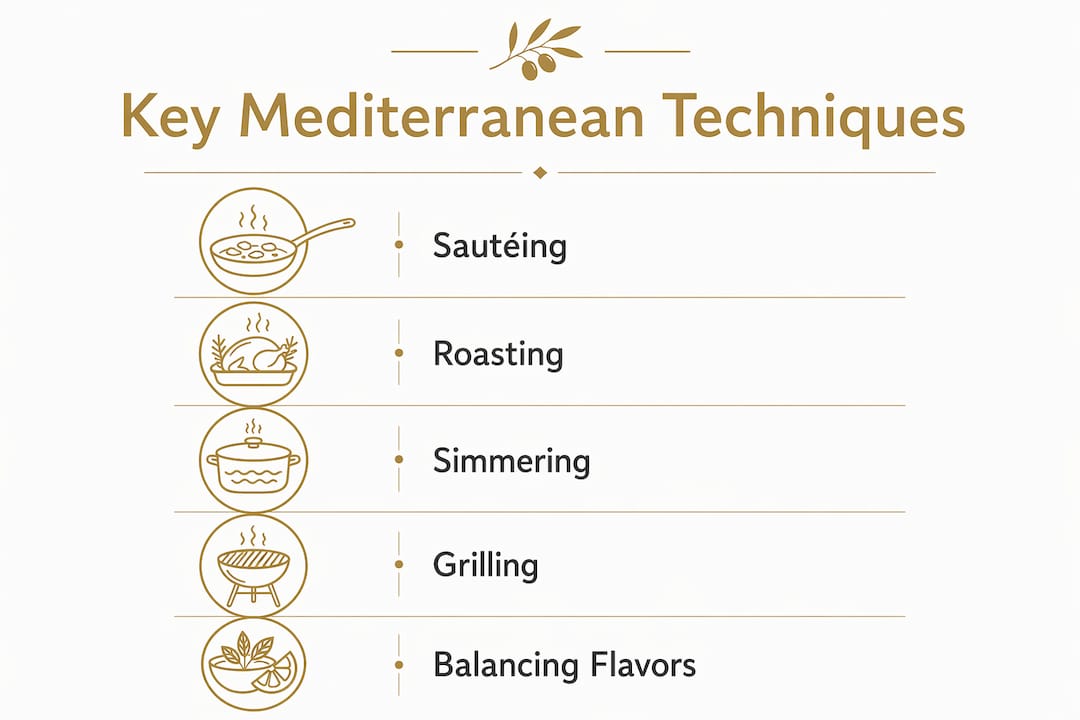
The most important structural principle is the three-part balance: olive oil for richness, an acid such as lemon juice or red wine vinegar for brightness, and fresh herbs for lift. This trio appears in Greek salads, Spanish sofrito, Italian bruschetta, and Moroccan chermoula. The proportions shift by dish, but the logic never changes.
Seasoning is not a finishing step. Layering salt, acid, and herbs through the cooking process builds depth that a pinch of salt at the table cannot replicate. Salt your onions early so they release their natural sugars. Add dried herbs to hot oil before the vegetables go in. Finish with fresh herbs and a squeeze of lemon only after the heat is off.
Do’s and don’ts for Mediterranean technique:
-
Do use olive oil as your primary cooking fat from the very start.
-
Do salt aromatics early to draw out moisture and sweetness.
-
Do add lemon juice off the heat to preserve its brightness.
-
Do roast vegetables at high heat (200°C or above) for caramelisation.
-
Don’t substitute butter or heavy cream. They shift the flavour profile entirely.
-
Don’t add all your herbs at the beginning. Dried herbs go in early; fresh herbs go in last.
-
Don’t skip the acid. A dish that tastes flat almost always needs lemon, not more salt.
-
Don’t overcrowd the pan when sautéing. Crowding steams rather than colours.
Pro Tip: Lemon juice as a brightener works best added in the final 30 seconds off the heat. It cuts through fat and richness without making the dish taste sour.
How does the Mediterranean diet basics shape meal structure?
The Mediterranean diet is a sustainable culinary philosophy, not a calorie-counting system. Its structure places plant-based foods at the centre of every meal, with lean proteins such as fish, legumes, and poultry appearing several times a week, and red meat reserved for occasional use. Dairy, primarily in the form of yoghurt and aged cheese, appears in modest portions.
Replacing butter or seed oils with extra-virgin olive oil is the single most impactful structural change a home cook can make. It shifts the fat profile of every dish immediately. The flavour benefit is equally significant: olive oil adds a grassy, peppery note that neutral oils cannot provide.
The table below contrasts Mediterranean meal structure with a typical Western dietary pattern to show where the differences are most pronounced.
| Meal element | Mediterranean structure | Typical Western structure |
|---|---|---|
| Primary fat | Extra-virgin olive oil | Butter or seed oils |
| Protein source | Legumes, fish, poultry | Red meat, processed meats |
| Carbohydrate | Whole grains, legumes | Refined bread, pasta, rice |
| Vegetables | Half the plate or more | Side dish or garnish |
| Dairy | Yoghurt, aged cheese (small portions) | Milk, cheese, cream (large portions) |
| Meal rhythm | Shared, unhurried, seasonal | Fast, individual, convenience-led |
The cultural dimension of this eating pattern matters as much as the nutritional one. Meals are shared, unhurried, and built around what is fresh and local. That rhythm is itself part of the health benefit.
How can home cooks apply these fundamentals every day?
Mediterranean cooking is a pantry-based framework that enables countless meal variations without relying on strict recipes. The practical implication is significant: once you understand the system, you stop needing to follow instructions and start cooking intuitively.
A reliable meal-building framework for everyday use works as follows:
-
Choose your fat. Start with extra-virgin olive oil in a warm pan. Add garlic or onion and let the aromatics soften and become fragrant.
-
Add your base. Introduce a cooked grain or legume, such as bulgur, brown rice, or chickpeas. These provide substance and absorb the flavours around them.
-
Build with vegetables. Add whatever seasonal produce you have. Roasted peppers, wilted spinach, grilled courgette, and cherry tomatoes all work within this structure.
-
Finish with protein. Grilled fish, poached eggs, or pan-fried halloumi sit naturally on top without dominating the dish.
-
Balance and brighten. Taste the dish. Add a squeeze of lemon, a handful of fresh herbs, and a final drizzle of olive oil before serving.
This five-step process produces a complete, nourishing meal in under 40 minutes. It also adapts to whatever is in your fridge. A tapas-style approach to meal building, where several small components are assembled rather than one central dish cooked, is a natural extension of this framework.
Pro Tip: Organise your pantry so that grains and legumes are visible and accessible. When the base ingredients are in plain sight, you are far more likely to reach for them on a busy weeknight.
What regional variations exist within Mediterranean cuisine fundamentals?
The Mediterranean basin spans more than 20 countries, and the culinary traditions within it are genuinely diverse. Yet the shared fundamentals appear in every regional style, expressed through different local ingredients and spice combinations.
Key regional patterns include:
-
Italian coastal cooking centres on simplicity: pasta dressed with olive oil, garlic, and bottarga; grilled fish with capers and lemon; slow-cooked white beans with sage. The restraint is the point.
-
Greek cuisine uses high-heat grilling and controlled emulsification to build layers of flavour. Lemon, oregano, and olive oil appear in almost every dish. Slow-roasted lamb and whole grilled fish are the signature expressions of the technique.
-
Spanish gastronomy relies on sofrito, a slow-cooked base of tomato, onion, and olive oil, as the foundation for rice dishes, stews, and braised meats. The diversity of Spanish culinary traditions across regions like Andalusia, Valencia, and the Basque Country shows how one set of fundamentals can produce radically different results.
-
North African coastal cuisines introduce warm spices such as cumin, coriander, and smoked paprika alongside preserved lemons and harissa. The fundamentals remain: olive oil, legumes, grains, and fresh herbs. The spice palette shifts the character entirely.
Climate and agriculture shape these differences more than cultural preference. Saffron grows in Spain; sumac grows in Lebanon; capers grow wild across the Greek islands. Each region cooks with what its land produces, which is itself a Mediterranean principle. For a deeper look at how these traditions intersect, the private dining guide for Granada explores the culinary crossroads of Southern Europe and North Africa in practical detail.
Key takeaways
Mediterranean cuisine fundamentals rest on a disciplined pantry, a three-part flavour balance of fat, acid, and herbs, and a plant-forward meal structure that adapts to any season or region.
| Point | Details |
|---|---|
| Build a core pantry | Stock olive oil, legumes, grains, canned tomatoes, garlic, and dried herbs to enable fast, flexible meal assembly. |
| Master the three-part balance | Every dish needs olive oil richness, acid brightness, and fresh herb lift to taste authentically Mediterranean. |
| Layer seasoning through cooking | Salt aromatics early, add dried herbs to hot oil, and finish with fresh herbs and lemon off the heat. |
| Use the meal-building framework | Fat plus grain or legume plus vegetable plus protein produces a complete meal in under 40 minutes. |
| Swap to extra-virgin olive oil | Replacing butter or seed oils with olive oil is the single most impactful change for both flavour and nutrition. |
What I have learned after 13 years cooking Mediterranean food
The most common mistake I see home cooks make is treating Mediterranean recipes as a list of instructions rather than a set of principles. They follow the quantities exactly, then wonder why the dish tastes flat. The answer is almost always that they added the lemon at the wrong moment, or salted the pan at the end instead of the beginning.
Authenticity in this cuisine does not come from obscure ingredients or elaborate technique. It comes from restraint and timing. A perfectly grilled piece of fish with good olive oil, sea salt, and a wedge of lemon is more authentically Mediterranean than a complicated dish with twenty components. The simplicity is the skill.
What I find genuinely exciting about teaching these fundamentals is watching home cooks realise they already have most of what they need. The pantry shift is small. The technique shift is modest. The result, though, is a completely different relationship with food: one that is seasonal, intuitive, and deeply satisfying. Stop following recipes and start understanding the logic behind them. That is where the real confidence begins.
— Joseph
Private dining experiences rooted in Mediterranean mastery
Thesensorychef brings over 13 years of professional culinary experience to bespoke private dining events across Granada and Andalusia, with Mediterranean cuisine at the heart of every menu.

Whether you are hosting a celebration, a family gathering, or an intimate anniversary dinner, each experience is built around the same fundamentals explored in this guide: quality ingredients, considered technique, and flavour that speaks for itself. Joseph crafts every menu personally, accommodating dietary requirements and tailoring each dish to the occasion. For a genuinely memorable introduction to Mediterranean gastronomy at its finest, explore the signature dining experience or browse the full range of private dining options available across the region.
FAQ
What are the core Mediterranean cuisine fundamentals?
Mediterranean cuisine fundamentals are defined by a quality pantry of extra-virgin olive oil, legumes, whole grains, and seasonal vegetables, combined with simple techniques such as sautéing, roasting, and simmering, balanced with acid and fresh herbs.
How do I start cooking Mediterranean food at home?
Stock your pantry with olive oil, chickpeas, lentils, bulgur, canned tomatoes, garlic, and dried herbs, then use the five-step framework of fat, base, vegetables, protein, and acid to assemble meals without a recipe.
What makes extra-virgin olive oil so central to this cuisine?
Extra-virgin olive oil replaces butter and seed oils as the primary cooking fat, adding a distinctive flavour and aligning the dish with the nutritional profile of the Mediterranean diet from the very first step.
How does seasoning work differently in Mediterranean cooking?
Seasoning is layered through the cooking process rather than added only at the end. Salt aromatics early, introduce dried herbs to hot oil, and finish with fresh herbs and lemon juice off the heat for complex, balanced flavour.
Is the Mediterranean diet the same as Mediterranean cuisine?
The Mediterranean diet is a long-term cultural eating pattern that underpins the cuisine. The cooking style reflects its principles, placing plant-based foods, healthy fats, and lean proteins at the centre of every meal.