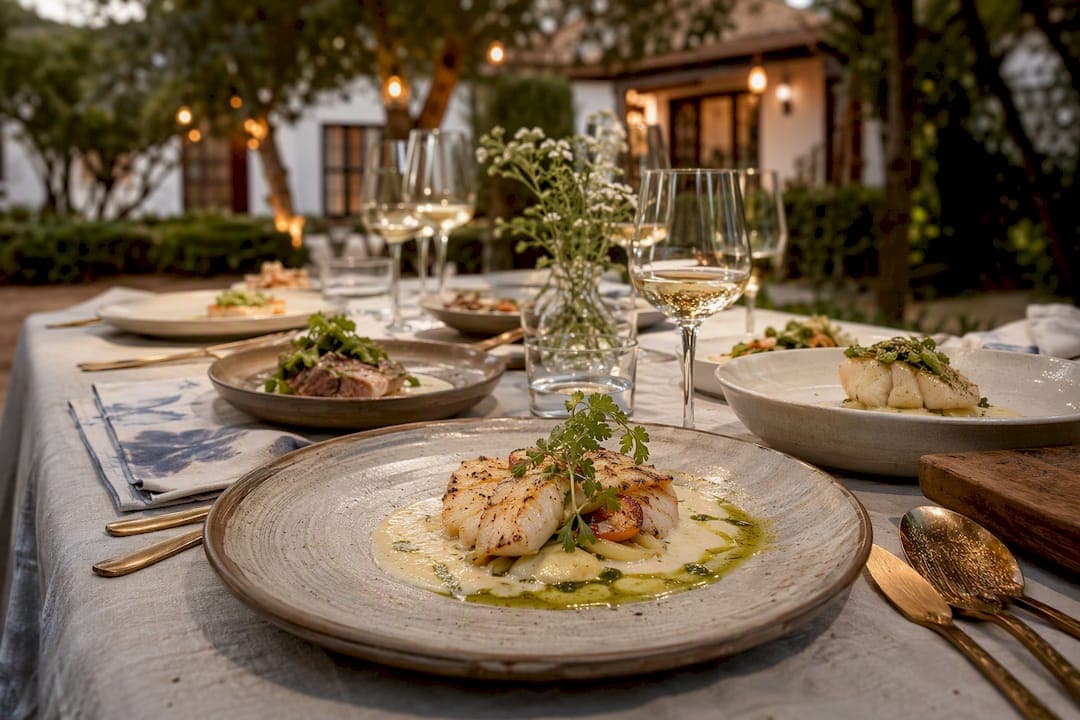
Michelin-inspired private-chef cooking means restaurant-quality tasting menus, built around the sequencing, technique and sourcing standards of top kitchens, delivered inside your own villa rather than at a table booked months in advance. Guests should expect a handful of carefully paced courses, precise plating, ingredients bought that same morning, and a level of personal attention no dining room can offer because the chef is cooking for you alone.
Joseph Warner, founder of The Sensory Chef, brings more than 13 years of professional kitchens and French gastronomy training to this format, adapted for villas across Granada, Almuñécar, the Costa Tropical and Andalucía.
- Sequenced courses that build in flavour and intensity, not just a series of separate dishes
- Refined plating and finishing touches usually reserved for professional dining rooms
- Fresh, market-bought ingredients rather than pre-packaged catering trays
- A menu shaped around your dietary needs, your occasion and your kitchen
Key Takeaways
Michelin-inspired private-chef cooking succeeds when market-fresh sourcing, deliberate course sequencing and clear logistics are agreed with your chef well before the event date.
| Point | Details |
|---|---|
| Definition | Restaurant-quality tasting menus, adapted for private service, built on sourcing, sequencing and sensory finishing. |
| Menu format | Expect four to eight courses with fifteen to twenty-five minutes of pacing between each. |
| Pricing structure | Chef fee and groceries are billed separately, with per-person cost falling as guest count rises. |
| Booking lead time | Allow two to six weeks for standard dates, three to six months for peak season or milestone events. |
| The Sensory Chef | Joseph Warner brings French training and a sensory approach to villa tasting menus across Granada and Andalucía. |
Table of Contents
- What makes a tasting menu Michelin-inspired in a private setting?
- What should guests expect from menu format and service?
- Logistics, pricing and billing hosts must confirm before booking
- How to book and brief your chef: consultation checklist
- Sample menus and the sensory approach
- Host day-of checklist
- Why the sensory method shapes every menu I design
- Book a Michelin-inspired tasting menu for your villa
- Sources
- FAQ
What makes a tasting menu Michelin-inspired in a private setting?
The hallmarks are the same ones you'd recognise from a starred dining room: disciplined sourcing, deliberate sequencing, and finishing work that respects texture and temperature. What changes is scale. A chef cooking for eight guests in a villa kitchen doesn't need a brigade of six; they need a tight plan and a kitchen that can support it.
Sourcing comes first; this advantage of fresh, market-bought ingredients is well explained in Why Order from Local Chefs: Real Benefits for Food Lovers. Buying fish, vegetables and herbs the same morning, rather than days ahead, gives a private chef an advantage even large restaurants struggle to match, because there's no delivery lag between market and plate. Course sequencing matters just as much: a well-built tasting menu moves from light and acidic to rich and savoury, with a palate-resetting course somewhere in the middle. Technical finishing, such as a quick glaze under the broiler or a sauce mounted at the very last second, has to happen close to service, which is why a proper walk-through of the villa kitchen matters before the night itself.
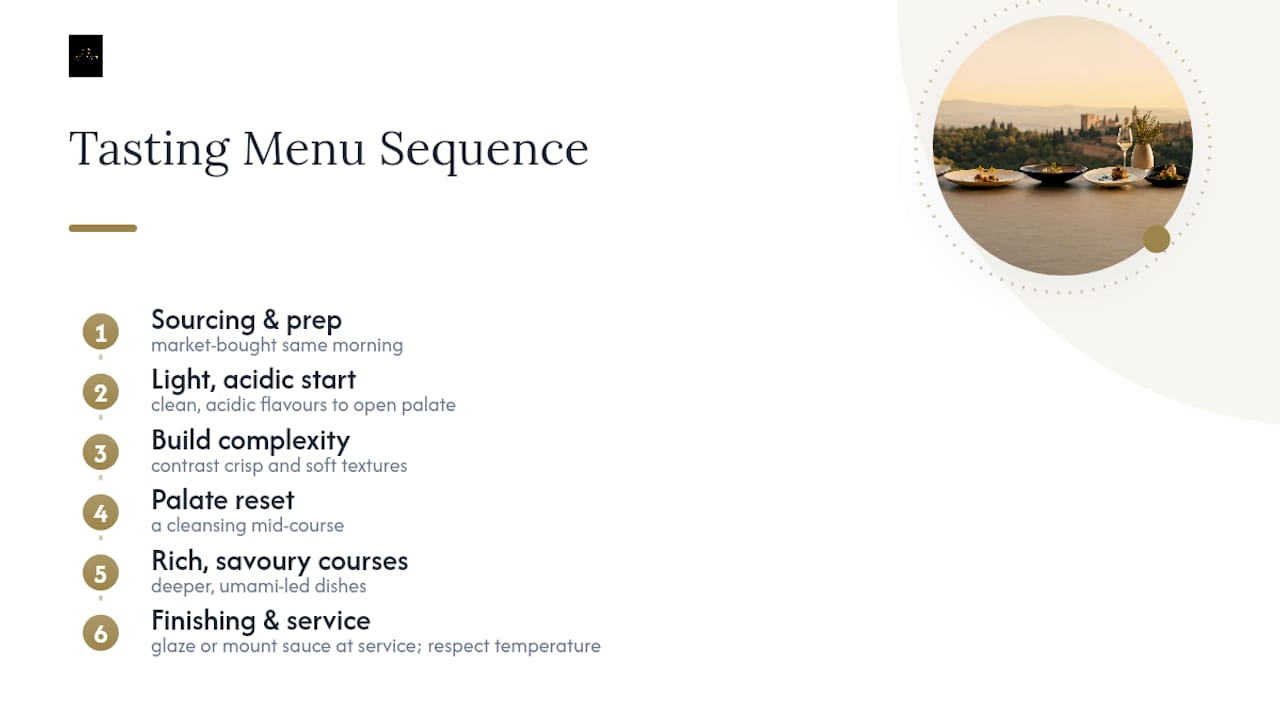
Sensory layering is where the sensory approach at the heart of The Sensory Chef's work comes through. Aroma released as a dish arrives, contrast between a crisp element and a soft one, temperature differences between plate and garnish. All of it is built deliberately, not left to chance.
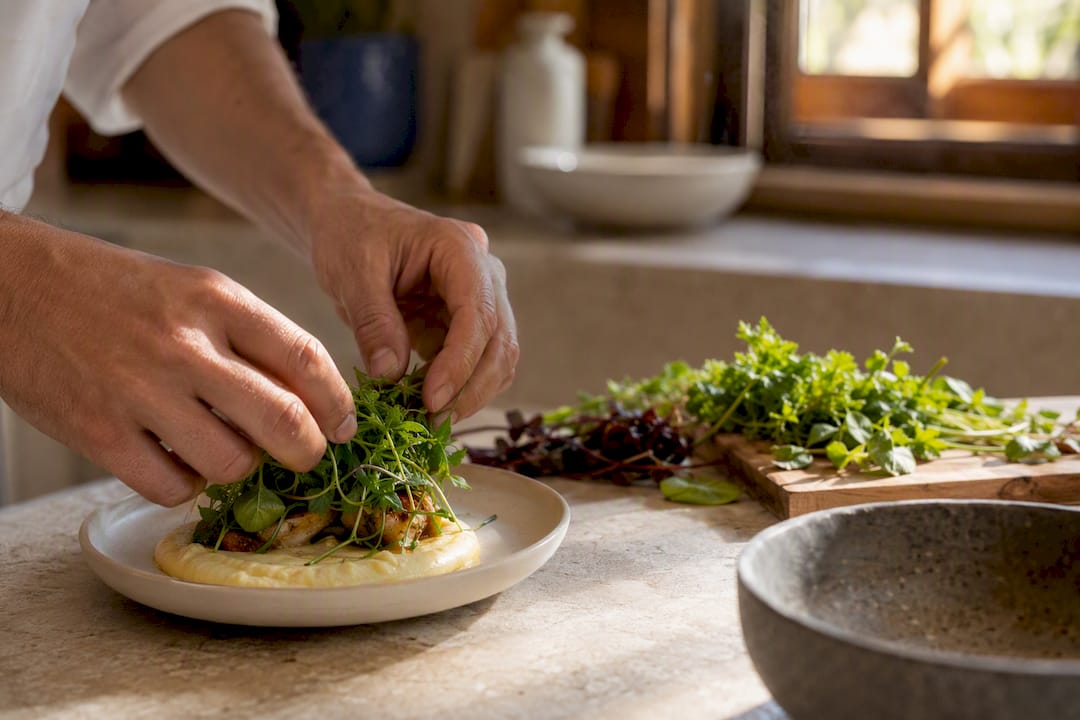
Pro Tip: Ask your chef to talk you through one course as it's served. A thirty-second explanation of technique or provenance adds theatre without slowing the evening down.
What should guests expect from menu format and service?
A private tasting menu isn't one fixed formula. Course count, pacing and staffing all shift depending on the occasion, the guest list and how formal you want the evening to feel.
- Course count and pacing. Most Michelin-inspired villa menus run four to eight courses, with fifteen to twenty-five minutes between each to let flavours settle and conversation breathe. A romantic dinner for two might run tighter and more intimate; a birthday celebration for twelve often stretches the evening deliberately.
- Service style. A chef-only booking suits smaller, informal groups where the host is happy to clear plates. Add a server for anything above six guests, or where you want the table left entirely to your conversation. Fully staffed service, with a server and sometimes a second pair of hands in the kitchen, suits larger celebrations or when courses need plating right at the table.
- Theatre without disruption. A short note on where the fish was landed, or a sauce finished tableside, creates a sense of occasion without turning your living room into a restaurant floor.
- Tasting menu versus family-style. If you want the drama of a paced narrative, choose the tasting format. If your group is boisterous and mixed in age, an elevated family-style spread, generous Mediterranean and French dishes, shared at the table, often suit the evening better.
Logistics, pricing and billing hosts must confirm before booking
Private-chef pricing almost always separates into two parts: a flat chef fee for the labour and groceries billed separately. Per-person cost tends to fall as the group grows, since the chef fee is spread across more plates while the grocery bill scales more gently.
Provisioning can work three ways: ingredients billed strictly at cost, cost plus a small margin, or a fixed food budget agreed in advance. Ask for itemised receipts either way. Villa guidance consistently recommends separating the chef fee from the food budget and watching for provisioning margins, which commonly sit around 10 to 20% when a chef sources and delivers the shopping themselves.
Deposits of a substantial portion are common practice across private-chef bookings, with the balance settled after service.
Confirm these details before the date is locked in:
- Deposit amount and payment timeline
- Whether groceries are billed at cost, at cost plus margin, or as a fixed budget
- Kitchen walk-through, including oven, hob and refrigeration capacity
- Arrival window (typically 90 to 120 minutes before service for prep) and expected finish time
- Who handles cleanup, and whether that's included in the fee
Peak season in Andalucía books out early, so lead time matters as much as price. Treat any cost figure quoted online as illustrative only; your actual quote depends on guest count, menu complexity and the season you're booking in.
How to book and brief your chef: consultation checklist
Booking a Michelin-inspired tasting menu starts with an enquiry, moves through a menu consultation, and ends with a written confirmation both sides can rely on.
- Send the essentials first. Date, guest count, dietary needs, formality level, and any must-have ingredients or dishes you're hoping to see on the table.
- Have the menu consultation. This is where the host's vision meets the chef's sourcing and technical knowledge, and where allergies, swaps and course structure get finalised together rather than picked from a fixed list.
- Share your kitchen before confirming. A few photos of the hob, oven and workspace, plus any villa rental restrictions on cooking, let the chef plan properly rather than improvise on arrival.
- Book with lead time in mind. Two to six weeks suits a standard weekend booking; a milestone celebration or a peak-season date benefits from three to six months' notice.
Sample menus and the sensory approach
A seasonal fish tasting menu might open with a citrus-cured local catch, its acidity waking the palate, before moving to a warm course where aroma from a herb butter reaches the table before the plate does. Texture contrast, something crisp against something silken, runs through each course deliberately.
A plant-forward menu leans on the same logic: savoury courses building in richness before a lighter, almost dessert-like vegetable course resets the palate ahead of something sweet. Where a guest has an allergy, the substitution keeps the course's intended contrast intact rather than simply removing an ingredient.
- Seasonal fish menu: cured catch, aromatic warm course, textural dessert
- Plant-forward menu: layered vegetable courses building toward a sweet finish
- Allergy adaptations built around preserving contrast, not just removing risk
- Full seasonal examples are available on The Sensory Chef's Granada menu page
Host day-of checklist
Confirm these before your chef and any support staff arrive:
- Clear kitchen access, parking and any gate or entry codes shared in advance
- A clean surface reserved for plating, plus fridge space for anything delivered ahead of time
- A spot for wine storage and any ingredients you're providing yourself
- One named contact person for the evening, plus a rough service and wrap-up timeline
Further detail on setting up your space properly is covered in The Sensory Chef's guide to hosting at home.
Why the sensory method shapes every menu I design
I built my sensory approach because a plate should tell you something before the first bite: through aroma, through the sound of a crisp element breaking, through how a temperature contrast lands on the tongue. That matters more in a villa than in any dining room, because there's no ambient noise or unfamiliar setting to do the emotional work for you.
When I design a tasting menu for a villa, I'm thinking about your kitchen's limits, your guests' dietary needs, and the story I want the courses to tell across an evening, not a fixed catalogue of dishes. If you have a particular celebration in mind, I'd genuinely like to hear about it before I write a single course. You can read more about my background on the chef profile page.
— Joseph Warner
Book a Michelin-inspired tasting menu for your villa
If a paced, restaurant-quality menu sounds right for your celebration, romantic dinner or family gathering, The Sensory Chef designs each one around your guests rather than pulling from a fixed catalogue. Every booking starts with a proper consultation covering course structure, dietary accommodation and sourcing, with billing kept transparent from the first quote to the final invoice.
Menus range from a seasonal fish tasting sequence to a French-leaning celebration dinner or a classic paella night, all built for villa kitchens across Granada and Andalucía. Guests with allergies or dietary restrictions are accommodated without losing the intent behind each course, detailed further on The Sensory Chef's dietary needs page. To check availability for your date and start the menu consultation, visit the Private Dining Experience page or enquire directly through Joseph Warner's booking page.
Sources
- The Case for Hiring a Private Chef on Vacation | Travel Magazine
- How Villa Private Chefs Work | Villas For Kings
- Hire a private chef: bespoke culinary events guide | The Prestige Edit
FAQ
What does Michelin-inspired mean for a private chef?
It means the chef applies restaurant-level sourcing, sequencing and plating standards to a smaller, private tasting menu rather than a full dining-room service.
How many courses are in a typical private tasting menu?
Most villa tasting menus run between four and eight courses, paced fifteen to twenty-five minutes apart depending on the occasion.
How is a private chef's fee structured?
Pricing typically separates into a flat chef fee for labour and a grocery cost, either billed at cost or as an agreed fixed food budget.
How far in advance should I book?
Two to six weeks suits most standard dates, while peak-season celebrations benefit from three to six months' notice.
Can Michelin-inspired menus accommodate allergies?
Yes. The Sensory Chef adapts each course to dietary needs during the menu consultation, preserving the intended flavour and texture contrasts rather than simply omitting ingredients.