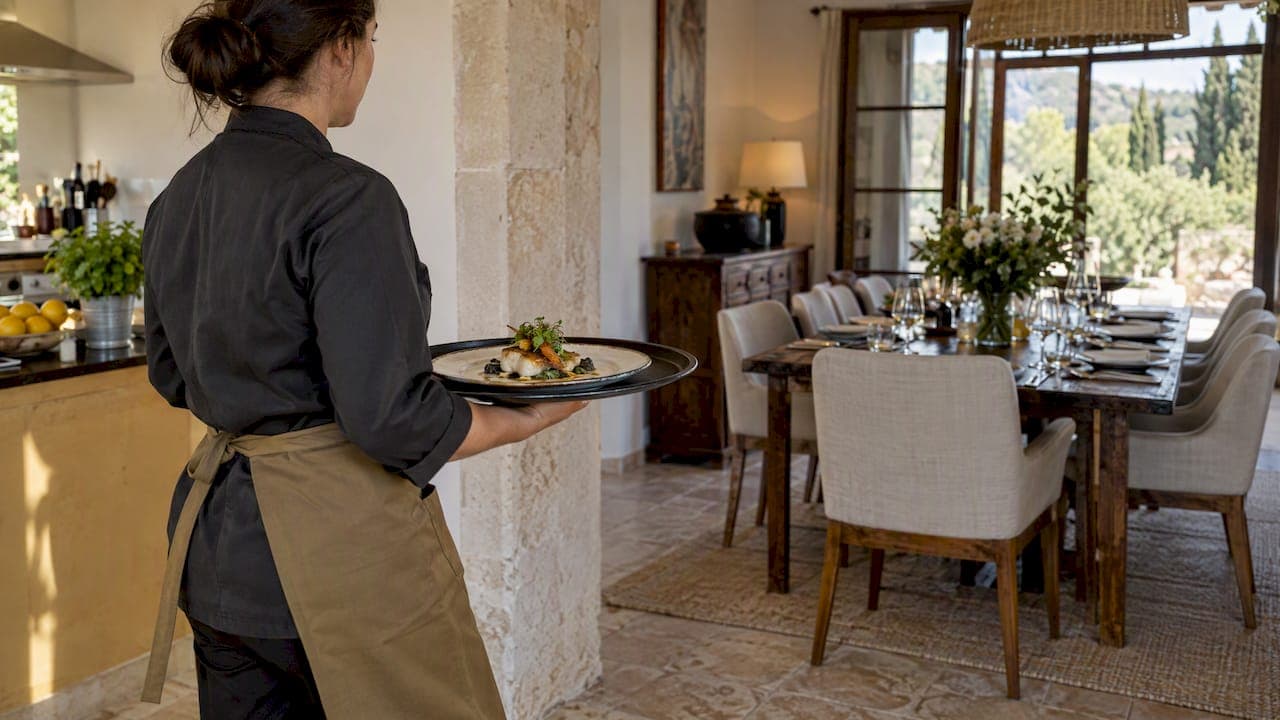
A private dinner typically runs between 75 minutes for a brisk three-course menu and three to four hours for an extended tasting experience, with the industry benchmark of 15 to 25 minutes per course shaping most of that total. The number of courses, the style of service and the size of your guest list all push that figure up or down. A seated dinner with synchronised delivery between courses takes noticeably longer than an informal, help-yourself gathering, even with the same menu.
TL;DR:
- Three courses take 60 to 90 minutes, five take two to two and a half hours, and seven typically take three to four hours.
- Assign one person to track timing, brief the team for ten minutes before service, and keep a quiet buffer for delays on longer courses.
- For dietary changes, prepare separate plates earlier and add buffer only to the affected course, so guests with different meals can still be served together.
- Self hosting suits casual three course dinners, but five or more courses, synchronized plating, or a villa kitchen make timing harder to manage alone.
Table of Contents
- Common course formats and the timing each implies
- How does a private dinner move through its service phases?
- How do you plan and control timings for your private dinner?
- Sample timelines you can copy for your evening
- Chef notes: practical tactics that save time and improve pacing
- Typical durations for each menu we offer
- Adjusting timing for dietary requirements and personalised menus
- Weaving sensory pacing into the service itself
- Timing considerations for villa settings and exclusive events
- Coordinating kitchen and service communication during the evening
- When is it worth hiring a private chef instead of self-hosting?
- How we help you hit your timing goals
- FAQ
- Sources
Common course formats and the timing each implies
The format you choose sets the pace of the whole evening before a single plate reaches the table. A three-course menu (starter, main, dessert) is the simplest structure and the quickest to deliver, while a five course menu adds a soup, salad or light fish course between starter and main. A seven course tasting menu introduces an amuse bouche, a pre dessert and often a cheese or palate cleanser, which adds both kitchen prep time and natural pauses for guests to enjoy each course without feeling rushed.
Each addition changes the rhythm of the evening, not just its length. An amuse bouche or pre dessert course tends to run for a shorter time, because it is designed as a light transition rather than a full course.
- Three courses: around 60 to 90 minutes, fitting comfortably within an hour in many settings according to this meal courses guide.
- Five courses: roughly two to two and a half hours, including a short aperitif and a steadier pace between dishes, a format we cover in more depth in why five courses work for villa dinners.
- Seven courses: typically three to four hours, with a six to eight-course tasting menu running a few hours in total once wine pairings and conversation are factored in.
How does a private dinner move through its service phases?
Breaking an evening into phases makes the overall timing far easier to plan and communicate. A private dinner generally moves through arrival and welcome, aperitif, amuse bouche, the main sequence of courses, pre dessert, dessert, mignardises and finally the bill or farewell.
- Arrival and welcome: guests are greeted, coats taken, and seated within the first few minutes.
- Aperitif and amuse bouche: a light drink and a small opening bite settle the table before the first course.
- Main course sequence: each course follows the 15 to 25 minute benchmark, with plates cleared and the next course delivered on a steady rhythm.
- Pre dessert, dessert and mignardises: a lighter closing sequence that slows the pace deliberately.
- Bill or farewell: coffee, a final word with the chef, and a relaxed close to the evening.
Benchmark: industry guidance targets 15 to 25 minutes per course for tasting menus, which is the figure that determines whether a seven course evening finishes in three hours or stretches towards four.
Within that window, the same source notes that guests are typically greeted within 60 seconds, handed a menu within 90 seconds, and offered water or an aperitif within three minutes of being seated. This synchronised rhythm, what French kitchens call la depose synchronisée, means every guest at the table receives their plate within moments of each other rather than watching others eat while they wait.
How do you plan and control timings for your private dinner?
Good timing is decided long before the first course leaves the kitchen. The groundwork happens in three distinct windows: before the event, on the day itself, and during service.
- Send timing details in the confirmation email: include the arrival window, dress code and a reminder to confirm any dietary requirements or allergies in advance.
- Confirm suppliers and deliveries early: fresh ingredients and any specialist items should be locked in well before the cooking begins.
- Complete mise en place and sign it off: every component that can be prepared ahead, sauces, garnishes, doughs, should be ready before guests arrive.
- Hold a short pre shift brief: a focused ten-minute briefing covering the running order, pace and buffer rules keeps everyone aligned before service starts.
- Designate a timing lead for the evening: one person tracks the clock and signals when the next course should move.
- Build in a buffer: a small, unseen cushion on longer lead courses absorbs minor delays without guests noticing.
- Follow a recovery protocol if something slips: a clear, calm adjustment (serving the next course slightly sooner, or offering a small extra bite) keeps the evening feeling unhurried even when the kitchen is catching up.
Pro Tip: Keep the buffer invisible to guests: a few quiet minutes held in reserve on your longest course does more for a relaxed evening than any amount of rushing later.
Sample timelines you can copy for your evening
A written timeline, even a rough one, is the simplest way to keep a private dinner on track. These three examples cover the most common formats hosts ask for.
- Quick three course dinner: guests arrive at 7:00pm, welcome drink shortly after, starter approximately 15–20 minutes later, main served about 25 minutes after starter, dessert and coffee to follow, with the entire meal around 90 minutes.
- Relaxed five course dinner: arrival 7:00pm, aperitif and amuse bouche in the opening 20 minutes, starter followed by mid-meal courses paced steadily, with dessert and closing around two to two and a half hours after start.
- Full seven course tasting menu: arrival 7:00pm, initial courses in the first hour, a mid-meal pause for palate rest or wine change, remaining courses and dessert extending the evening by several hours overall.
Chef notes: practical tactics that save time and improve pacing
With more than 13 years of professional experience and training in traditional French gastronomy, Joseph Warner builds every menu around a sensory approach that considers flavour, texture, aroma and presentation together, which naturally shapes how each course is timed and plated.
- Prepare components that hold well in advance: sauces, terrines and desserts are finished ahead so only final plating happens under time pressure.
- Stage hot plates in small batches: this avoids a bottleneck where every plate needs the stove at once.
- Balance menus so no single course demands last minute attention from every dish on the table: one hero dish per course, supported by elements already prepared.
Pro Tip: A curated five course menu, cooked and served in a private villa, can comfortably run around two hours when mise en place is complete before the first guest arrives.
For more on how plating choices affect pacing, see our presentation tips guide.
Typical durations for each menu we offer
Menu length and style both affect how long an evening runs, so it helps to know roughly what to expect from each format. A Tapas Selection moves quickly, usually under two hours, since small plates are designed for a relaxed, grazing pace rather than a formal sequence. A Paella Feast typically runs around two hours, centred on the communal main dish with a simpler starter and dessert either side.
French Elegance and Mediterranean Flair, both built as multi course menus, generally take two to two and a half hours, following the same pacing logic as a five course dinner. Our more elaborate Celebration Menu and Signature Dining Experience lean towards three hours or more, reflecting their longer course sequences and the additional ceremony suited to anniversaries, weddings and milestone birthdays.

These are starting points rather than fixed rules. Guest count, villa layout and whether you add a cooking demonstration or wine pairing will all nudge the total time. Full details and current pricing for each format sit on our services page and menus page, which is the best place to compare formats before booking.
Adjusting timing for dietary requirements and personalised menus
Dietary adjustments rarely change the overall length of an evening, but they do change how the kitchen schedules preparation. A gluten free or dairy free course often needs to be cooked separately rather than adapted at the last moment, which means it is usually finished slightly earlier and held, rather than fired alongside the main run of plates.
When several guests have different requirements, we build a small amount of extra buffer into the relevant course rather than into the whole evening, so the table is served together regardless of what is on each plate. Personalised menus, built around a guest's preferences rather than restrictions, follow the same principle: any course that departs from the standard sequence gets its own prep slot earlier in the day so it does not compete for stove space during peak service.
The result for guests is simple: everyone eats at the same pace, and no one notices which plate took extra planning. More detail on how we handle specific requirements sits on our dietary needs page.
Weaving sensory pacing into the service itself
Flavour, texture, aroma and presentation are not just plating decisions, they shape how long a course should sit in front of a guest before the next one arrives. A delicate, aromatic starter benefits from a slightly longer pause so its scent and first impression register before cutlery moves. A rich, textured main can follow more briskly, since its weight on the palate signals the meal is progressing.

Presentation plays a quieter role in pacing too. A course plated with visual drama tends to hold attention a little longer, which gives the kitchen a natural window to prepare the next dish without feeling rushed. Matching the rhythm of service to these sensory cues, rather than running every course on an identical clock, is part of what keeps a tasting menu feeling considered rather than mechanical.
Timing considerations for villa settings and exclusive events
Private villa dinners carry logistics that a restaurant kitchen never has to think about: no pass, no walk in fridge next door, and often a kitchen some distance from the dining table. This changes how much buffer time to build in. A villa with an outdoor dining area, for instance, needs extra minutes allowed for plates travelling further, especially once the sun sets and lighting becomes a factor for service staff.
Exclusive events such as weddings, anniversaries or milestone celebrations also tend to include speeches, toasts or a first dance, none of which the kitchen controls. Building a flexible pause into the timeline around these moments, rather than fighting against them, keeps the meal feeling unhurried. For villa hosts planning a tasting menu specifically, our guide on hiring a private chef for a tasting menu at home covers the staffing and layout questions worth asking before the night.
Coordinating kitchen and service communication during the evening
Consistent timing depends on clear, quiet communication between the kitchen and whoever is serving at the table. A simple system, a verbal cue or a discreet signal when a course is five minutes from ready, lets the floor know when to clear and when to hold.
One person should hold responsibility for watching the clock and relaying that information both ways: letting the kitchen know when the table is ready for the next course, and letting service know when a dish needs a moment longer. This single point of contact avoids the confusion of multiple people guessing at timing independently, and it is one of the quiet reasons a seven course evening can run smoothly from first course to last without a single awkward gap.
When is it worth hiring a private chef instead of self-hosting?
Self-hosting works well for a casual three course dinner among friends, where a short delay barely registers. Once you move to five or more courses, synchronised plating or a villa setting with guests you want fully present for, timing reliability becomes harder to manage alone, and that is exactly where booking a private chef removes the guesswork.
— Joseph Warner
How we help you hit your timing goals
We build every private dinner around a clear running order, from pre-shift briefing to the final course, so you can host without watching the clock. Whether you want a relaxed small plates menu or a full multi-course dining experience, bespoke menus and on-the-night coordination are designed to keep courses moving at the right pace for your guests.
Browse our Private Dining Experience to see formats and request a proposal for your villa or celebration.
FAQ
What are the four courses in a restaurant meal?
A four course restaurant meal typically includes a starter, a soup or fish course, a main, and a dessert. Some kitchens swap the soup course for a salad, but the structure stays close to this four part sequence.
What are the five courses in a restaurant meal?
A five course meal generally adds a light course, often a soup, salad or small fish dish, between the starter and main of a standard three course structure. This extra step is also what gives a five course private dinner its slower, more considered pace compared to a quick three course evening.
What time is considered dinner for a private event?
Dinner service for a private event usually begins around 7:00pm, with most hosts choosing an early evening start to allow a full multi course menu to finish at a comfortable hour. The exact start time depends on the number of courses planned and whether the evening includes a speech, toast or other pause in service.
What does a four course dinner include?
A four course dinner includes a starter, a secondary course such as soup or fish, a main, and a dessert, served in that order. At this length, the 15 to 25 minute per course benchmark typically brings the whole meal in at around 90 minutes to two hours.
Sources
- Fine Dining Experience Workflow: Optimize Every Service
- Meal courses explained: 3-course to 12-course guide