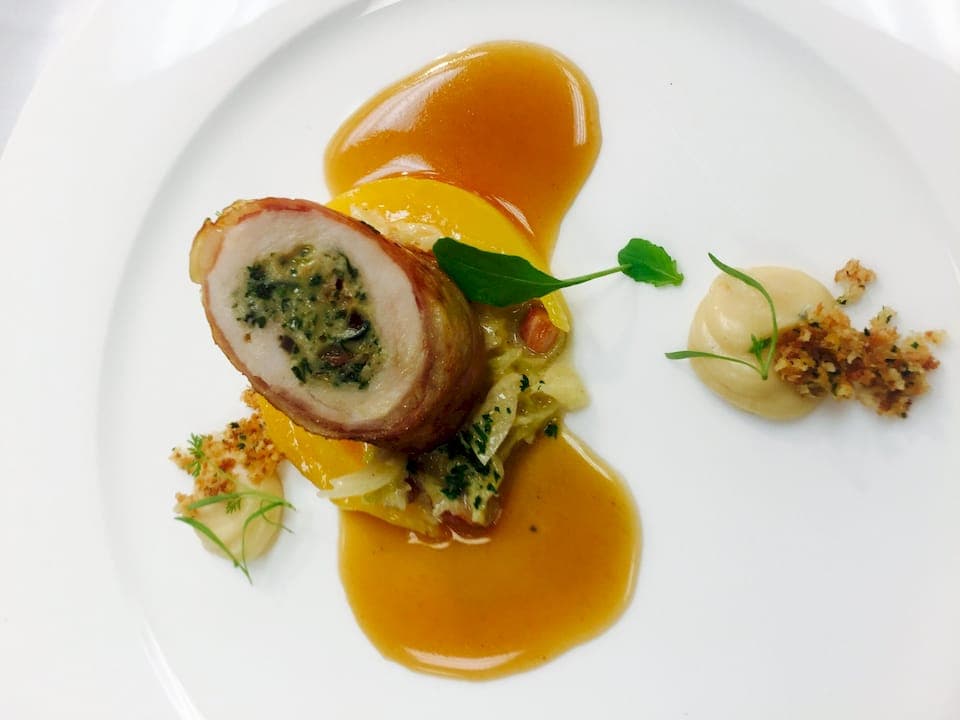
Professional plating, the culinary term for the deliberate arrangement of food on a plate, is the defining difference between a meal that looks homemade and one that feels like a restaurant experience. Private chef food presentation tips are grounded in the same principles used in fine dining kitchens: focal placement, texture contrast, and purposeful garnishing. A plate is a functional delivery system first, not merely an artistic canvas. Master these principles and your dinner party dishes will carry the same authority as anything served in a Michelin-starred room.
1. How does the rule of thirds improve plate composition?
The rule of thirds is the primary technique for professional plating in 2026. It works by dividing the plate into a three-by-three grid of nine equal sections. You then place the main protein at one of the four intersecting points rather than dead centre. That off-centre placement creates natural visual movement and makes the plate feel considered rather than rigid.
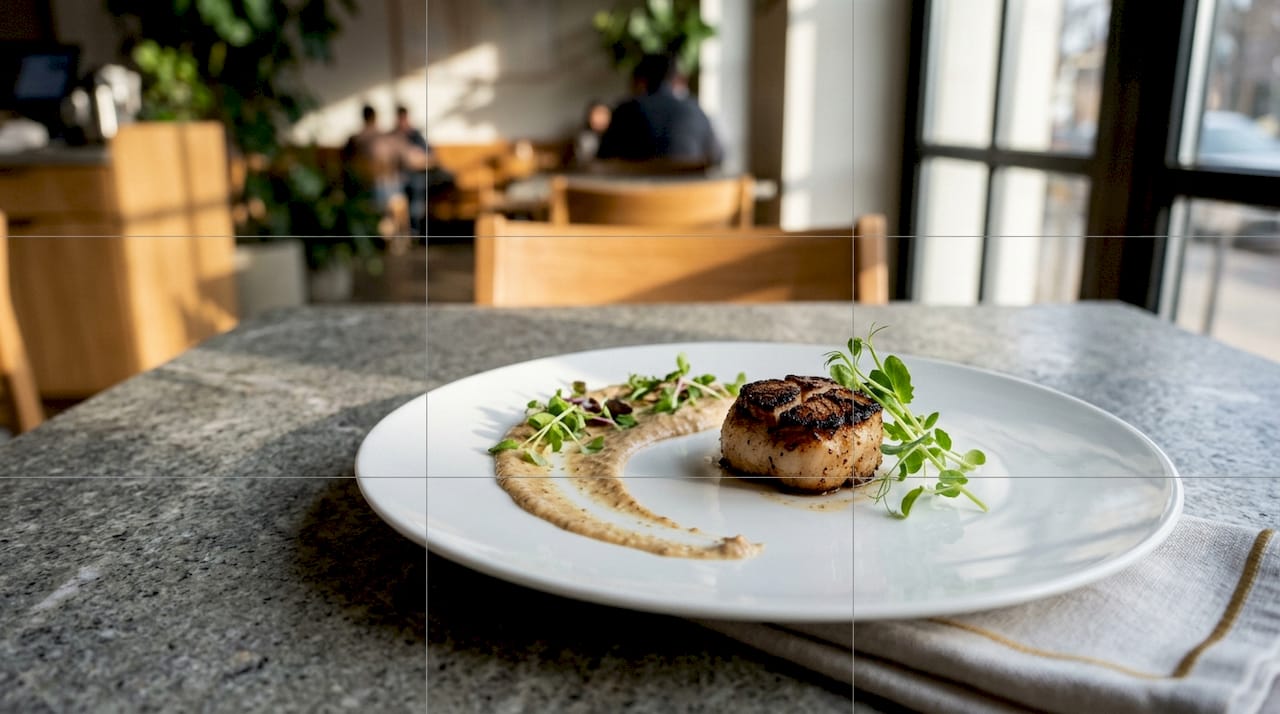
Leaving areas of the plate deliberately empty is just as important as what you place on it. Negative space gives the eye a place to rest and prevents the dish from looking crowded. Think of it the way a photographer frames a subject: the empty background is not wasted space. It is what makes the subject stand out.
Practical ways to apply the rule of thirds at home:
-
Place your protein at the upper-right intersection of the imaginary grid.
-
Arrange your sauce or purée in a curved sweep from the lower-left to the centre.
-
Position vegetables or garnish at the lower-left intersection to balance the composition.
-
Leave at least one third of the plate completely clear.
Pro Tip: Photograph your plate from directly above before serving. If the composition looks balanced in a photo, it will look balanced to your guests.
2. What are professional finishing techniques for restaurant-level plating?
A three-step finishing technique takes under ten seconds and lifts any plate from home-cooked to polished. The steps are a controlled sauce drizzle, a garnish sprinkle from height, and a clean wipe of the plate rim. Each step serves a specific purpose and none requires specialist equipment.
-
Sauce drizzle. Use a squeeze bottle or a spoon to apply sauce in a deliberate arc or pool. Avoid flooding the plate. A small, confident gesture reads as intentional.
-
Sprinkle from height. Hold your garnish, whether chopped herbs, toasted seeds, or flaked salt, roughly 30 centimetres above the plate and release. The fall creates a natural, unforced scatter that looks far more elegant than placing garnish by hand.
-
Wipe the plate rim. Use a clean, damp cloth to remove any drips or smears from the edge of the plate. A spotless rim signals care and professionalism.
Temperature control is part of finishing too. Hot dishes go on warmed plates and cold dishes on chilled plates. This preserves texture and flavour from the moment the plate leaves the kitchen to the moment it reaches the table.
Pro Tip: Plate your dishes as close to serving time as possible. A beautifully arranged plate that sits for ten minutes loses both temperature and visual crispness.
3. How can balancing textures enhance the sensory appeal of a dish?
Texture contrast is often overlooked but is one of the most effective tools in a chef’s repertoire. A plate composed entirely of soft elements, such as a creamy sauce, a braised protein, and a smooth purée, creates sensory monotony. The diner’s palate disengages quickly because there is nothing to interrupt the uniformity.
Pairing creamy elements with something crunchy solves this immediately. The contrast keeps each mouthful interesting and makes the dish feel more complete. This is why a silky cauliflower velouté benefits from a scattering of toasted hazelnuts, and why a slow-cooked lamb shoulder gains enormously from a crisp herb crust.
Texture choices that add contrast without complicating the plate:
-
Crunchy: toasted nuts, fried capers, puffed grains, crispy shallots.
-
Creamy: whipped butter, smooth purées, crème fraîche, burrata.
-
Chewy: slow-roasted tomatoes, dried fruit, braised pulses.
-
Crisp and fresh: microgreens, thinly sliced radish, raw fennel.
Aim for at least two distinct textures on every plate. Three is the sweet spot for gourmet meal plating. Beyond three, the composition risks becoming cluttered.
4. What are the key considerations when selecting garnishes?
Every garnish on a plate must serve flavour, aroma, or texture. A sprig of curly parsley placed on a plate purely for colour is considered unprofessional by 2026 culinary standards. It adds nothing to the eating experience and signals that the garnish was an afterthought rather than a deliberate choice.
Functional garnishes work with the dish rather than sitting on top of it. A few drops of herb oil add colour, aroma, and a fresh flavour note simultaneously. Microgreens contribute visual height, a mild peppery flavour, and a delicate texture. Toasted pine nuts bring warmth, crunch, and a nutty depth that echoes roasted proteins beautifully.
Colour placement matters too. A garnish should either complement or contrast the dominant colour of the dish. A pale, golden risotto benefits from the deep green of basil oil and the vivid red of a slow-roasted cherry tomato. The contrast draws the eye and signals freshness.
“Avoid non-functional garnishes. They detract from the dish’s culinary narrative and undermine the care taken in every other element of the plate. Every component must earn its place.”
Good garnish choices for home cooks aiming for elegant food displays:
-
Microgreens or pea shoots for height and freshness.
-
Toasted nuts or seeds for texture and warmth.
-
Herb oils or flavoured vinegars for colour and aroma.
-
Edible flowers for occasion-specific visual drama, used sparingly.
-
Citrus zest for brightness and a clean aromatic lift.
5. How does menu development influence effective plating?
Plating is most effective when it is driven by menu development, not last-minute assembly. Deciding on your plate shape, sauce colour, and garnish before you begin cooking means every element is chosen to work together. Improvising at the point of plating almost always results in overcrowded or visually incoherent dishes.
Think of plating decisions as part of the recipe itself. If you plan a dark, rich red wine reduction as your sauce, choose a white or cream-coloured plate to maximise contrast. If your protein is pale, plan a vivid garnish in advance. These are not decorative choices. They are part of how you communicate the dish to your guest.
The table below outlines a simple planning framework for home cooks preparing a dinner party menu:
| Planning stage | What to decide |
|---|---|
| Menu concept | Dominant flavour profile and colour palette of each dish |
| Plate selection | Shape, colour, and size relative to portion |
| Sauce and base | Colour, consistency, and placement method |
| Garnish | Functional role: flavour, texture, or aroma |
| Finishing | Rim wipe, temperature check, and final sprinkle |
Thesensorychef applies this menu-driven approach to every private dining event, planning each plate’s visual composition alongside its flavour profile well before the evening begins.
6. Using the clock method as a classic plating structure
The clock method is a reliable framework for balanced dinner party food arrangement. Place your starch at the 10 o’clock position, your protein at 2 o’clock, and your vegetables at 6 o’clock. This classic plating structure distributes visual weight evenly and gives the diner a natural reading order across the plate.
The clock method works particularly well for traditional multi-course formats where guests expect a clear, legible plate. It is less suited to contemporary tasting menus, where asymmetry and negative space tend to signal a more refined aesthetic. Knowing which structure fits your occasion is part of good catering food styling advice.
The clock method also reinforces portion legibility. Diners must immediately recognise the protein and serving size or the plating has failed regardless of how beautiful it looks. Clarity of composition is not a compromise on artistry. It is the foundation of it.
Key takeaways
The most effective approach to private chef food presentation is to plan every plate element, from vessel choice to garnish, as part of the menu itself rather than as a finishing afterthought.
| Point | Details |
|---|---|
| Rule of thirds | Place protein at an off-centre grid intersection and leave at least one third of the plate clear. |
| Three-step finish | Drizzle sauce, sprinkle garnish from height, and wipe the plate rim clean before every service. |
| Texture contrast | Combine at least two distinct textures per plate to keep the palate engaged throughout the meal. |
| Functional garnish | Every garnish must serve flavour, aroma, or texture; decorative-only elements weaken the dish. |
| Menu-driven plating | Decide plate colour, sauce base, and garnish during menu planning, not at the point of assembly. |
What I have learnt from plating hundreds of private dinners
The biggest mistake I see from home cooks is treating plating as the last step rather than part of the cooking process. They spend an hour perfecting a sauce and then reach for whatever plate is nearest. That single decision undoes a great deal of the work that came before it.
The rule of thirds and the clock method are not rules to follow rigidly. They are frameworks that train your eye. Once you have practised them enough times, you stop thinking about the grid and start feeling when a plate looks right. That instinct is what separates confident plating from hesitant plating.
The sensory dimension beyond the visual is something I think about constantly. As a deaf chef, I rely on flavour, texture, and aroma more acutely than most. A plate that smells extraordinary before the first bite has already begun the dining experience. A garnish that adds a burst of acidity or a hit of warmth does more for the guest than any purely decorative element ever could.
My honest advice: start with one technique at a time. Apply the three-step finish to your next dinner at home. Once that feels natural, introduce the rule of thirds. Build the habit gradually and your plating will improve with every meal you serve. For deeper inspiration on setting up a luxury dining experience at home, the principles translate directly from professional kitchens to your own table.
— Joseph
Thesensorychef: private dining where presentation is part of the experience
Thesensorychef brings over 13 years of professional culinary experience to private dining events across Granada and Andalusia, with every dish planned and plated to restaurant standard.

Each menu is designed with plate composition, texture balance, and garnish selection built in from the start. Whether you are hosting an anniversary dinner, a villa gathering, or an exclusive celebration, the visual presentation of every course is as carefully considered as its flavour. Explore the full range of private dining experiences or book a bespoke event through the seaside dining experience page to see how professional plating transforms a meal into a memory.
FAQ
What is the rule of thirds in food plating?
The rule of thirds divides the plate into a nine-section grid and places the main protein at one of the four intersecting points. This off-centre placement creates natural visual flow and prevents the dish from looking static.
How do I make my plating look more professional at home?
Apply the three-step finishing technique: drizzle your sauce with control, sprinkle garnishes from roughly 30 centimetres above the plate, and wipe the rim clean before serving. These three steps take under ten seconds and add immediate polish.
What garnishes should I use for elegant plating?
Choose garnishes that serve a functional role: microgreens for freshness and height, toasted nuts for texture, herb oils for colour and aroma, and citrus zest for brightness. Avoid purely decorative garnishes that add nothing to the flavour or texture of the dish.
Why does plate temperature matter for food presentation?
Serving hot food on a warmed plate and cold food on a chilled plate preserves texture and flavour integrity from kitchen to table. It also prevents sauces from splitting or proteins from losing their finish before the guest takes their first bite.
How does menu planning improve food presentation?
Planning your plate shape, sauce colour, and garnish during menu development ensures every element works together visually and flavour-wise. Improvising at the point of plating almost always results in overcrowded or incoherent dishes.