For team integration, choose a collaborative menu workshop; for energy and visible leadership, choose a paella challenge or MasterChef-style contest; for cocktail-style networking, choose a tapas relay. Each format suits groups of a moderate size, typically several team members, and generally runs several hours. The Sensory Chef can deliver all three across Granada, Málaga and the wider Costa del Sol with a chef-coach leading the session.
TL;DR:
- Collaborative formats are ideal for new or cross-departmental teams to foster inclusion and emphasize shared goals over competition.
- Competitive challenges like paella contests or mystery box cook-offs work best for experienced groups seeking high-energy, visible leadership, and fun.
- Proper facilitation focuses on decision-making at key moments and turning waiting time into purposeful tasks, enhancing team engagement and learning.
- Keep station groups small, assign roles early, and plan for parallel stations in larger groups to ensure active participation and safety.
- Selecting a provider who clearly outlines facilitation, equipment, and dietary handling ensures a smooth experience and effective team-building outcomes.
Table of Contents
- Ideas for team building cocina: why the format matters more than the menu
- 12 cooking team-building ideas worth proposing
- How to choose the right format and brief a supplier
- Running the day: stations, timing, safety and dietary needs
- A chef's view from the pass: how these formats play out in practice
- Why most cooking team-building briefs get the format wrong
- Book a cooking team-building experience with The Sensory Chef
- Sources
- FAQ
Ideas for team building cocina: why the format matters more than the menu
Most planners pick a cooking activity by cuisine first and objective second. That order is backwards. A kitchen forces people into roles almost immediately: someone starts chopping, someone else reads the recipe aloud, someone quietly takes charge of timing. A well-structured cooking challenge triggers collaboration, leadership emergence and communication under pressure, and the mistakes that happen along the way (a burnt sofrito, a mistimed sauce) become the material a good facilitator uses to spark conversation afterwards, rather than something to hide.
The choice between competitive and collaborative formats should follow your goal, not your budget:
- Choose collaborative (shared menu, one final dish) when the group is newly formed, cross-departmental, or you want inclusion over rivalry.
- Choose competitive (paella contest, MasterChef-style challenge) when the team already knows each other and you want energy, humour and visible leadership to surface.
- Choose convivial showcooking when the brief is really "nice afternoon together" rather than deep team development.
Pro Tip: If you're mixing seniority levels, run a collaborative format first. Competitive challenges can accidentally let the loudest voice dominate, which undermines the inclusion you're trying to build.
12 cooking team-building ideas worth proposing
1. Paella challenge
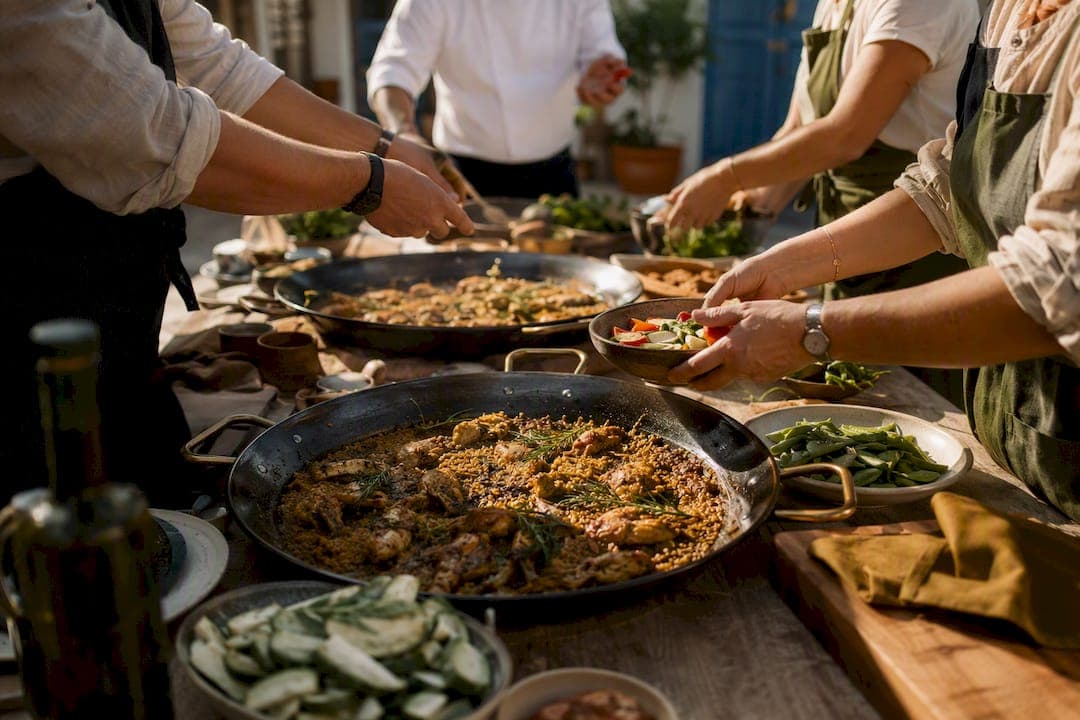
The classic. Teams generally form small groups to build a paella from scratch under time pressure, usually outdoors with gas burners and wide paella pans. It rewards visible leadership and works brilliantly for celebration-led briefs. Paella contests suit large, celebratory groups well, provided logistics and safety are managed, which means checking permissions for outdoor flames before you book a venue.
2. MasterChef-style mystery box contest
Teams receive a surprise basket of ingredients and a time limit, then present to a panel of judges. High energy, high creativity, and genuinely competitive. Best run in a multi-hour block with proper judging criteria set in advance, not decided on the spot.
3. Collaborative menu workshop
No competition, one shared multi-course menu, everyone contributes a course or element. This is the format to choose when integration matters more than adrenaline, particularly for teams working across offices or countries.
4. Tapas relay ("guerra de tapas")
Short rotating stations, each producing a different tapa, judged on speed and presentation rather than technical skill. Ideal as a warm-up activity before a networking dinner, since it keeps people moving and talking rather than seated.
5. Showcooking with participatory stations
The chef runs the main demonstration while small groups handle side tasks. This suits briefs where the client wants a social food focus without asking every attendee to cook.
6. Market-to-table experience
A short market visit followed by a group cook using what was bought. Strong for local identity and storytelling, particularly appealing to international teams visiting Andalucía for the first time.
7. Pizza workshop
Dough, sauce, toppings, wood oven if available. Low technical barrier, so it works well for mixed-ability groups where some attendees have never cooked professionally at all.
8. Pastry or dessert challenge
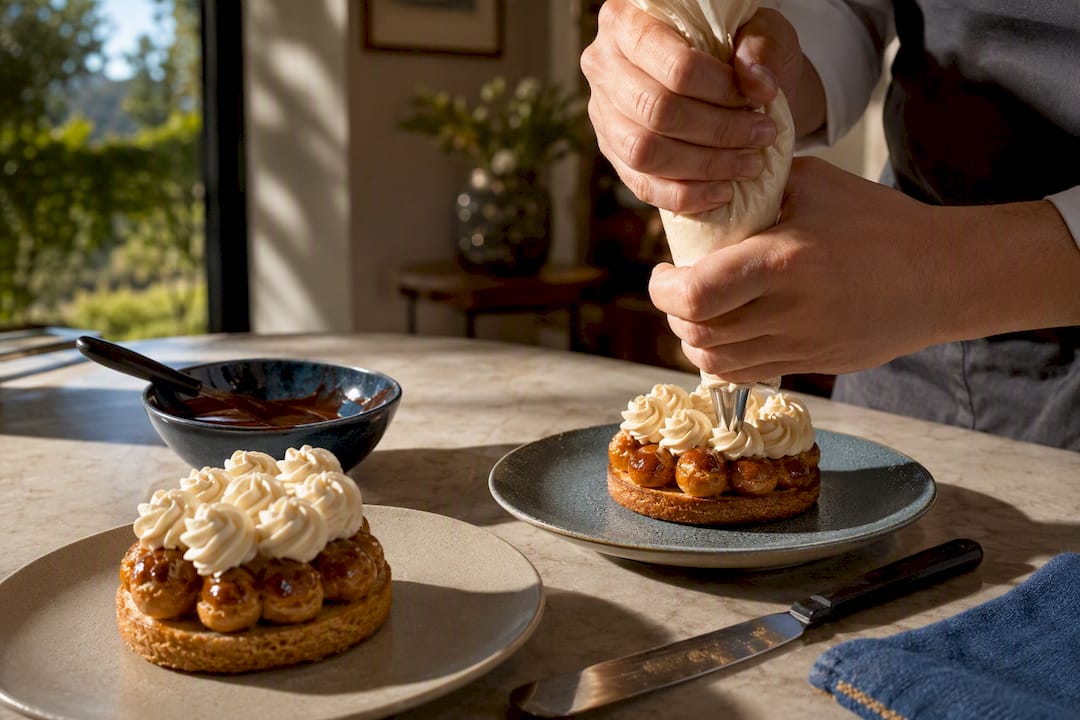
Precision-focused and tactile: piping, tempering, plating. Good for teams who respond better to methodical tasks than chaotic ones.
9. Cocktail and tapas pairing challenge
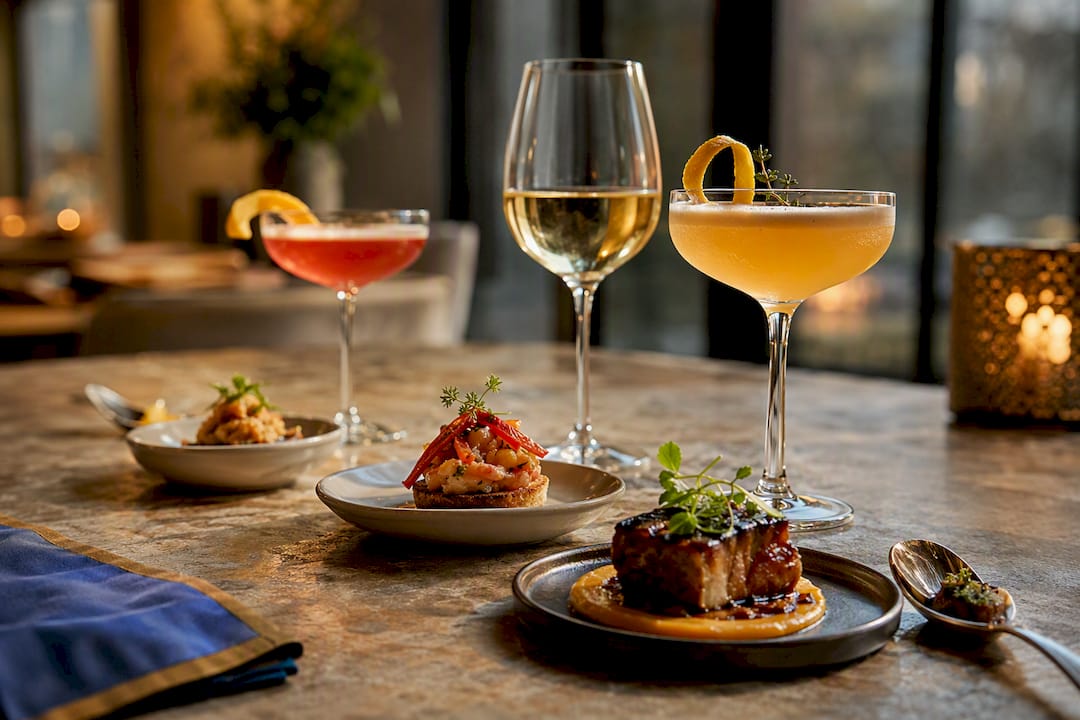
Teams pair small dishes with cocktails or wines, then present their reasoning. Cross-functional by nature, since it rewards taste, presentation and persuasive pitching in equal measure.
10. Outdoor barbecue or paella al aire libre
A scalable, celebratory format for larger groups, often the closing event of an offsite. Works well at a villa with garden space, provided extraction and waste handling are considered in advance.
11. Sensory blindfold cooking
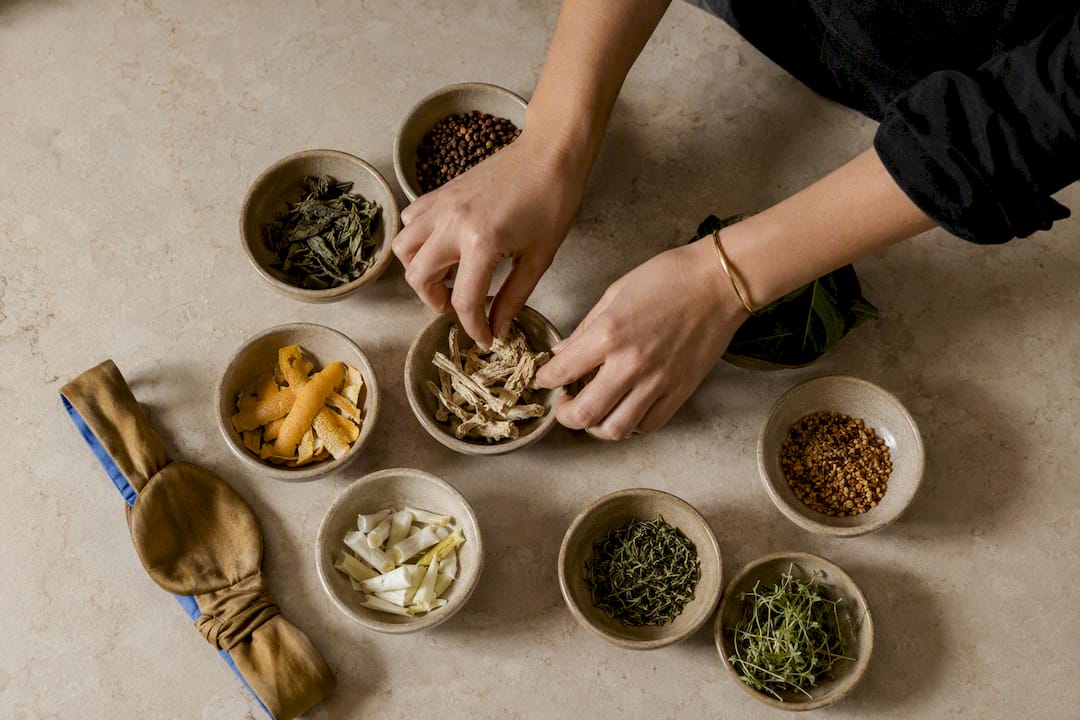
Participants identify ingredients, textures and aromas without sight, then cook a simple dish guided by taste and smell alone. It reframes the whole activity around non-visual senses, which tends to produce the most memorable debrief conversations of any format on this list.
12. Family-style collaborative menu
One shared table, one shared menu, plated and served together rather than by team. This suits briefs built around shared ownership and inclusion rather than individual recognition.
How to choose the right format and brief a supplier
Start with the objective, not the cuisine. Ask whether you need integration, energy, celebration or reward, then match it to a format from the list above rather than picking whatever looks best in photos.
Before contacting a provider, gather:
- Final headcount and the mix of attendees (seniority, dietary needs, languages spoken)
- Budget per head and the time slot available in your agenda
- Venue details: indoor kitchen, outdoor space, power supply, and any AV needs
Then ask the provider directly:
- Who facilitates the session, and is it a trained chef-coach or a general host?
- What's included in the price, and do they supply all equipment?
- How do they handle allergies and dietary restrictions?
- Do they run a dry run or site visit before the event?
Pro Tip: Ask for a sample menu and a sample timing plan in the same email. A provider who can't produce both quickly probably hasn't run the format at scale before. Providers publishing clear pricing and inclusions tend to make internal approval far faster, since HR and procurement can sign off without a back-and-forth.
Running the day: stations, timing, safety and dietary needs
Keep station groups to 4 to 6 people so everyone has a visible role, and assign one timekeeper per team from the start. Larger groups need parallel stations and clear role allocation rather than one open kitchen. For very large groups, that means multiple parallel stations feeding into a single final judging round.
A typical three-hour block runs: 15 to 20 minutes of briefing and warm-up, 75 to 90 minutes of cooking, 20 to 30 minutes of plating and presentation, then tasting and close.
- Collect dietary requirements before the event, not on the day
- Label allergen-sensitive stations clearly and prepare separate prep areas for severe cases
- Confirm power, extraction and waste handling with the venue in advance
- Check permissions and insurance for any outdoor cooking, especially with open flames
Standard allergen workflows use a pre-event form and chef-managed substitutes, which is the same approach The Sensory Chef applies when handling large groups.
A chef's view from the pass: how these formats play out in practice
Joseph Warner trained in French gastronomy before spending over 13 years running professional kitchens, and founded The Sensory Chef to bring that experience into private villas and events across Andalucía. His sensory approach, developed as a deaf chef, leans on texture, aroma and visual cues rather than verbal instruction alone, which turns out to suit team facilitation particularly well.
One recent villa booking near the Costa Tropical set the brief simply: energise a small leadership team before a strategy day. A paella challenge split them into two competing stations, with decision points (when to add the stock, how to judge the socarrat) left deliberately unguided until someone asked.
For a mixed-location sales team offsite, the brief shifted to integration. A collaborative menu workshop had each subgroup responsible for one course, plated and served family-style at the end.
The best moments happen in the gaps, when a team is waiting for rice to absorb stock or pastry to chill. Give people a real task in that gap, like prepping the next station's ingredients, and the energy never drops.
Facilitation that intervenes only at pre-defined decision points preserves that agency, and converting waiting time into purposeful tasks is what separates a memorable session from a forgettable cooking class.
Why most cooking team-building briefs get the format wrong
The research behind this list points to one recurring mistake: planners default to whichever format looks most photogenic rather than the one that matches their actual objective. A paella contest photographs beautifully, but if your team just merged two departments and morale is fragile, a competitive format can quietly reward the loudest personalities rather than build trust across the room.
The conventional advice, "book a fun cooking class," undersells what a properly facilitated kitchen session can do. The value sits entirely in the facilitation, not the recipe. A chef who steps back at the right moments and only intervenes at genuine decision points teaches a team more about how it makes choices under pressure than any icebreaker exercise ever will.
If there's one thing planners should prioritise first, it's asking a prospective supplier how they facilitate, not what they cook. The dish is almost incidental. The structure around it, timing, role design, how waiting time gets used, is where the actual team-building happens.
— Joseph Warner
Book a cooking team-building experience with The Sensory Chef
The Sensory Chef designs and runs cooking team-building sessions across Granada, Málaga and the Costa del Sol, so you're booking one chef-coach for the whole event rather than assembling a caterer, a venue and a host separately. Formats on offer include the paella challenge, collaborative menu workshops, private villa events and tasting menus for smaller leadership groups.
Every booking includes chef-coach facilitation, ingredient sourcing, full management of allergies and dietary requirements, tasting, and cleanup, so your team leaves the kitchen and nothing else needs organising. To check dates and get a proposal for your group size, get in touch through the private dining experience page with your headcount and preferred format. Most bookings are confirmed two to three weeks ahead, though villa events during peak summer months benefit from earlier notice.
Sources
For background on how facilitators frame these sessions, see what makes a culinary experience sensory and why hiring a chef benefits corporate events.
- Team Building de Cocina para Empresas | Cooking Challenge
- Cooking team building Madrid | Spain Incentives
- Interactive team building paella or tapas class in Barcelona | Traveling Spoon
- Concurso de Paellas Team Building en Málaga - Jardín Las Calas
FAQ
What activities work best for a cooking team-building event?
Paella challenges and MasterChef-style contests work best for energy and celebration, while collaborative menu workshops suit integration and mixed-ability groups.
What are some innovative cooking techniques used in these sessions?
Sensory blindfold cooking, market-to-table sourcing, and mystery-box style challenges are the three techniques planners request most often, since each forces a team to communicate without relying on habit.
How many people fit in a typical cooking station?
Stations work best with 4 to 6 people each, with larger groups split into parallel stations feeding into one final judging round.
What skills does a chef bring to facilitating these events?
The essentials are timing, ingredient knowledge, clear communication under pressure, adaptability to dietary needs, and the judgement to know when to step back and let a team make its own decisions.
How long does a cooking team-building session usually last?
Most sessions run around a three-hour block, covering briefing, cooking, plating and a tasting close.