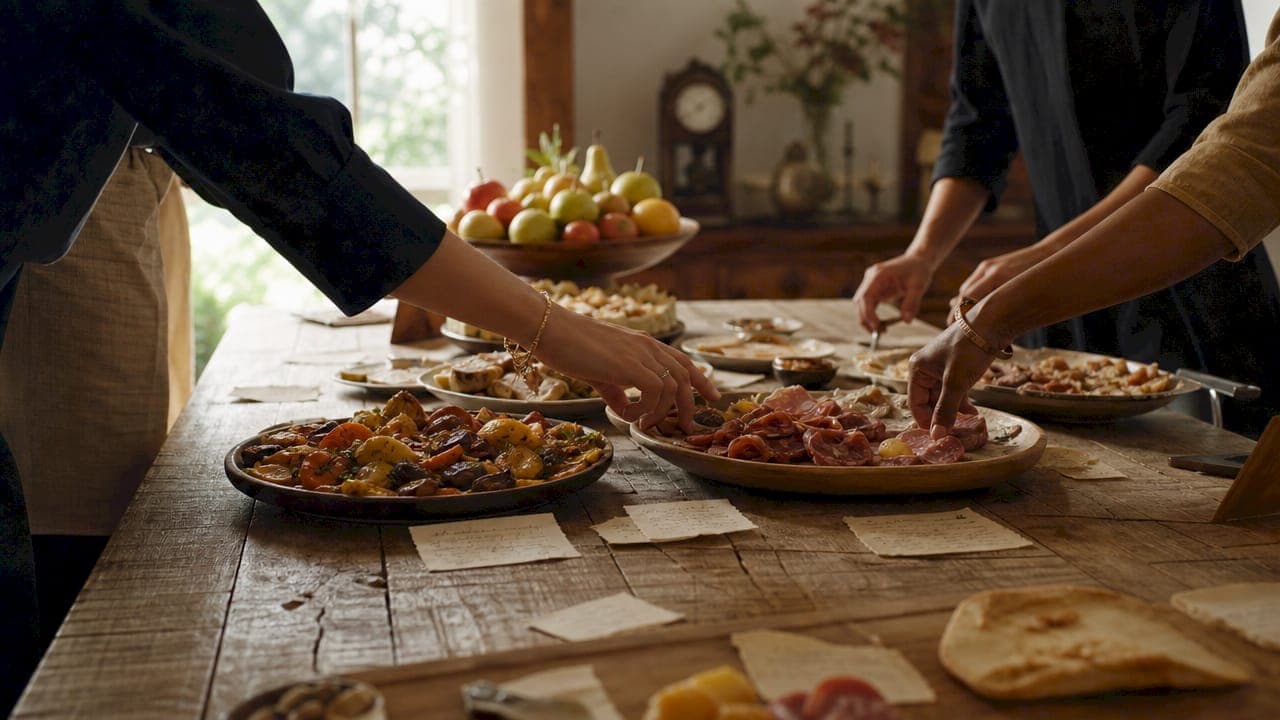
Planning a memorable festive gathering is defined by the orchestration of timelines, menus, guest coordination, and operational logistics working together as one. How holiday dining experiences are planned separates a stressful, chaotic evening from one that guests remember for years. The professional approach draws on backward planning frameworks, structured menu curation, and detailed written specifications. Whether you are hosting twelve guests in a villa or thirty at a family celebration, the same principles apply. Get the foundations right, and the joy of hosting follows naturally.
What timelines and milestones define holiday dining planning?
The timeline is the single most critical variable in festive event planning. December peak lead times for seated dinners extend to 12–16 weeks, while evening receptions require 10–14 weeks, and drop-off lunches need just 4–5 weeks. Those numbers mean a Christmas seated dinner planned in september is already cutting it fine.
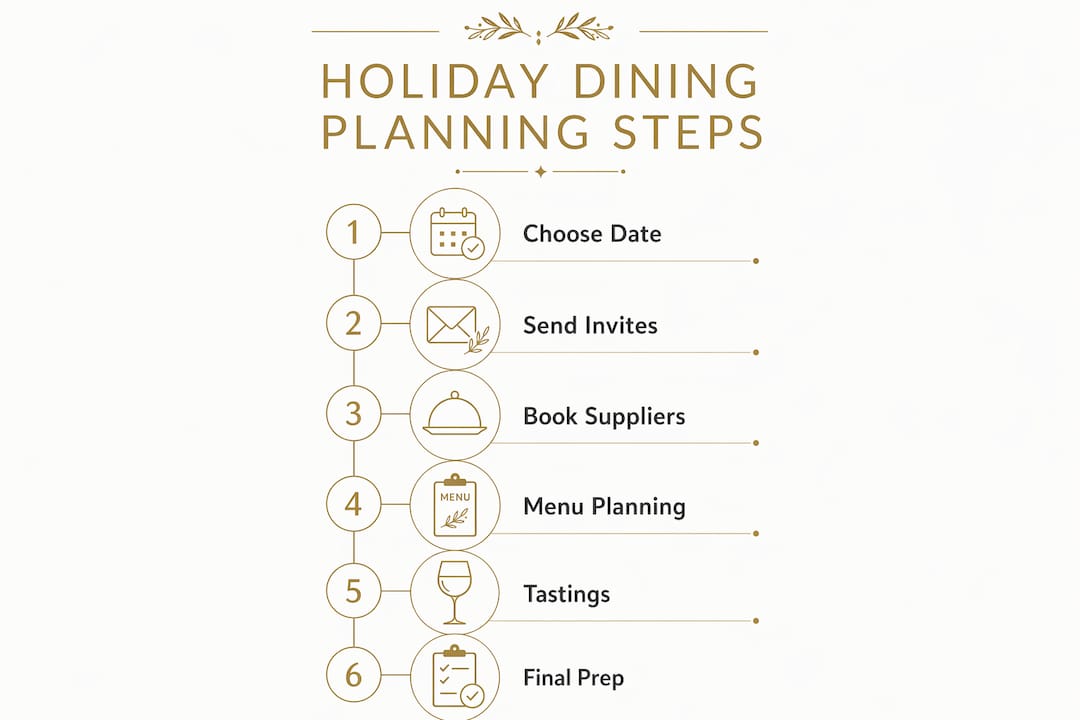
A practical approach is the 4-week backward planning method, widely used in hospitality frameworks. Week four sets your date and guest list; week two focuses on ordering non-perishables and rehearsing your table layout; week one finalises RSVPs and handles deep cleaning; the final days cover fresh shopping and active preparation. This structure prevents the common mistake of leaving too many tasks to the last 48 hours.
The table below shows how lead times vary by event type during the peak holiday season.
| Event type | Recommended lead time |
|---|---|
| Seated dinner (Christmas peak) | 12–16 weeks |
| Evening reception | 10–14 weeks |
| Drop-off or buffet lunch | 4–5 weeks |
| Intimate home dinner party | 3–4 weeks |
-
Set your date and confirm the venue or home space.
-
Send invitations and request dietary information immediately.
-
Finalise your menu and order non-perishable ingredients.
-
Confirm final guest numbers and complete your shopping list.
-
Prepare what can be made ahead, and brief anyone helping you serve.
Pro Tip: Book your key suppliers, florists, and any hired help at the same time you send invitations. During peak season, availability disappears faster than you expect.
How do menu planning and guest preferences shape the event?
Menu planning is not simply choosing dishes you enjoy cooking. It is a process of matching flavour, texture, and timing to the specific group of guests you are feeding. Collecting dietary information at the invitation stage, rather than the week before, gives you time to build a menu that works for everyone without last-minute substitutions.
Flagging allergy severity early in the planning process is one of the most important steps a host can take. A preference for vegetarian food requires a different response than a severe nut allergy. Treating them with the same urgency creates risk; distinguishing between them creates safety and confidence.
Ingredient overlap is a professional technique that home hosts rarely use but should. When multiple dishes share a core ingredient, such as a herb, a stock, or a seasonal vegetable, you reduce waste, simplify shopping, and create a menu that feels coherent rather than assembled from separate recipes.
Key considerations when planning menus for groups:
-
Collect dietary requirements and allergy information with the invitation.
-
Separate medical allergies from personal preferences in your planning notes.
-
Choose dishes that share at least two or three core ingredients.
-
Balance labour-intensive dishes with at least two that can be prepared a day ahead.
-
Avoid more than one dish requiring last-minute, high-attention cooking at the same time.
-
Consider how dishes hold at temperature, particularly if guests arrive at different times.
Pro Tip: Build your menu around the season’s best produce. A dish made with ingredients at their peak flavour requires far less effort to taste exceptional than one fighting against out-of-season ingredients.
Why are tastings and written specifications crucial for quality?
Tastings are functional tests, not formalities. Tastings let hosts evaluate temperature holding, texture under serving conditions, and how dishes interact on the plate. A dish that tastes perfect straight from the pan may dry out, lose colour, or become too rich when held for thirty minutes at a buffet. A tasting reveals this before your guests do.
Trial runs show how seasonal ingredient changes affect the final dish. A sauce built around early-season tomatoes will taste different in december. Adjusting recipes to reflect actual serving conditions, not ideal kitchen conditions, is what separates a good cook from a confident host.
Written specifications take this one step further. Professional event teams use precise internal temperature targets and plating instructions rather than verbal guidelines. Written specs for reheating and plating prevent the most common event-day mistakes: overcooked proteins, dried-out sides, and inconsistent presentation across plates.
| Specification component | Purpose |
|---|---|
| Internal temperature targets | Prevents overcooking or undercooking during reheating |
| Plating instructions | Ensures consistent presentation across all covers |
| Holding time limits | Defines how long a dish can rest before quality drops |
| Garnish and finishing notes | Maintains visual coherence and flavour balance at service |
Pro Tip: Write your specifications the day after your trial run, while the details are fresh. Note what worked, what needed adjustment, and the exact timing that produced the best result.
How can AI improve holiday dining planning and execution?
AI tools have become genuinely useful for managing the logistical complexity of festive events. AI systems cross-utilise ingredients to reduce waste and generate detailed, minute-by-minute cooking schedules that account for oven space, hob availability, and resting times. For a host managing six dishes simultaneously, that kind of schedule is not a luxury. It is a practical necessity.
The most valuable application is dietary constraint management. AI planning tools flag the difference between a preference and a medical allergy at the earliest stage of menu building. This means the menu is designed around those constraints from the start, rather than adapted awkwardly at the end.
Other practical benefits of AI-assisted planning include:
-
Generating shopping lists organised by category and supplier to reduce preparation time.
-
Creating production schedules that sequence tasks across multiple days, not just the day itself.
-
Suggesting ingredient substitutions when seasonal availability changes close to the event.
-
Identifying timing conflicts between dishes that require simultaneous high-attention cooking.
AI does not replace culinary judgement. It handles the logistical scaffolding so that your attention stays on flavour, texture, and the experience of your guests.
What practical steps help home hosts plan memorable festive meals?
The most effective approach for home hosts is to build the meal around a single hero dish. A star dish anchors the meal, while supporting dishes are chosen for stability, ease of holding, and minimal last-minute attention. Attempting three complex dishes at once is the fastest route to a stressful evening and a disappointing table.
Adding 15–30 minute buffers to your production schedule keeps timing flexible when guests arrive late, conversations run long, or a dish needs an extra few minutes. Rigid schedules collapse under the natural unpredictability of a gathering. Flexible ones hold.
For a luxury home dining experience, the table setup matters as much as the food. Guests form their first impression before they taste anything. Laying the table the evening before, preparing garnishes in advance, and briefing anyone helping you serve removes pressure on the day itself.
-
Choose one hero dish and build the menu around it.
-
Select two or three supporting dishes that can be prepared at least partially the day before.
-
Write a cooking timeline with named tasks and built-in buffer time.
-
Set the table and prepare all garnishes the evening before.
-
Brief helpers on their specific roles before guests arrive.
-
Accept that something small will go differently than planned. That is normal, and guests rarely notice.
Pro Tip: Involve guests in a small, low-stakes task such as choosing a wine or assembling a shared starter. It creates warmth, reduces your workload slightly, and makes the evening feel collaborative rather than performative.
Key takeaways
Successful holiday dining depends on early planning, structured menus, and written specifications that remove guesswork from the day itself.
| Point | Details |
|---|---|
| Start planning early | Seated dinners during peak season need 12–16 weeks of lead time. |
| Use backward planning | Set your date first, then work backwards through weekly milestones to the event day. |
| Build menus around constraints | Collect dietary and allergy information at invitation stage, not the week before. |
| Test before the event | Tastings and trial runs reveal timing, texture, and temperature issues before guests arrive. |
| Build in buffer time | Adding 15–30 minute buffers to your schedule keeps quality high when plans shift. |
What I have learned from planning holiday dining events
The biggest mistake hosts make is planning for the ideal version of the evening rather than the real one. Guests arrive late. An oven runs hot. A dish needs five more minutes. When your schedule has no room for any of that, the whole evening tightens. When it does, you stay calm, and your guests feel it.
After more than 13 years in professional kitchens, the question I ask before any festive event is not “what do I want to cook?” It is “what can I cook well, consistently, under pressure, for this specific group of people?” Those are very different questions. Expert planners ask ceiling questions early: how long can this dish hold? What happens if service runs 20 minutes late? What is the recovery plan if a component fails? Home hosts rarely ask these questions, and that is precisely where stress enters.
The other thing I would say is this: a simpler menu executed with care and attention to flavour, aroma, and presentation will always outperform an ambitious one executed under pressure. Your guests are not there to be impressed by complexity. They are there to feel welcomed, fed well, and genuinely cared for. That is what a private culinary event at its best delivers, whether it is prepared by a professional chef or a passionate home host.
Plan for reality. Cook with intention. The rest takes care of itself.
— Joseph
Bespoke holiday dining with Thesensorychef
When the planning, the cooking, and the coordination become too much to manage alone, working with a professional chef transforms the entire experience.
Thesensorychef brings over 13 years of professional culinary experience to private gatherings across Granada and Andalusia. Every event begins with a bespoke menu built around your guests’ tastes, dietary needs, and the occasion itself. From intimate family celebrations to exclusive villa dinners, the planning, preparation, and service are handled with care so that you can be fully present with the people you are hosting. Explore the full range of private dining experiences and find the right format for your celebration.
FAQ
How far in advance should I plan a holiday dinner party?
For a seated dinner during the Christmas peak season, lead times of 12–16 weeks are standard. Smaller home gatherings can be planned in 3–4 weeks, provided dietary information is collected early.
What is backward planning for holiday meals?
Backward planning means setting your event date first, then working backwards through weekly milestones covering invitations, shopping, preparation, and final RSVPs. It prevents tasks from collapsing into the final 48 hours before the event.
How do I handle dietary requirements for a group dinner?
Collect dietary information and allergy details at the invitation stage. Separate medical allergies from personal preferences in your planning notes, and build your menu around those constraints from the start rather than adapting it later.
Are tastings necessary for a home dinner party?
A full tasting is not always practical at home, but a trial run of your hero dish is worth doing at least once before the event. Trial runs reveal how seasonal ingredients and serving conditions affect the final result in ways that a single test cook cannot predict.
Can AI tools genuinely help with holiday meal planning?
Yes. AI planning tools are most useful for generating production schedules, managing ingredient cross-utilisation to reduce waste, and flagging dietary constraints early. They handle logistical complexity so your focus stays on the quality of the food and the experience of your guests.