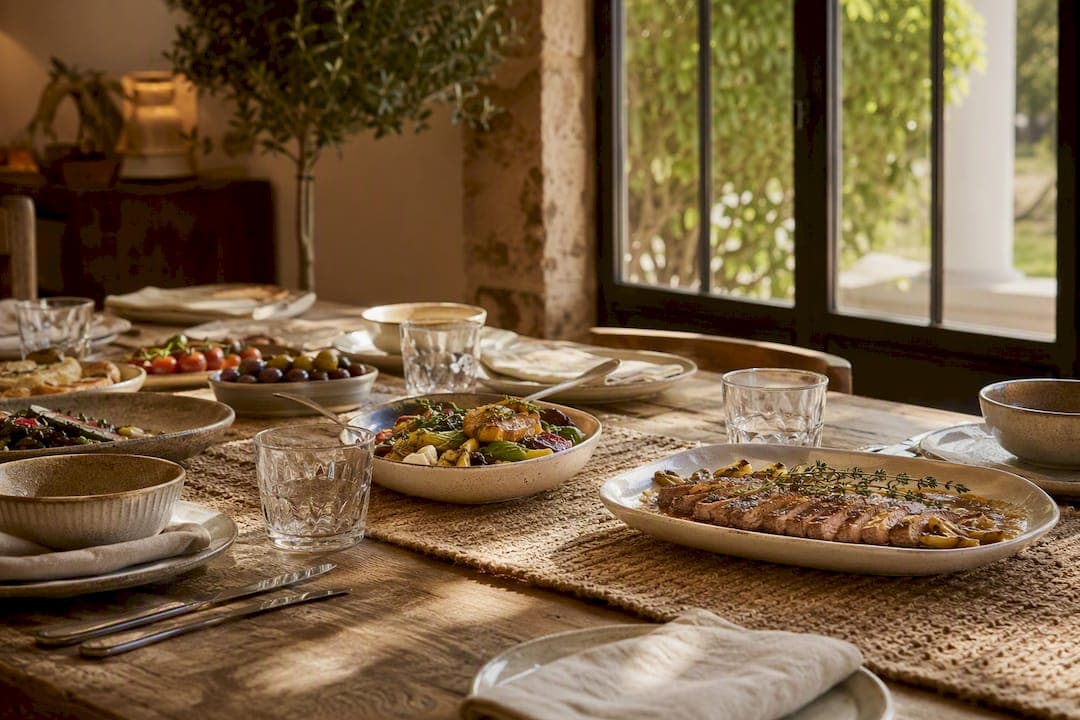
Family-style dining is when large shared platters go straight onto the table and everyone serves themselves, rather than food arriving pre-portioned on individual plates. It works because it turns a meal into a shared event, not a sequence of separate transactions. The format suits three settings especially well: home or villa hosting, childcare and early years dining, and restaurants or private events looking for a more social atmosphere.
Before you commit to it, weigh the trade-offs:
- Pro: Builds conversation and connection, since everyone reaches across the same dishes.
- Pro: Gives cooks flexibility, because one big pot of paella feeds a table of eight as easily as six.
- Con: Needs more coordination around allergies and portion control than a plated meal.
- Con: Can run messier if nobody sets ground rules for serving order and utensils.
A study on family meal habits found that 29% of households already eat this way, against 36% who plate meals individually and 11% who mix both. Family-style is not a niche habit; it is a genuine alternative to the plated norm.
Key Takeaways
Family-style dining works because shared platters replace individual plates, and success depends on clear serving order, careful portioning and simple allergy safeguards.
| Point | Details |
|---|---|
| Core mechanics | Large shared platters arrive together; guests serve themselves using dedicated utensils for each dish. |
| Safety first | Pre-plate for toddlers and diners with swallowing difficulties, and label allergen dishes clearly. |
| Portion planning | Budget roughly 150 to 200 grams of protein per adult, adjusting up for feature dishes like paella. |
| Setting-specific setup | Childcare needs supervision and pre-portioned backup plates; restaurants need menu and POS changes. |
| When to hire help | A private chef can manage portioning, plating and allergen separation for villa dinners and events. |
Table of Contents
- How family style dining works at the table
- What are the benefits of family style dining?
- Safety and hygiene risks to manage
- Running family style meals in childcare settings
- Setting up family style service in a restaurant
- How to host a family style meal at home or in a villa
- How much food to serve for shared platters
- Professional tips that make family style dining work
- Why family style dining rewards good planning, not luxury
- Sources
- FAQ
How family style dining works at the table
The mechanics are simpler than most people expect. Dishes come to the table together, or in close succession, rather than staggered course by course. Whoever is nearest, or the host, typically starts the platter moving, and it passes hand to hand around the table until everyone has served themselves.
A sensible serving order still matters even without individual plates:
- Starters or shared boards go down first, giving guests something to nibble while mains finish cooking.
- Mains and their accompaniments follow, often several dishes at once, so people can mix and match.
- Sides and sauces circulate last, since they are refilled more often than the main dish.
- Desserts arrive only once the table has been cleared, keeping the palate transition clean.
Two practical habits keep the flow smooth. First, every shared dish needs its own serving spoon or tongs so guests are not using personal cutlery in communal food. Second, platters should sit within arm's reach of at least two diners at all times, which usually means the middle of the table rather than one end.
- Use wide, low bowls rather than deep ones, so serving spoons reach the bottom easily.
- Keep hot dishes on trivets, not directly on tablecloths or shared surfaces.
- Refill from the kitchen rather than crowding the table with backup dishes.
What are the benefits of family style dining?
Ask anyone who has hosted a long, easy dinner why the format works, and the answer usually comes down to atmosphere. Capital One's overview of family-style dining notes that the format creates an intimate, communal feel precisely because guests are reaching, passing and talking rather than eating in silence over identical plates. Variety helps too: a table with four or five dishes on it lets people try things they would never have ordered individually.
For restaurants and hosts running events, the commercial logic is just as strong. Kitchens can prepare fewer, larger dishes instead of dozens of individually plated portions, which simplifies production and reduces complexity during service. Menus built around shareable dishes also open natural upsell moments, since a table that finishes one platter early is an easy sell for a second.
Children benefit in ways that go beyond convenience. Letting a child choose their own portion from a shared bowl supports the kind of responsive feeding that encourages them to try new foods on their own terms rather than facing a plate someone else has decided is right for them. It also teaches turn-taking and sharing in a way that plated meals simply cannot.
- Adults get variety and conversation instead of a fixed, single-plate meal.
- Restaurants gain menu flexibility and simpler kitchen logistics.
- Children develop food confidence and basic table manners through practice, not instruction.
Safety and hygiene risks to manage
Shared dishes are not automatically risky, but they do introduce specific hazards a plated meal avoids. The main hygiene concern is cross-contamination: hands, personal cutlery and even breath near open platters can transfer bacteria or allergens between diners far more easily than sealed, individual plates.
The fix is straightforward and worth stating plainly to every table or classroom before the meal starts.
Give every shared dish its own serving spoon, never let personal cutlery touch a communal platter, and brief guests or children on this rule before the food arrives. That single habit removes most of the cross-contamination risk without changing the format at all.
Allergy management needs a firmer structure than "just ask around the table". Label dishes clearly when nuts, shellfish, gluten or dairy are involved, and keep at least one allergen-free version of any high-risk dish separate from the main platter rather than mixed in. In a restaurant, that means training staff to state allergens verbally when the dish is set down, not just printing them on a menu nobody reads twice. In a home or villa setting, a quick check with guests before cooking avoids awkward surprises later, and planning menus around dietary needs from the outset is far easier than improvising at the table.
Choking risk changes by age group, and treating every diner the same is a mistake. Toddlers and children under about four should generally be served a pre-cut, pre-plated portion rather than serving themselves from a shared bowl, since whole grapes, nuts or hard vegetable pieces on a communal platter are a genuine hazard at that age. Older children and most adults manage self-serving safely, but elderly diners with swallowing difficulties deserve the same pre-plating caution as toddlers, not a blanket assumption that "adult" means "self-service is fine".
- Assign one serving utensil per dish, never shared with personal cutlery.
- Separate or clearly label allergen-heavy dishes before they reach the table.
- Pre-plate for toddlers and any diner with known swallowing difficulties, regardless of age.
Running family style meals in childcare settings
Early years settings can use family-style dining as a teaching tool as much as a feeding method, but it needs structure to work safely with a room full of young children.
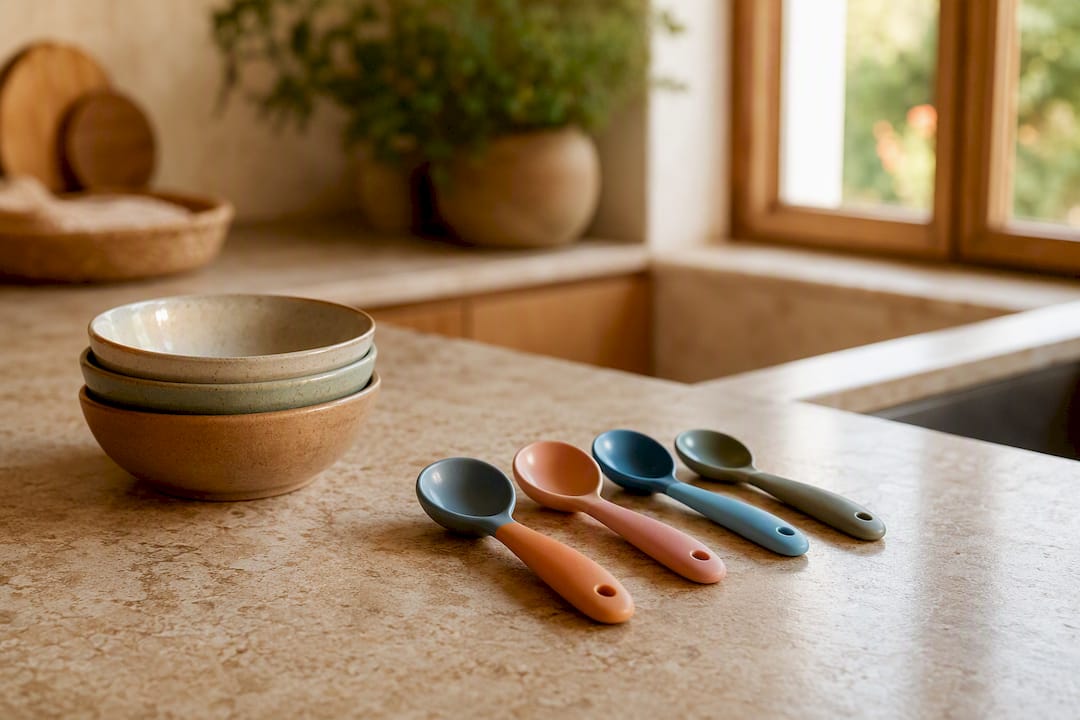
Before the meal, staff should confirm allergy lists against the day's dishes, set out low, non-slip trays so bowls do not slide on the table, and assign one adult per table to supervise serving rather than eating separately. Child-sized serving spoons matter more than they sound; a spoon too large for small hands is the single biggest cause of spills.
During the meal, rotate the platter in one direction so every child gets a turn without reaching across a neighbour. Encourage children to serve themselves even if the result is uneven, since the chance to choose their own portion is the point, not a mess to prevent. If a child over-serves, a calm prompt to "take a little now, you can have more later" works better than removing food from their plate.
After the meal, involve children in simple clearing tasks and use the moment for a short reflection on sharing or trying something new. It reinforces the social skills the format is meant to build.
Pro Tip: Keep a spare, pre-portioned plate ready at every childcare table. It lets you seat a child with a severe allergy or sensory aversion at the same table as their peers without excluding them from the shared experience.
- Non-slip trays and child-sized serving spoons.
- Wide, shallow serving bowls that small hands can manage.
- A pre-portioned backup plate for allergies or younger toddlers.
- Clear, labelled allergen information visible to all staff at the table.
Setting up family style service in a restaurant
Restaurants cannot simply swap plated mains for platters and expect the kitchen to cope. Family-style service depends on real system changes: menu selection, portioning standards and staff training all need to shift together, or service slows down fast.
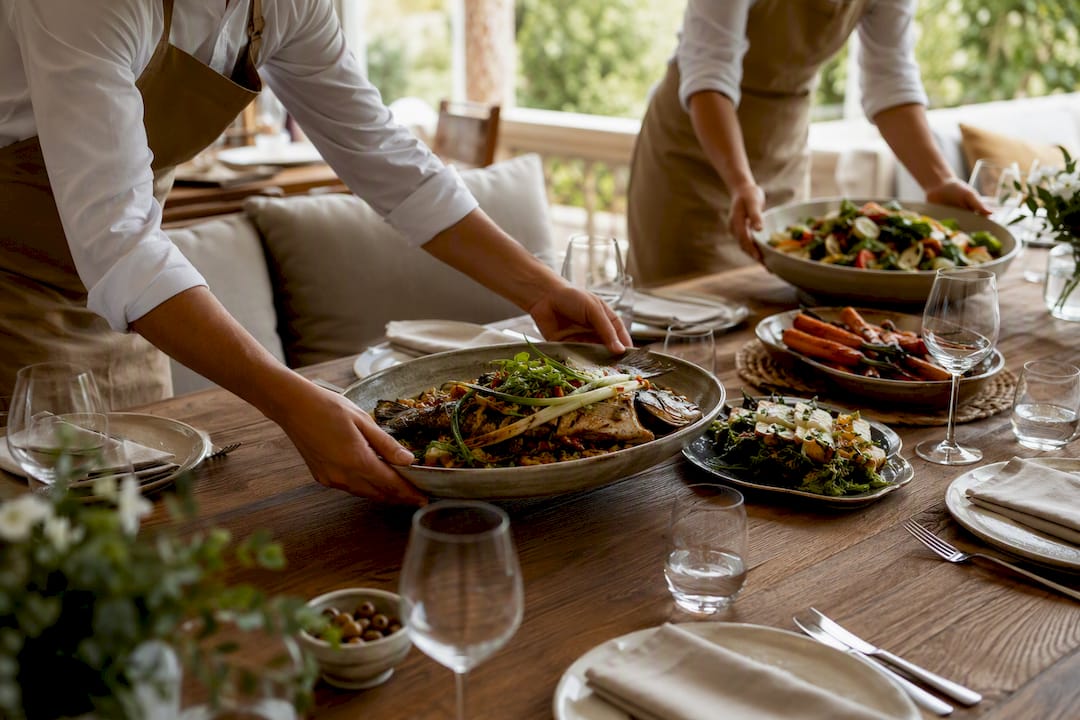
Menu design comes first. Dishes need clear serving counts on the menu itself, so a table of four knows whether one platter feeds them or whether they need two. Bundle pricing tends to work better than per-dish pricing here, since it removes the awkward moment of a table debating whether to order a second bowl of rice.
Staffing changes too. A family-style operating model needs servers briefed on refill timing rather than course timing, and someone at the pass who understands that six identical bowls of the same dish are easier to produce consistently than six variations of a plated dish.
- Redesign the menu around shareable serving sizes with printed portion counts.
- Brief servers on refill cues rather than traditional course sequencing.
- Adjust kitchen production to batch cooking rather than individual plating.
- Update packaging for takeout so shared dishes still travel and reheat well.
- POS systems need bundle logic built in, not just single-item pricing.
- Kitchen routing should favour batch production over individual plate assembly.
- Packaging for delivery needs to keep sauces and proteins separate to avoid sogginess.
How to host a family style meal at home or in a villa
Hosting family-style at home rewards preparation more than plated dinners do, mostly because timing several shared dishes to land together takes more coordination than one plate per guest.
- Plan a menu of two or three mains that can sit on the table together, such as a braise, a pasta and a vegetable side.
- Prep components in advance so nothing needs last-minute individual assembly.
- Set the table with wide serving bowls and a spoon in every dish before guests sit down.
- Serve starters first, then bring mains out together rather than staggered.
- Pace refills from the kitchen rather than overloading the table at once.
Braises, one-pan pastas, mezze-style boards and paella-style rice dishes all suit the format naturally, since they are designed to be spooned rather than sliced and arranged.
- Choose dishes that hold their temperature well over a longer table conversation.
- Keep at least one vegetarian or allergen-free dish clearly separated.
- Have a simple dessert plated individually, since it signals the meal is winding down.
For villa dinners and private celebrations, a private chef removes most of the coordination burden. Joseph Warner's personalised menus are built around exactly this kind of shared service, drawing on more than 13 years of French-trained culinary experience to portion, plate and separate allergens without losing the relaxed, communal feel that makes family-style dining worth choosing in the first place.
Compact equipment checklist for any setting
- Wide, shallow serving bowls (deep bowls make serving spoons hard to reach the bottom).
- One serving spoon or tongs per dish, never doubled up with personal cutlery.
- Non-slip mats or trivets under hot platters.
- Small side plates for starters, kept separate from the main sharing dishes.
- Platters positioned centrally, within reach of at least two diners.
- Condiments and sauces placed near the dishes they accompany, not scattered randomly.
Presentation still matters even in a practical, self-serve format. A wide bowl of glazed vegetables arranged with the colour facing up reads as considered, not just functional, and takes seconds longer to plate.
How much food to serve for shared platters
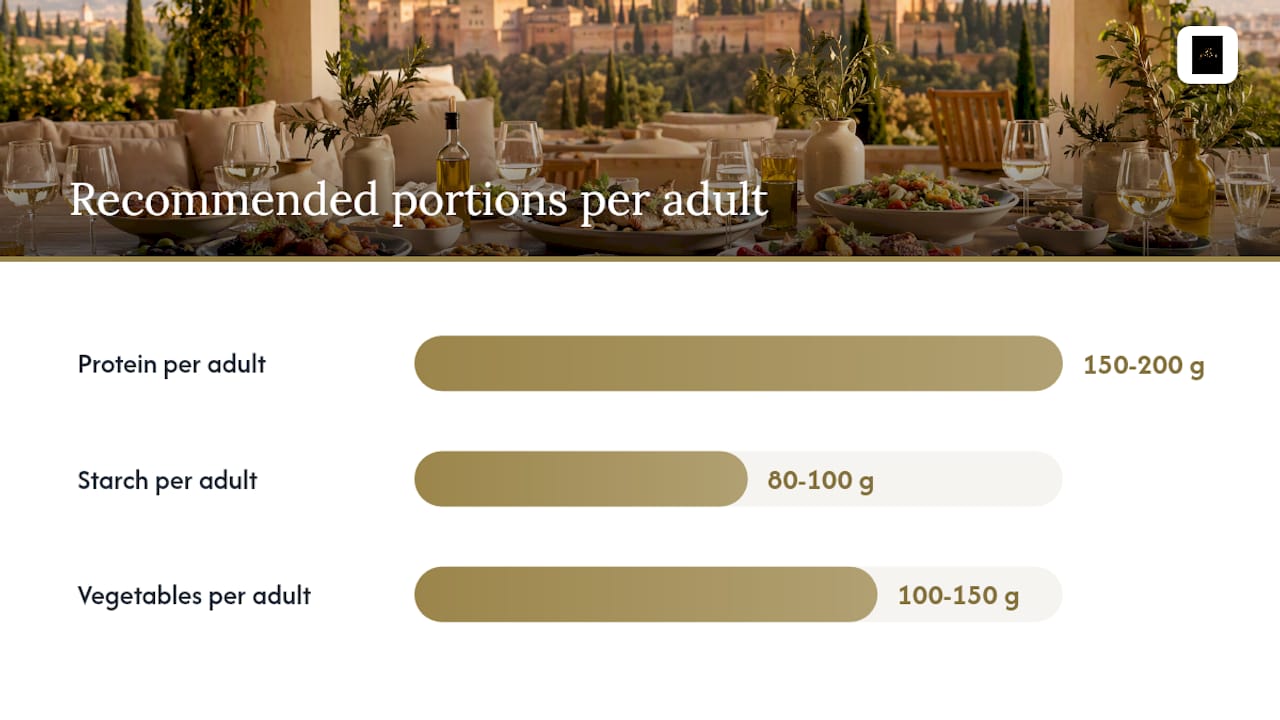
Portioning for shared dishes is less precise than plating, but a few rules of thumb keep waste down and stop tables running short. As a starting point, budget roughly 150 to 200 grams of protein per adult, 80 to 100 grams of starch, and 100 to 150 grams of vegetables, then adjust up for dishes that double as a main feature like paella.
Waste drops noticeably when hosts serve slightly smaller starter portions and keep a refill ready in the kitchen rather than piling everything onto the table at once. It also means fewer half-finished bowls at the end of the night. Restaurants applying the same logic often build refill rules directly into their menu structure, so servers know exactly when a table qualifies for a top-up rather than a fresh order.
- Serve starters slightly smaller than you think necessary; you can always refill.
- Batch-cook starches and vegetables separately from proteins to control timing.
- Keep one dish in reserve in the kitchen rather than crowding the table upfront.
Professional tips that make family style dining work
Timing separates a good family-style meal from an average one. Dishes need to land at the table within a few minutes of each other, hot but not scalding, since a platter that sits too long loses the atmosphere it is meant to create. Describing each dish briefly as it arrives, rather than leaving guests to guess, also nudges people to try things they might otherwise skip.
Sensory detail matters more in a shared format than a plated one, since guests are handling food themselves rather than simply receiving it. Joseph Warner's approach, shaped by training in traditional French technique and years working across Mediterranean and Spanish kitchens, leans on aroma, texture and visual contrast to guide diners toward dishes without saying a word. Working as a deaf chef, he built that sensory-first method deliberately, and it translates naturally to villa dinners in Granada and along the Costa Tropical, where guests often want the meal to feel unhurried and personal rather than formally staged.
Pro Tip: When serving a mixed-age table, put the mildest version of a dish nearest the children and the more robust, spiced version further along. It avoids two separate cooking runs while still respecting different palates.
- Announce dishes briefly as they land, rather than leaving guests to identify them alone.
- Match spice and intensity gradients across the table for mixed-age groups.
- Keep one dish deliberately mild for guests with sensitive palates or young children.
Why family style dining rewards good planning, not luxury
The biggest misconception about family-style dining is that it is a casual fallback, easier than a plated meal because nobody has to arrange anything on a plate. The opposite is closer to the truth. A shared table demands more thought about timing, portioning and allergen separation than a plated dinner does, precisely because there is no individual control once the platter lands.
What gets overlooked most often is pacing. Hosts focus on the menu and forget that a shared meal lives or dies on how dishes are sequenced and refilled. Get that right, and the format delivers exactly what it promises: a table that talks more and eats slower, in the best sense.
If there is one thing worth prioritising above menu choice, it is briefing your table, whether that is three toddlers in a nursery or ten adults at a villa dinner, on how the sharing works before the food arrives. A single sentence about serving spoons and pacing prevents almost every problem this format can create.
Sources
- What is family style dining?
- Family Style Meals: What They Are, How they Help, and 6 Examples - Maryann Jacobsen
- Hospitality
- What is family style dining: Family Style Dining Explained:
- What is Family-Style Dining? | Capital One
For venue-specific advice on running family-style dinners in a villa near Granada or along the Costa Tropical, The Sensory Chef can help plan the menu and service around your group.
FAQ
What are the benefits of family-style dining?
It builds connection through shared conversation, gives guests more variety per meal, and lets restaurants simplify kitchen production while children develop autonomy by choosing their own portions.
Is family-style dining safe for young children?
Toddlers under about four should generally be served a pre-plated portion rather than self-serving from a shared platter, since loose items on a communal dish carry a real choking risk at that age.
How do you manage allergies at a family-style meal?
Label allergen-heavy dishes clearly, keep a separate allergen-free version where possible, and brief staff or guests verbally rather than relying on a printed note alone.
How much food should I cook for a shared family-style meal?
Budget roughly 150 to 200 grams of protein per adult, 80 to 100 grams of starch and 100 to 150 grams of vegetables, adjusting upward for a single feature dish like paella.
Can a private chef run family-style service at a villa dinner?
Yes. A private chef handles portioning, plating and allergen separation so the meal keeps its relaxed, communal feel without the hosting burden falling on the guests themselves.