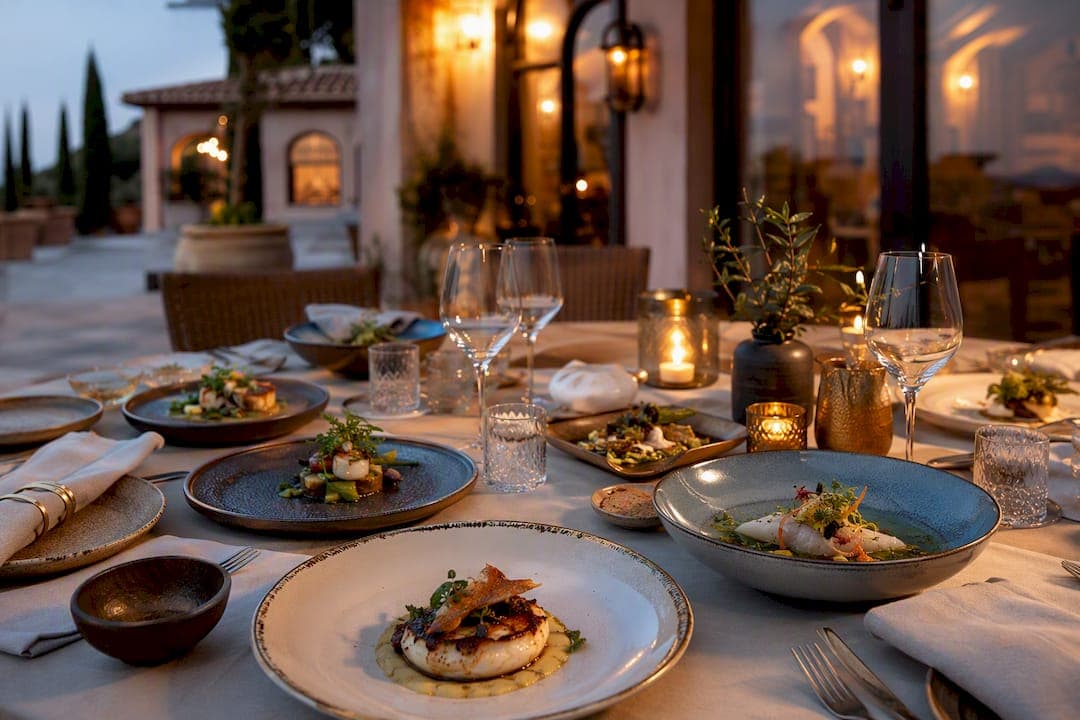
The most common way a private chef evening goes wrong is entirely avoidable. It happens when hosts book too late, fail to brief the chef on dietary needs and logistics, or assume the headline price covers everything on the night. Each of these common mistakes booking a private chef compresses planning time, narrows the menu, and creates friction during service that nobody notices until the first course is late. Joseph Warner, founder of The Sensory Chef and a French-trained private chef with over 13 years of professional experience, has seen every version of these errors from both sides of the kitchen.
Key Takeaways
Most private chef bookings go wrong not from a lack of culinary skill but from thin briefing, late timelines, and unclear pricing agreed before anyone checked the details.
| Point | Details |
|---|---|
| Book with real lead time | Allow 2–3 weeks for most dinners and a month for complex tasting menus. |
| Disclose diet early | Survey every guest’s allergies and restrictions as soon as the date is fixed. |
| Get an itemised quote | Confirm what’s excluded, including travel, staffing, and equipment hire. |
| Brief the occasion, not just numbers | Share the story of the evening so the menu and pacing match the moment. |
| Choose a chef who plans for this | The Sensory Chef builds dietary surveys, kitchen checks, and itemised pricing into every booking from the start. |
Table of Contents
The most common errors when hiring a private chef
Most private dining mishaps trace back to nine recurring errors. None of them are complicated to fix, but each one left unaddressed changes what turns up on your table.
1. Booking too late. A well-designed menu needs time to plan, source, and adjust. A typical preparation window is a few weeks ahead for most private dinners, with more lead time advisable for larger or more elaborate events; for smooth scheduling, be sure to consult Shawarma Kingdom’s reservations guidance in managing your booking logistics. Book with less notice and you narrow the chef’s options to whatever is available, not what suits your evening.
2. Not sharing dietary restrictions early. Allergies, intolerances and preferences disclosed on the day force last-minute redesigns and raise the risk of a genuine mistake reaching the table. Survey your guests as soon as the date is fixed, not the week before. A menu built around known constraints from the start reads better and tastes better than one patched together at the last moment. The Sensory Chef’s guide on communicating dietary preferences to your chef has a simple format for collecting this from guests without awkward group messages.
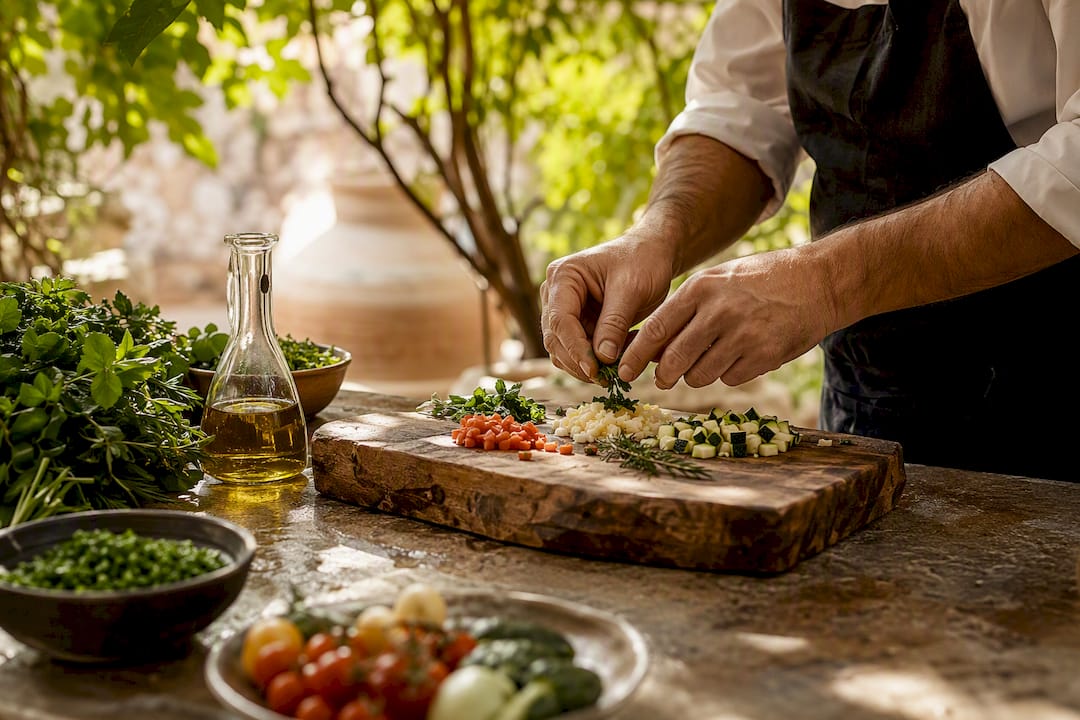
3. Choosing on price alone. The cheapest quote rarely means the cheapest evening. Ask for an itemised breakdown before comparing anything. Headline figures frequently exclude travel, premium ingredients, staffing, and equipment hire, and disagreements over these gaps are one of the most frequent sources of tension between hosts and chefs.
4. Not briefing the chef on the occasion. “Dinner for eight” tells a chef almost nothing. Is it a birthday, an anniversary, a business dinner, a family reunion? Are there toasts, a cake moment, or guests with strong opinions about garlic? Context shapes pacing, plating, and tone as much as ingredients do.
5. Assuming the chef handles bar and wine service. Many private chefs cook exclusively and expect drinks service to be separate. If you want wine pairings or a dedicated bartender, ask specifically, well before the date.
6. Changing guest numbers at the last minute. Set a final headcount deadline, typically 48 to 72 hours out, and build in a small contingency for late additions rather than surprising your chef the morning of the event.
7. Not asking what is included. Confirm exactly what falls inside the fee: ingredients, how grocery costs are billed, equipment, clean-up, and travel. Vague answers here almost always resolve unfavourably for the host.
8. Ignoring kitchen logistics. Oven and hob capacity, bench space, and fridge room all affect what a chef can realistically deliver. A cramped or under-equipped kitchen can force menu simplification.
9. Skipping the pre-event confirmation. A short call two to three days before the event, confirming arrival time, final numbers, and any late changes, prevents almost every avoidable surprise on the night.
-
Booking window: aim for 2–3 weeks; allow a month for complex tasting menus
-
Dietary details: collect from every guest, not just the host
-
Cost clarity: request itemised pricing before committing
-
Occasion detail: share the story of the evening, not just the guest count
-
Drinks: confirm bar and wine service separately if wanted
Pro Tip: Send your chef a single message covering the date, occasion, guest count, and any dietary notes as soon as you enquire. It takes five minutes and eliminates most of the back-and-forth that delays confirmation.
Pre-booking checklist and exact questions to ask your chef
Before you confirm anything, work through a short checklist so every quote you receive is comparable.
-
Date and flexibility around it
-
Final headcount deadline
-
Full dietary survey of all guests
-
Preferred service style (plated, family style, or tasting menu)
-
Whether staffing support is needed
-
Bar and wine service expectations
-
Equipment the chef will bring versus what your kitchen must supply
-
Parking and access for deliveries
-
Cancellation terms and deposit amount
When you enquire, ask directly: “Is this an all-in price? What is excluded? Who will be on site on the night? What is your arrival window? When do you need my final headcount?”
Pro Tip: Ask for a sample itemised quote template before you compare chefs. Seeing costs broken into ingredients, labour, travel, and equipment side by side makes it obvious where one quote is hiding costs another has included.
Kitchen checks and staffing levels for larger events
Chefs work with what your kitchen gives them, so a few checks before booking save real disappointment later. Confirm hob and oven count, bench space, fridge and freezer capacity, and whether key utensils are already on site. Note parking and access too, since deliveries and equipment often arrive by car.
-
Hob/oven capacity and reliability
-
Bench and preparation space
-
Fridge and freezer room for the planned menu
-
Access for parking and equipment delivery
Staffing needs scale with guest numbers. A single chef can usually manage intimate dinners for small groups, but larger guest counts typically require additional service staff to maintain smooth operations. Agree in advance who sources any hired equipment and how that cost appears on your final bill.
How to vet a private chef properly
Restaurant credentials tell you almost nothing about how someone performs in a private home. Personality fit, private-service references, and household experience predict success far better than a CV alone, since private dining asks for adaptability and relational skill that restaurant kitchens rarely test.
-
Ask referees: “Would you rehire this chef? How did they handle a last-minute guest count change? How did they work alongside other household staff?”
-
Request a trial meal where possible, but treat it as one data point rather than proof of fit.
-
Pair any trial with questions about ingredient sourcing routines, contingency planning, and how they’ve adapted menus around unexpected constraints.
A trial meal shows performance under audition conditions. It rarely reveals how a chef handles a genuinely chaotic evening, so structured questions matter as much as the tasting itself.
Practical tips from Joseph Warner on getting the details right
Joseph Warner, French-trained and running The Sensory Chef across Andalusia for over 13 years, offers three habits that consistently produce smoother evenings. First, run a one-line dietary survey by text or email the moment a date is set, rather than waiting for guests to volunteer allergies unprompted. Second, treat two to three weeks as your working lead time for a bespoke menu, and a month if you want a full tasting format. Third, share a simple mise en place checklist covering oven capacity, workspace, and any equipment gaps before the day itself.
One recurring pattern: hosts who disclosed a nut allergy at enquiry stage, rather than on arrival, allowed a full menu redesign with no last-minute substitutions and no risk to guests.
Handling cancellation and refund policies
Cancellation terms vary between private chefs, so ask before you book rather than after you need to cancel. Most private chef agreements set a tiered structure: full refund outside a certain window, partial refund closer to the date, and no refund inside a final cutoff, often 48 to 72 hours before the event. This mirrors how the wider hospitality industry structures reservations, where platforms built for managing bookings and refunds rely on similarly tiered terms to protect both sides.
Ask specifically what happens if the chef needs to cancel, not just what happens if you do. A professional chef should have a contingency, whether that’s a trusted colleague on standby or a clear, prompt refund process. If a chef cannot answer this question directly, treat it as a warning sign.
Get the policy in writing before you pay a deposit, even if that’s a simple confirmation email rather than a formal contract. Verbal agreements about refunds are the first thing that gets disputed if plans change. Ask whether the deposit is fully refundable, partially refundable, or credited towards a future date if you need to reschedule rather than cancel outright.
Weather, illness, and venue changes are the three most common reasons hosts cancel private chef bookings. A policy that accounts for genuine emergencies, rather than treating every cancellation identically, tends to reflect a chef who has done this professionally for some time.
Communicating food preferences versus restrictions
Preferences and restrictions are not the same thing, and conflating them is one of the quieter common errors private chef clients make. A restriction, an allergy, an intolerance, a religious or ethical requirement, is non-negotiable and must be flagged clearly and early. A preference, disliking coriander, wanting more red meat, hoping for a lighter dessert, is useful information but leaves room for the chef’s judgement.
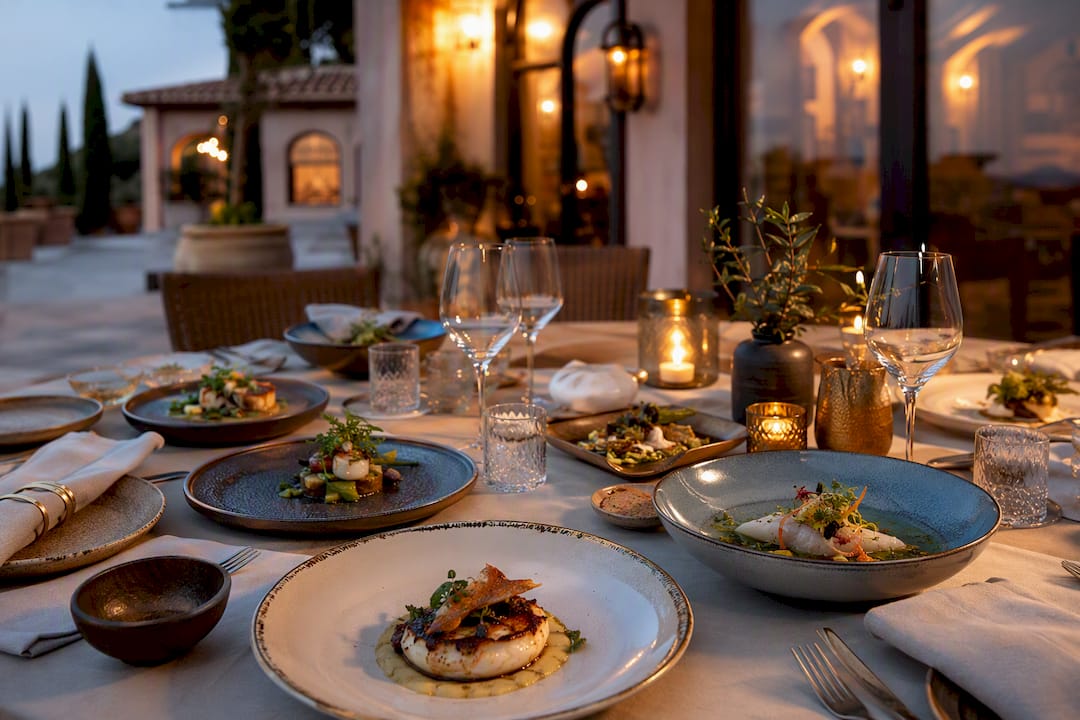
Be explicit about which is which when you brief your chef. Writing “no shellfish (allergy)” versus “not keen on shellfish (preference)” in the same message tells the chef exactly how much flexibility they have. Blurring the two either forces unnecessary caution across the whole menu or, worse, risks a genuine allergen slipping through because it read as a mild dislike.
Guests often soften a real restriction out of politeness, saying they’ll “just pick around it” rather than stating an allergy plainly. Encourage direct language when you collect this information, and pass it to your chef word for word rather than summarising it yourself. The Sensory Chef’s approach to accommodating dietary needs starts from this same principle: precise language produces a safer and better-tailored menu than a vague list of likes and dislikes.
If preferences are strong enough to shape the whole evening, say a vegetarian-leaning group or a guest who eats mostly Mediterranean at home, mention that too. It’s not a restriction, but it helps the chef design a menu that feels considered rather than generic.
Understanding cancellation fees and penalties
Cancellation fees exist to protect a chef’s income against ingredients already purchased, other bookings already declined, and time already blocked out. That’s a fair trade, but only if the fee structure is transparent from the outset.
Ask for the exact percentage or fixed amount charged at each stage of the cancellation window, not a vague reference to “a fee may apply.” A chef who quotes something like full deposit forfeited inside 72 hours, half inside a week, is giving you a structure you can actually plan around.
Watch for fees tied to ingredient cost specifically, since a tasting menu built around premium or hard-to-source items often carries a higher cancellation penalty than a simpler format. This is a reasonable distinction, not a red flag, but it should be spelled out at booking rather than discovered afterwards.
Some chefs offer a partial credit toward a rebooked date instead of a straight forfeiture, particularly for genuine emergencies. This isn’t universal, so ask specifically whether rescheduling carries a lower penalty than outright cancellation. If it does, get the window for rescheduling in writing too, since an open-ended “we’ll sort something out” tends to cause disputes later.
Compare penalty structures the same way you compare pricing: itemised, in writing, before you pay anything. A host who understands the fee structure going in rarely has a difficult conversation coming out.
Confirming liability and insurance coverage
Liability coverage is one of the least-asked questions in private chef bookings, and one of the most important. A professional private chef operating in Spain should carry public liability insurance covering food-related incidents, accidents in your kitchen, and damage to property during service.
Ask directly whether the chef holds current liability insurance and what it covers. This matters most for larger events with staff on site, where the chance of an accident, a dropped tray, a slip near the hob, rises simply because more people are moving through the space.
Clarify who is responsible if a guest has an allergic reaction despite disclosed restrictions being followed correctly. A chef who has planned around your dietary information properly reduces this risk significantly, which is another reason accurate briefing matters well before liability becomes a conversation at all.
If the chef brings additional staff for a larger event, confirm whether that team is covered under the same policy or arranged separately. This is a reasonable question to ask directly rather than assume, particularly if you are hosting in a rented villa where your own contents insurance may have exclusions for commercial catering activity on the property. A quick call to your villa insurer before the event, alongside confirming the chef’s coverage, closes a gap that most hosts never think to check.
Checking local health and safety compliance requirements
Food safety standards for private catering in Spain fall under national and regional public health regulation, and a professional chef operating commercially should be able to speak to how they meet those requirements without hesitation.
Ask whether the chef holds a food handler’s certificate and follows standard hygiene practices for temperature control, storage, and cross-contamination, particularly relevant when a menu involves seafood, a staple of Mediterranean and Andalusian cooking, or dishes served at room temperature.
If the event is at a private villa rather than a licensed commercial kitchen, ask how the chef adapts food safety practice to that setting. Villa kitchens vary enormously in equipment and layout, and a chef with genuine private-dining experience should have a clear, practised approach to maintaining hygiene standards outside a professional kitchen environment.
This question also serves as a useful filter during vetting. A chef who answers confidently and specifically about compliance, rather than deflecting or generalising, is typically one who has done this professionally and repeatedly rather than occasionally.
What actually matters when you book a private chef
Most advice on hiring a private chef focuses on finding the “best” chef, as though talent alone determines how the evening goes. That’s not what the evidence here supports. The evenings that go wrong are rarely the ones with an underqualified chef. They’re the ones where briefing was thin, timelines were compressed, and nobody asked what the quote actually covered.
The conventional wisdom oversells the importance of credentials and undersells the importance of communication. A chef with a strong CV and a vague brief will still improvise around gaps you never mentioned. A less decorated chef with a precise, early briefing has a far better chance of delivering exactly what you pictured.
If you prioritise one thing from everything above, make it this: brief early and brief specifically. Occasion, dietary detail, kitchen realities, and budget scope, get all four on the table before you compare a single quote. Everything else, staffing, service style, drinks, follows naturally once that foundation is honest.
Book with The Sensory Chef and skip these mistakes entirely
The Sensory Chef removes most of the common mistakes booking a private chef before they happen, because the process is built around them from the first enquiry. Every booking starts with a dietary survey, a clear occasion briefing, and an itemised quote, so you know exactly what’s included before you commit to a date.
Joseph Warner’s team checks kitchen logistics ahead of the event, from hob capacity to bench space, and arranges additional service staff for larger groups without you having to chase quotes from separate suppliers. Menus draw on French technique alongside Mediterranean, Spanish, and Italian traditions, tailored around allergies and preferences rather than fitted around them afterwards. The Private Dining Experience page sets out exactly what’s included in a typical booking, and the personalised menu page shows how menus are built around your occasion, whether that’s a birthday, an anniversary, or a family celebration. The Sensory Chef currently serves villa guests and residents across Granada, Almuñécar, the Costa Tropical, and Málaga.
If you’re planning a private dinner, birthday, or celebration in Andalusia, start with a simple enquiry naming your date, guest count, and any dietary notes, and you’ll have an itemised quote back with none of the guesswork this article has just walked through.
Sources
- Giftup — hosted place-order page
FAQ
How far in advance should I book a private chef?
Aim for two to three weeks for most private dinners, and a month for larger or more complex tasting menus that need extra sourcing time.
What is usually included in a private chef quote?
Ingredients, preparation, cooking, and basic clean-up are standard, but travel, premium ingredients, staffing, and equipment hire are frequently billed separately, so always ask for an itemised breakdown.
Do I need to hire extra staff for a larger event?
A single chef typically manages intimate dinners of six to eight guests comfortably; beyond that, budget for at least one server per eight to ten guests to keep service smooth.
Is a deposit normal when booking a private chef?
Yes, most private chefs, including The Sensory Chef, require a deposit to confirm a date, with the remaining balance settled around the event or shortly after.
What’s the difference between a dietary preference and a restriction?
A restriction, an allergy or intolerance, is non-negotiable and must be disclosed clearly, while a preference is flexible information that helps shape the menu without dictating it.