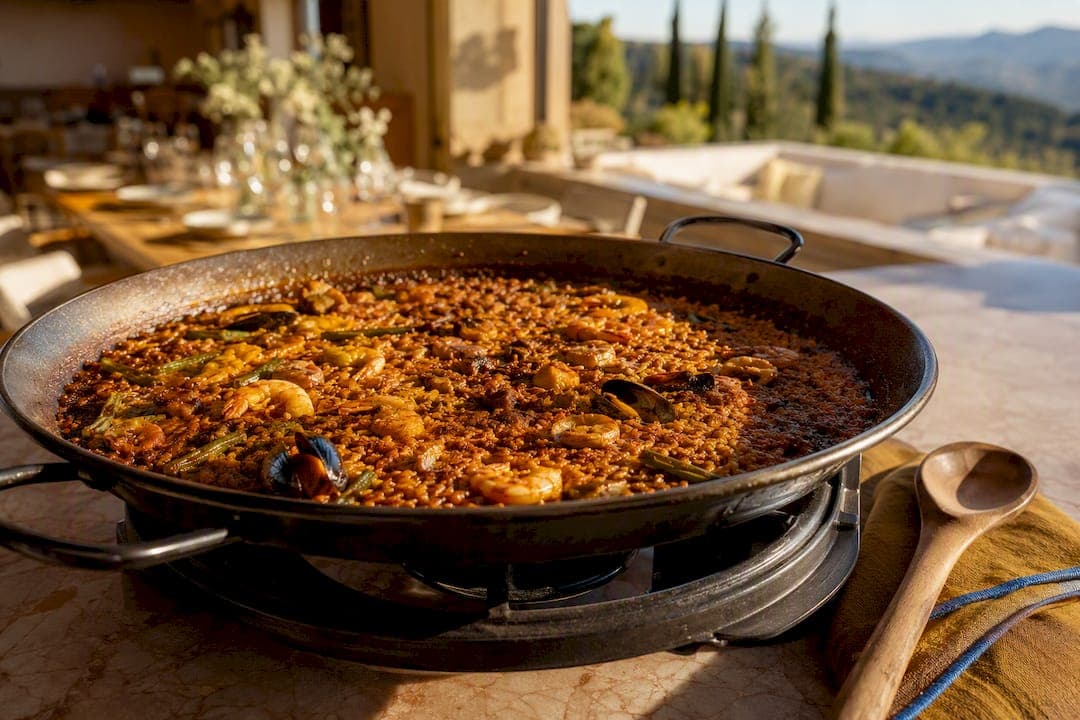
A hands-on paella class, or a private chef workshop held right in your own kitchen, is the fastest practical way to learn how to cook proper paella at home. The best sessions teach you to handle bomba rice and build a genuine socarrat, the caramelised crust that separates good paella from great paella, and a chef-led format such as The Sensory Chef's makes that transferable to your own hob.
TL;DR:
- Choosing a private chef session ensures hands-on learning with direct feedback, increasing your ability to perfect techniques like socarrat formation.
- Use Bomba rice, high-quality fumet, and saffron threads for authentic flavor and texture, while avoiding long-grain rice and powder saffron.
- Focus on mastering the sofrito, avoiding stirring after adding stock, and properly timing the resting period for a genuine paella crust.
- Smaller group classes (up to 12 participants) offer more practical guidance and personalized correction, versus large demonstration-only sessions.
- Expect to pay around €69 for a 2.5-hour group class in Spain, with private sessions typically costing more depending on group size and menu customization.
Table of Contents
- What does a clase de paella en casa actually involve?
- Your step-by-step checklist for cooking paella after class
- How do you choose the right paella class for you?
- What should you expect to pay and how long does it take?
- Why learn paella from a professional private chef?
- Where to source authentic ingredients for paella at home
- What actually separates a good paella class from a wasted afternoon
- Book a private paella experience with The Sensory Chef
- Sources
- FAQ
What does a clase de paella en casa actually involve?
Not every paella class is built the same way, and the format you pick decides how much you actually walk away able to cook. The Spanish phrase clase de paella en casa covers everything from a shared cooking studio session to a chef arriving with a pan and a bag of Bomba rice at your villa door.
Hands-on workshops put you at a burner, usually paired with one other person, and you cook your paella from sofrito to socarrat before sitting down to eat what you made. Many workshops in Spain run this way deliberately: two people per pan, shared equipment, and a meal together at the end rather than a demonstration you simply watch.
Private in-home chef sessions flip the dynamic. The chef leads, but you can be as involved as you like, from chopping vegetables and toasting rice to controlling the final rest before serving. This suits people who want a tailored menu (say, a mar y tierra paella for a mixed group of meat and seafood eaters) without managing every step solo.
Demo classes are lecture style: you watch, ask questions, and taste, but you don't cook. They work well as a first exposure to technique before booking something hands-on.
Online and multi-lesson courses suit a different kind of learner. Platforms such as Scoolinary structure paella teaching across several lessons covering different recipes and techniques, which fits someone who prefers to study in stages rather than absorb everything in one afternoon.
Market-visit classes add an ingredient-sourcing layer before the cooking starts. Some Valencia-based experiences include a guided market visit where a chef explains what to look for in good rice, fresh shellfish, or ripe tomatoes, before moving to the stove.
Recipes taught across these formats typically include:
- Paella Valenciana (chicken, rabbit, green beans, garrofón)
- Paella Marinera (seafood only, often with a fish and shellfish fumet)
- Mar y Tierra (a "sea and land" mix of meat and seafood)
- Fideuá (the noodle cousin of paella, cooked the same way)
- Vegetarian versions built around artichokes, peppers, and seasonal vegetables
Most classes, regardless of format, include the ingredients, cooking equipment, a tasting or full meal, and often a recipe card or diploma to take home.
Your step-by-step checklist for cooking paella after class
A class teaches you the feel of paella. This checklist is what you use the next morning, on your own hob, to put what you learned into practice.
Equipment first. You need a paella pan (paellera) sized to your group, approximately small for two people, up to large for a bigger group. A wide, low-sided pan matters more than a fancy one, because surface area is what lets the rice cook in a thin, even layer. If your hob has a single burner smaller than the pan's base, use two rings, or invest in a gas paella burner ring for outdoor cooking, which gives more even heat than most domestic hobs. Keep a wide wooden spoon or spatula, a ladle for stock, and a lid or foil for the resting stage.
Ingredients that actually matter. Bomba rice is worth seeking out specifically. It absorbs a high volume of liquid without turning mushy, which is what long-grain rice can't do. You need a proper fumet (fish or meat stock, depending on the dish), real saffron rather than colouring powder, good olive oil, ripe tomato for the sofrito, and whatever proteins or vegetables your recipe calls for.
Here is the sequence, with rough timings for a two-burner home setup:
- Build the sofrito (8 to 10 minutes). Sweat onion, garlic, and grated tomato in olive oil over medium heat until it reduces to a thick, jammy base. Rushing this step is the single most common reason home paella tastes flat.
- Sear your proteins (5 to 7 minutes). Brown chicken, rabbit, or seafood in the same pan before the sofrito, then set aside if needed, or push to one side.
- Toast the rice (2 minutes). Add the rice directly to the sofrito and stir so every grain gets coated in oil and tomato. This step protects the texture later.
- Add hot stock and saffron (18 to 20 minutes). Pour in hot fumet, roughly 2.5 to 3 times the rice volume, and add saffron. Do not stir again from this point. Simmer uncovered, adjusting heat so the liquid reduces steadily rather than violently.
- Push for the socarrat (2 to 3 minutes). Once the liquid has gone, raise the heat briefly to caramelise the bottom layer of rice. Listen for a faint crackle rather than watching for smoke.
- Rest, covered, for 5 minutes. This lets the rice finish absorbing residual moisture and settles the texture before serving.
Pro Tip: Resist the urge to stir once the stock goes in. Stirring releases starch the way it does in risotto, and that's exactly the texture paella is not supposed to have.
The most common beginner mistakes are rushing the sofrito, using long-grain rice instead of Bomba, and stirring out of habit. All three are fixable the moment you know to watch for them, which is precisely what a hands-on class trains your eye to catch.
How do you choose the right paella class for you?
Group size and hands-on time are the two variables that determine whether you leave able to cook, or just able to describe what you watched. Smaller groups, generally capped around 10 to 12 people, tend to give more direct feedback while you're actually cooking, which matters far more than a fancy venue.
Before booking, ask the organiser:
- How many people cook per pan, and how much of the process is hands-on versus watched?
- What language is instruction given in, and is that language comfortable for your group?
- Are ingredients, equipment, and the final tasting included in the price?
- Can the menu adapt to allergies, vegetarians, or specific dietary needs with notice?
- Do you take home a recipe card, printed notes, or a diploma?
- What is the cancellation or refund policy if plans change?
Red flags worth taking seriously: a class that calls itself "hands-on" but seats more than 15 people around a single demonstration pan, vague answers about what's included in the price, or no mention at all of the rice variety used. If nobody can tell you whether they're cooking with Bomba or a generic short-grain rice, that's a fair signal the class prioritises spectacle over technique.
What should you expect to pay and how long does it take?
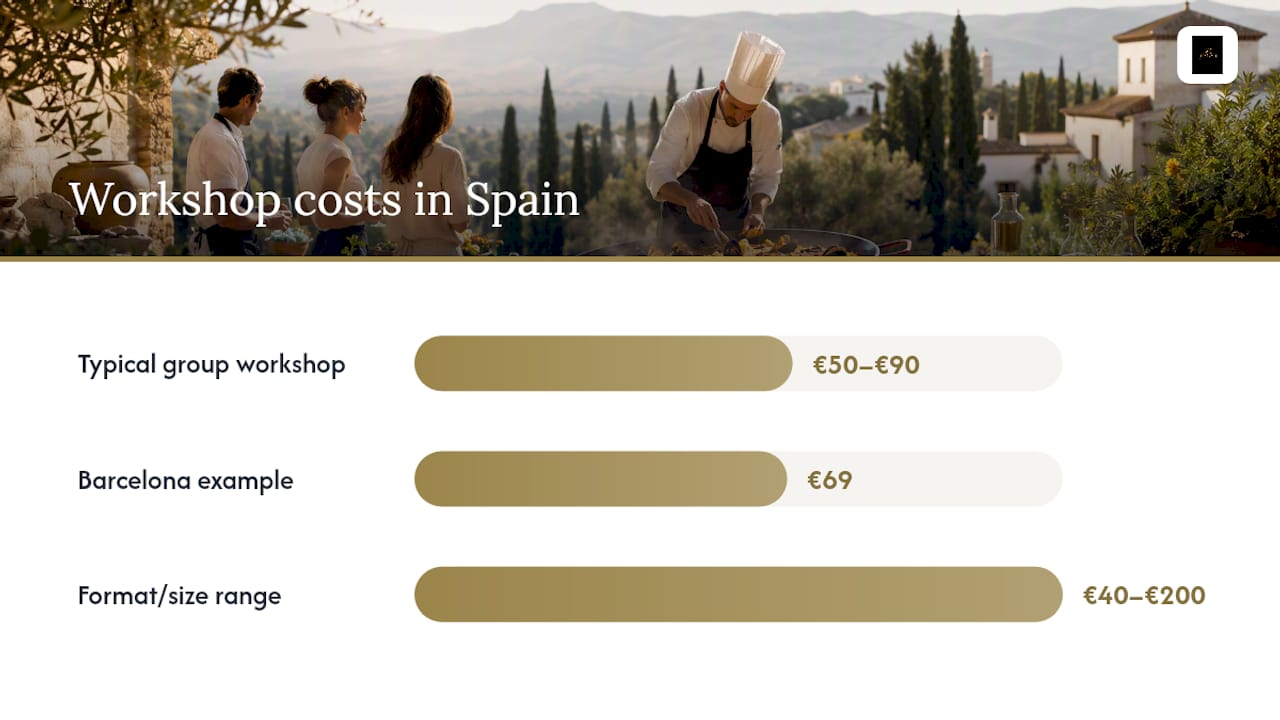
Group workshops in Spain typically run 2 to 3.5 hours and cost between €50 and €90 per person, depending on the venue and inclusions. A Barcelona hands-on session, for example, lists a 2.5-hour class at around €69 per person, using DO Valencia Albufera rice and covering the socarrat technique directly.
Private in-home sessions vary far more, since pricing depends on group size, menu complexity, and location, but they generally sit higher than a shared group class because you get a chef's full attention rather than a slice of it.
What's usually included:
- All ingredients, the cooking equipment, and a full tasting or meal
- A recipe card, printed notes, or sometimes a diploma of attendance
- Guidance on portioning rice per person depending on appetite and other dishes served
What often costs extra: drinks beyond a welcome glass, chef travel fees for private sessions outside a set radius, and any market visit add-on. If you're planning a home paella night for a group, one practical note worth checking with any organiser is what a private group cooking class typically costs, since group workshops in Spain commonly range from €40 to €200 depending on format and size. Dietary accommodation is increasingly standard: several providers state outright that they adapt for allergies and vegetarian diets given advance notice, so always ask early rather than on the day.
Why learn paella from a professional private chef?
Joseph Warner trained in traditional French gastronomy before spending more than 13 years in professional kitchens, eventually founding The Sensory Chef to bring private dining and hands-on cooking experiences to villas and homes across Granada and Andalucía. That background matters for paella specifically, because a chef who has managed professional kitchens learns to translate restaurant-grade technique down to whatever hob a client actually has, rather than insisting on ideal conditions.
What that gives home cooks in practice: adapted heat management for domestic burners instead of commercial gas rings, sensory cues for judging doneness by smell and sound rather than a stopwatch, and menu adjustments that keep a dish authentic while working around allergies or dietary preferences.
A deaf chef learns to read a kitchen through senses other than sound, watching how rice moves in the pan, judging colour change in the sofrito, timing by steam and texture rather than by ear.
This sensory approach, developed around Joseph Warner's own experience as a deaf chef, shapes how classes are taught: instruction leans on visual and textural cues that tend to help any home cook, not just those with specific access needs, because it forces you to actually watch the pan instead of half listening for a timer.
Where to source authentic ingredients for paella at home
Bomba rice is the ingredient most home cooks get wrong, usually by substituting whatever short-grain rice is nearest to hand. Look for it specifically labelled as Bomba or under the DO Valencia Albufera designation in Spanish supermarkets, delicatessens, or specialist online grocers that ship rice, saffron, and paprika together. It costs more than standard rice, but its capacity to absorb roughly three times its volume in stock without turning mushy is the entire reason paella has its texture.
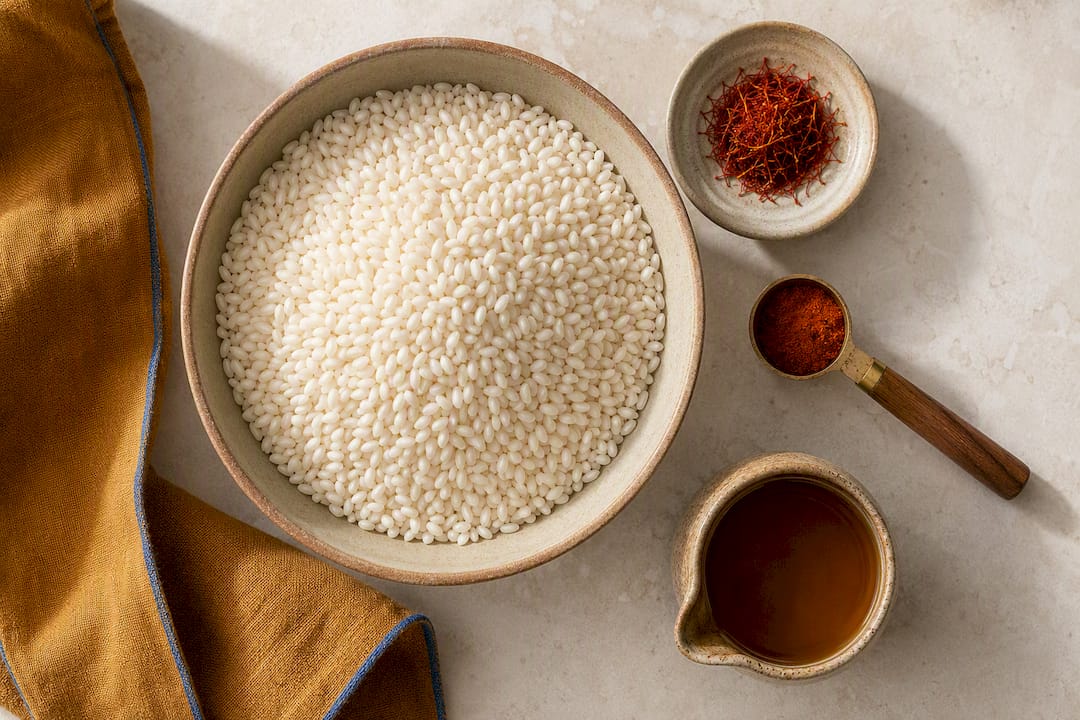
Saffron is the second ingredient worth being fussy about. Buy threads, not powder, and check the packaging states pure saffron rather than a blend with turmeric or other colouring agents, which is common in cheaper mixes sold as "paella seasoning."
For stock, a good fishmonger will often sell fish bones and shells cheaply, or even give them away, which makes a fresh fumet far better than a shortcut. If fresh isn't practical, a good-quality bought fish or chicken stock, reduced slightly to concentrate flavour, is a reasonable stand in.
Local markets, where available, remain the best source for ripe tomatoes, fresh green beans, and seasonal vegetables, and several paella experiences build a market visit into the class precisely so participants learn what freshness actually looks and smells like before they cook with it. If you're building a wider Mediterranean-inspired menu around your paella night, seasonal pairing ideas can help you plan starters or sides that don't compete with the main dish.
What actually separates a good paella class from a wasted afternoon
Most guides to learning paella focus on recipes, which misses the point entirely. Recipes are widely available and largely interchangeable. What separates a class worth paying for from one that isn't is whether you get your hands on the pan, and whether someone corrects your sofrito before it's ruined rather than after.
The conventional advice, watch a demo, take notes, try it at home, undersells how much technique lives in timing and sensory judgement rather than measurements. You cannot learn to recognise the sound of a socarrat forming, or the exact moment stock has reduced enough, from a written recipe. You learn it by standing at a pan while someone tells you "now" at the right second.
If you're serious about reproducing restaurant-quality paella at home, prioritise hands-on time over group size, ingredient quality over convenience, and a private, chef-led session over a crowded demo if your budget allows it. The rice and the saffron matter less than the eye you develop for judging both.
— Joseph Warner
Book a private paella experience with The Sensory Chef
If you'd rather skip the search for a workshop and bring the class straight to your villa, The Sensory Chef's paella cooking experience is built for exactly that: a private, hands-on session where the ingredients, equipment, and guidance all arrive with the chef, and you cook alongside him rather than watching from a distance.
The session suits villa guests planning a group activity, families wanting a shared cooking afternoon during a stay in Andalucía, and anyone marking a birthday, anniversary, or small celebration with something more memorable than a restaurant booking. Joseph Warner tailors the menu around your group, whether that means a classic Paella Valenciana, a seafood Marinera, or a version adjusted for allergies and dietary needs, and the class ends the way any good paella session should: with everyone sitting down to eat what they made. For groups wanting a broader cooking format beyond paella alone, the Mediterranean cooking workshops in Granada cover similar hands-on ground with a wider menu.
To check dates and discuss your group size, menu, and any dietary requirements, visit The Sensory Chef's booking page and get in touch directly. It's the most straightforward way to turn a paella class into an evening you actually remember.
Sources
A handful of course and experience pages are worth checking before you book elsewhere, simply to compare what "included" actually means from one provider to the next.
- Cursos de Paellas | La Paella en Casa
- Paella cooking class in Valencia | Market visit & lunch
- Paella Cooking Class in Barcelona (El Raval) 5.0 * | RTMY
- Cocina Básica en Casa: Paellas | Scoolinary
FAQ
What is the secret to a perfect paella?
The real secret is restraint: build a proper sofrito slowly, never stir once the stock is added, and let the pan run dry enough at the end to form a genuine socarrat without burning the rice underneath.
How do you make a good paella at home?
Use Bomba rice, a hot fumet at roughly 2.5 to 3 times the rice's volume, and follow the sequence of sofrito, searing, toasting the rice, then simmering the stock undisturbed before resting the pan for five minutes.
How many types of paella classes are there?
Broadly five: hands-on group workshops, demo-only classes, private in-home chef sessions, market-visit classes, and multi-lesson online courses, each suited to a different budget and learning style.
How can I make an easy, tasty paella without overcomplicating it?
Stick to one protein type, such as chicken or prawns, keep the vegetable list short, and focus your effort on the sofrito and the resting stage rather than adding extra ingredients, since simplicity cooked well beats a crowded pan cooked carelessly. A private, chef-led session like The Sensory Chef's paella experience is a practical way to get that technique corrected in real time rather than guessing from a recipe alone.