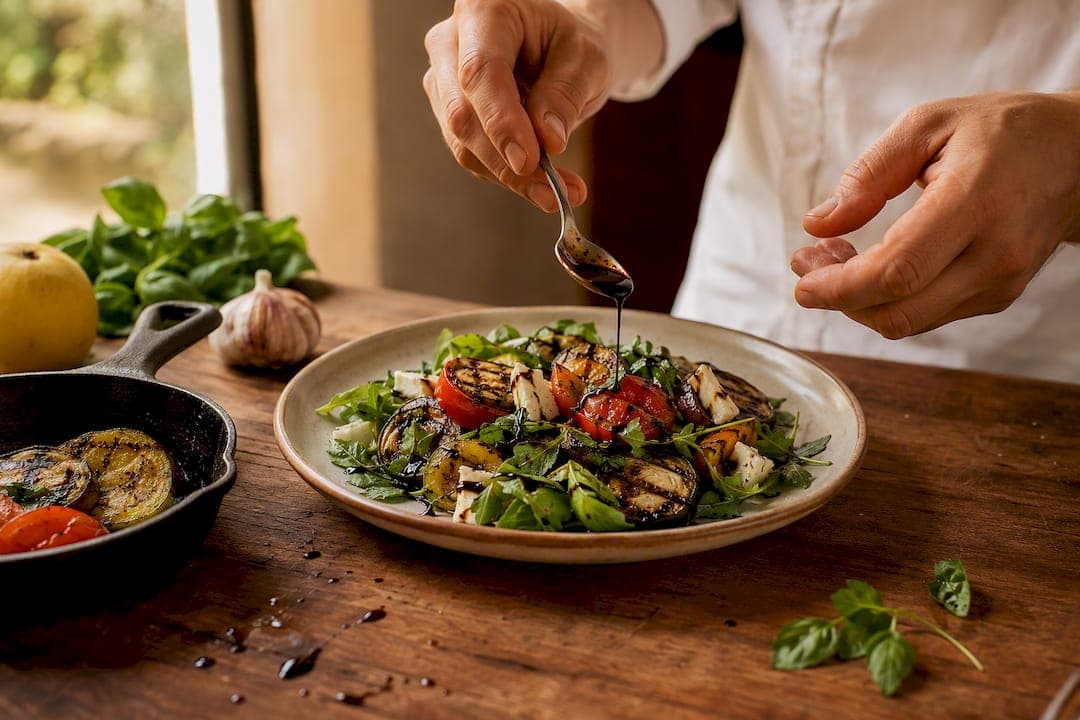
For social or celebratory groups, a private, hands-on workshop or a chef-led in-villa class is usually the better choice, since both keep every guest cooking rather than watching. Team-building groups do best with collaborative tasks split across stations. Entry-level workshops typically start around €40 per person, while a bespoke private-chef event with The Sensory Chef runs on a tailored quote built around your menu, guest count and location.
TL;DR:
- Private-chef in-villa classes typically cost between 150 and 200 euros per person, depending on the menu and inclusions.
- Group workshops start around 40 euros per person, covering ingredients, basic instruction, and a shared meal, with costs decreasing as group size increases.
- Shelters like paella and tapas classes are popular for sociable groups, while demonstration sessions suit larger or time-sensitive parties.
- Customizable menus and dietary accommodations are common, with most providers able to swap ingredients for allergies without losing the menu’s spirit.
- Clear communication of inclusions, cancellation policies, and a detailed quote are essential before booking to avoid hidden costs or misunderstandings.
Table of Contents
- Types of group cooking experiences and when to choose each
- What organisers should expect to pay (price ranges and what is included)
- Popular themes and menus for group classes
- Logistics: duration, group size, space and what the provider needs from you
- How to choose the right class or provider
- Author expertise and practical advice from a private-chef perspective
- Cancellation and refund policies
- Payment methods and deposit requirements
- Confirmation and communication process before the event
- Tips for maximising group engagement and enjoyment during the class
- How The Sensory Chef can deliver a private group class or in-villa workshop
- A chef's quick perspective: hosting tips to make the class memorable
- Sources
- FAQ
Types of group cooking experiences and when to choose each
A hands-on workshop puts guests at the stove in pairs or small teams, following a set menu with guidance throughout. It suits birthday parties, hen weekends and any group that wants to say they cooked their own dinner.
A demonstration plus tasting works better for larger or mixed-mobility groups, tourist parties, or anyone short on time. The chef cooks, the group watches and tastes, and there's little cleanup or standing required.
A private-chef in-villa class brings the whole experience to your rented villa or home, blending a short cooking session with a fully catered meal. This is the format most suited to anniversaries, family reunions and romantic dinners where you want cooking as entertainment rather than the entire event.
Other formats worth knowing:
- Market and cook sessions start with local shopping before heading to the kitchen, good for slower-paced groups with a full morning free.
- Paella or tapas masterclasses suit larger, sociable groups wanting one signature Spanish dish rather than a multi-course menu.
- Specialist add-ons like pastry workshops or cocktail pairings extend any format for groups wanting extra variety.
Team-building groups gain the most from formats with divided tasks and a shared finish line; celebrations benefit more from a bespoke menu and a private chef handling the pressure points.
What organisers should expect to pay (price ranges and what is included)
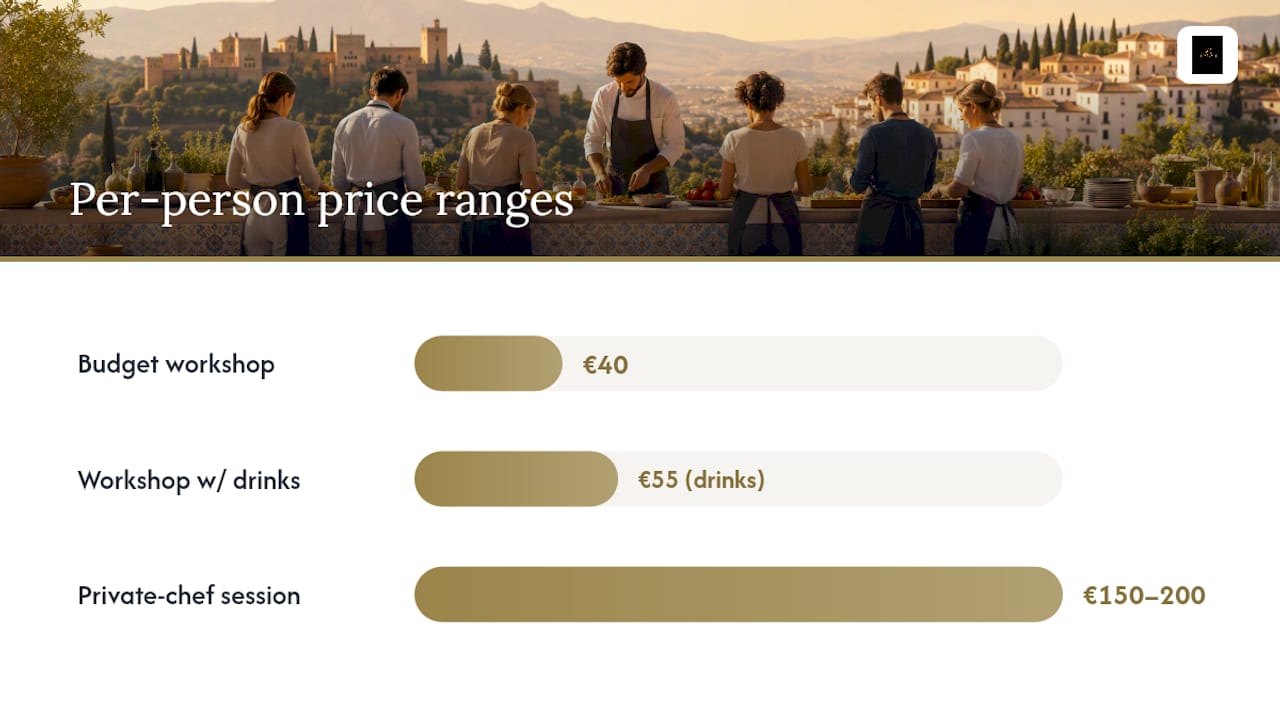
Budget-entry group workshops in Spain generally start around 40€ per person, covering a set menu, ingredients and basic instruction. Private-chef or specialist sessions typically start higher, often from 150 to 200€ per person, depending on the menu's complexity and what's included in the beverage package.
What most quotes cover:
- Ingredients and recipe cards to take home
- Aprons and use of kitchen equipment
- The finished meal, eaten together at the end
- Basic drinks (water, soft drinks, sometimes house wine)
Common add-ons that raise the price:
- Premium wine pairings or a full bar service
- A celebration cake or dessert course
- Travel costs for a chef visiting a villa outside the usual service radius
- Extra equipment hire for larger groups
Group size is the biggest lever on your final quote. Some cooking schools advertise sliding per-person pricing, where the cost per head drops as numbers rise, since fixed costs like the chef's time and kitchen hire spread across more guests. Location matters too: a villa an hour from the chef's base costs more to service than one five minutes away.
Pro Tip: Ask for a written breakdown of inclusions before comparing two quotes side by side. A 40€ workshop with no drinks included can end up pricier than a €55 one that covers wine and coffee.
Popular themes and menus for group classes
Matching the theme to the occasion matters more than picking the trendiest menu. A hen party wants something sociable and forgiving of mistakes; a corporate dinner wants precision and a polished finish.
- Paella and rice dishes are the classic sociable choice, ideal for larger groups and outdoor settings. Spain has a wide network of dedicated paella schools offering everything from traditional Valencian recipes to seafood variations.
- Spanish tapas and pintxos suit groups who want variety over one big dish, with several small plates built across the session.
- Mediterranean sharing plates work well for mixed dietary groups, since the format naturally accommodates swaps.
- Pasta masterclasses appeal to groups wanting a hands-on, flour-covered experience with immediate results.
- Pastry or dessert workshops make a strong addition to a birthday or anniversary booking.
- Cocktail pairing sessions add a social warm-up before or after the main class.
For dietary-friendly variations, most chefs can swap gluten, dairy or shellfish elements within a theme without losing the spirit of the menu. Say so when booking, and check the French cooking lessons or Spanish gastronomy examples for private events for menu inspiration before you enquire.
Logistics: duration, group size, space and what the provider needs from you
Most group cooking sessions run for two to three hours. That window gives enough time to cook properly, eat together and enjoy the social side, without the day dragging.
- Group size: Workshops typically start from four guests and often cap around 12 to 16 for hands-on formats; demonstration-style classes can host larger numbers comfortably.
- Per-person pricing shifts with headcount. Larger groups usually see the price per head fall as fixed costs spread wider, though very large groups may need extra staff, which adds back to the total.
- Space and equipment: A private-chef in-villa class needs reasonable hob or oven capacity, worktop space for prep, and a table that seats everyone for the meal. Confirm this with your provider before booking.
- Children and accessibility: Some formats are easily adapted for children with simpler tasks and shorter attention spans in mind; flag ages and mobility needs early so the chef can plan stations accordingly.
Some providers, particularly language schools bundling short workshops into wider programmes, set a minimum group size of around four guests for a private afternoon session. Always confirm minimums before you commit to a date.
How to choose the right class or provider
Start by defining what success looks like for your event. A team-building afternoon needs different things from a romantic anniversary dinner, and a good provider will ask you this before quoting.
Checklist before you book:
- What's the goal (social fun, team bonding, celebration)?
- Exactly what does the price include, and what costs extra?
- Can the menu be adjusted for allergies or dietary needs?
- What's the staff-to-guest ratio for larger groups?
- Can you see a sample menu before committing?
- Is the provider insured and food-safety compliant?
- What are the cancellation and payment terms?
In your enquiry email, include: proposed date, guest count, location, any dietary restrictions and your general budget range.
Red flags to watch for: a provider who won't share a sample menu, vague wording around what's "included," or unclear extra charges that only appear once you've paid a deposit.
Pro Tip: If a quote feels too good to be true for a large group, check whether staffing, travel and cleanup are actually covered. Missing labour costs are the most common hidden extra.
Author expertise and practical advice from a private-chef perspective
Joseph Warner trained in traditional French gastronomy and has spent more than 13 years working professionally in kitchens, including as Head Chef managing service for demanding dining rooms. Since founding The Sensory Chef, he's built bespoke private dining and cooking experiences across Granada and Andalucía, with particular focus on private villa settings, celebrations and dietary accommodation.
Pacing a group menu is where most amateur bookings go wrong. Courses served too close together rush the room; too far apart and momentum drops. Private chefs commonly advise hosts to keep a simple, central workspace and agree clear timings for plating and service in advance, since unplanned delays eat into the social time guests actually came for.
Collaborative cooking works because the sensory and social elements reinforce each other. Watching, smelling and tasting together builds the shared memory. When a group loses that rhythm, the class becomes a chore instead of an event.
(Detailed case studies from past bookings will be added here as client experiences are documented.)
Cancellation and refund policies
Cancellation terms vary by provider, so read them before you pay a deposit rather than after. Most private chefs and cooking schools in Spain use a tiered system: cancellations made well ahead of the event date (commonly four weeks or more) receive a full or near-full refund, while cancellations closer to the date lose part or all of the deposit to cover ingredient orders and staff scheduling already committed.
Weather, illness within the group, or a change in guest numbers are the most common reasons organisers request changes. Ask specifically whether the provider allows a date change instead of a straight cancellation, since many are more flexible about rescheduling than refunding, especially once ingredients have been ordered for a set menu.
For larger corporate or celebration bookings, it's worth asking whether the cancellation policy scales with lead time in stages, rather than a single fixed cutoff. A written policy, sent alongside your quote, protects both sides. If a provider only mentions cancellation terms verbally or refuses to put them in an email, treat that as a reason to ask more questions before booking. The Sensory Chef sets out its terms clearly at the point of enquiry so organisers know exactly where they stand well before the event date arrives.
Payment methods and deposit requirements
Most private chef and group cooking bookings in Spain require a deposit to secure the date, with the balance due closer to or on the day of the event. Deposits typically range from a fixed amount to a percentage of the total quote, and the exact figure depends on group size, menu complexity and how far ahead you're booking.
Common payment methods include bank transfer, card payment and, for some providers, digital payment platforms. Cash on the day is still accepted by some chefs for the balance, though the deposit itself is usually processed electronically to confirm the booking properly.
Confirm the deposit amount, due date and accepted payment methods in writing before you pay anything. This avoids confusion later, particularly for corporate bookings where an invoice is often needed for expense reporting. If a provider asks for full payment far in advance with no deposit structure at all, that's worth querying, since it's not the norm for this kind of service.
Confirmation and communication process before the event
A well-run booking follows a clear sequence: initial enquiry, a written quote covering inclusions and price, deposit payment to confirm the date, and then a follow-up conversation closer to the event to finalise details.
That follow-up matters more than organisers expect. It's when dietary requirements, final guest numbers, kitchen access and timing get locked in. Confirm this exchange happens at least a week before the event, not on the morning itself, so any last-minute allergy or access issue can be solved calmly rather than under pressure.
Ask your provider how they prefer to communicate in the run-up, whether that's email, phone or a messaging app, and get a mobile number for the day itself in case of traffic delays or venue access problems. A provider who's vague about this step, or who goes quiet between deposit and event day, is one of the clearer signs to look elsewhere next time.
Tips for maximising group engagement and enjoyment during the class
The biggest lever for enjoyment isn't the menu. It's how evenly tasks are spread across the group. Splitting guests into small stations, each responsible for one element of the meal, keeps everyone involved rather than leaving two people cooking while six watch.
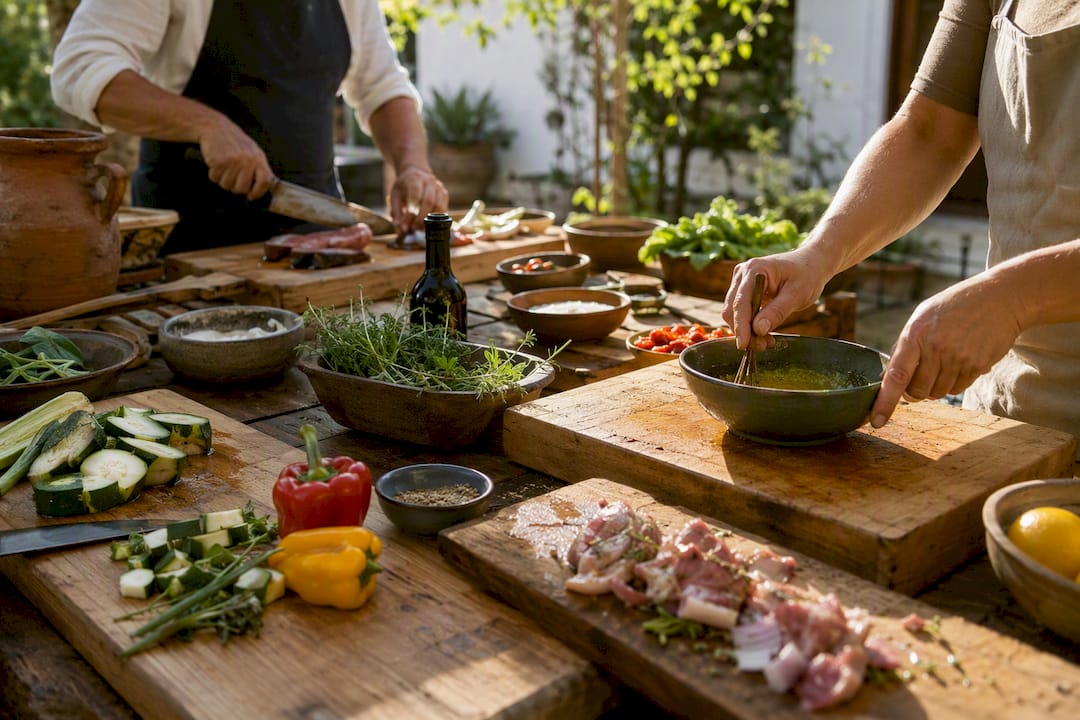
Build in a natural pause between cooking and eating. Guests who move straight from chopping board to dinner table often feel rushed; a short interval to tidy hands, pour a drink and talk about what's just been cooked adds to the sense of occasion.
Encourage some friendly competition or a shared challenge, particularly for team-building groups, since collaborative dynamics and communal dining are what generate most of the event's real value, more than the technical skill on show. Finally, brief the chef on the group's personality in advance. A quieter corporate group and a boisterous birthday party need different pacing and different jokes from whoever's leading the class.
How The Sensory Chef can deliver a private group class or in-villa workshop
The Sensory Chef runs private group cooking classes, paella and tapas workshops, and full celebration menus across Granada and Andalucía, built from French, Spanish, Mediterranean and international cuisine.
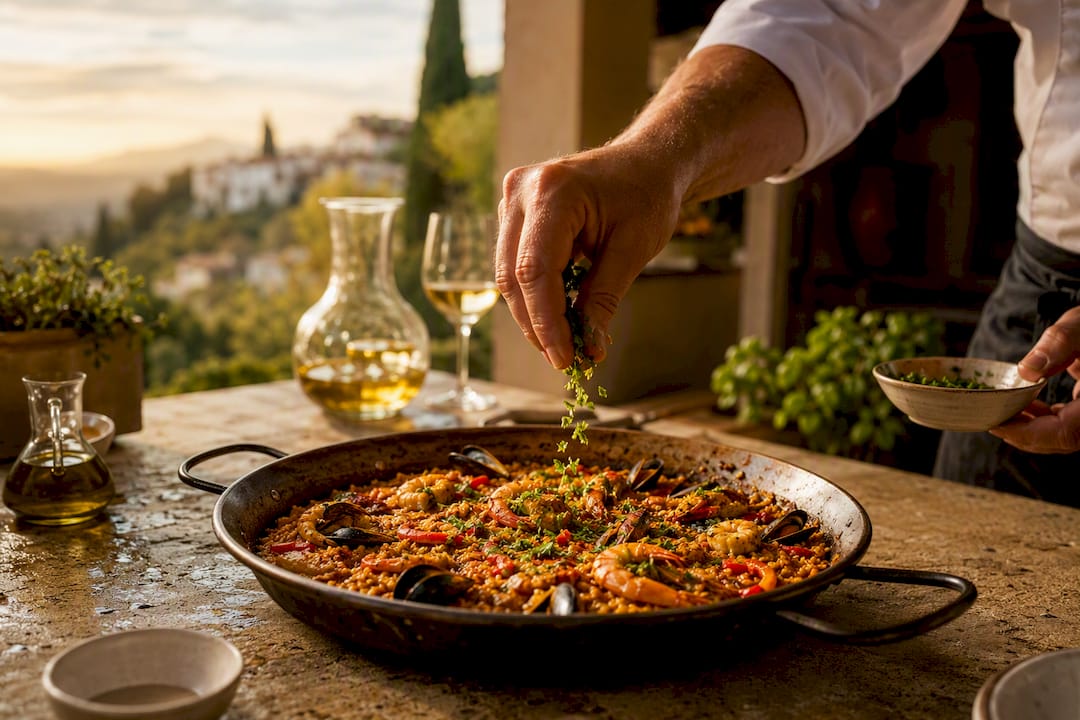
The advantage for organisers is straightforward: instead of gathering quotes from separate schools and chasing minimum-group rules, Joseph Warner brings the workshop, the menu and full dietary accommodation to your villa on one clear quote. His background in traditional French gastronomy, combined with more than 13 years running professional kitchens, means the pacing and sensory detail that make a group class memorable are already built into the plan, not left to chance.
To enquire, send your proposed date, number of guests and any dietary needs through the booking page, or explore a personalised menu with Chef Joseph Warner to see how a private group session could take shape for your event.
A chef's quick perspective: hosting tips to make the class memorable
Timing and seating decide whether a group class feels relaxed or rushed. Start slightly later than you think you need to, since guests always arrive in stages, and seat people so cooking pairs mix rather than sitting with whoever they arrived with. Small sensory touches, like letting guests smell spices before they're added, keep attention on the food rather than on phones.
How the meal finishes matters as much as how it starts. Bring the group back to one table, serve the dish together, and let the last five minutes be about the food and each other, not clearing up.
(Client testimonials from past group bookings will be added here as they're gathered.)
— Joseph Warner
Sources
- Wikipaella
- What is a culinary experience? A sensory guide – Wild Foodz
- Escuela Montalbán — Spanish and cooking combined programmes
FAQ
What types of cooking classes exist?
Formats range from hands-on workshops and demonstration-and-tasting sessions to private-chef in-villa classes, market-and-cook mornings, and themed masterclasses like paella or pastry.
How much does a cooking course typically cost?
Entry-level group workshops often start around 40€ per person, while private-chef or bespoke celebration events typically start from 150 to 200€ per person depending on menu and inclusions.
Where can I learn a paella class specifically?
Spain has a dedicated network of paella schools listed by region, alongside private chefs who run paella masterclasses as part of a wider group cooking event.
Are there free ways to learn cooking skills?
Some community centres and food festivals run occasional free demonstrations, but structured group classes with ingredients, guidance and a shared meal are almost always paid experiences, given the staffing and food costs involved.
Can a private chef accommodate large groups with dietary restrictions?
Yes. A private chef like Joseph Warner at The Sensory Chef typically builds allergy and dietary swaps directly into the menu design, which is harder to arrange with fixed-menu group workshops booked through larger schools.