
Hiring a private chef for a corporate event is defined as engaging a professional culinary expert to plan, prepare, and serve a bespoke menu on-site, tailored entirely to your guests and event objectives. Unlike standard corporate event catering, a private chef brings the kitchen to your venue, sourcing fresh ingredients the morning of the event and cooking course by course in real time. This level of personalisation transforms a routine business gathering into a genuinely memorable occasion. Whether you are planning an executive dinner, a product launch, or a team away-day, understanding why to hire a chef for a corporate event is the first step towards a measurably better guest experience.
Why hire a chef for a corporate event: the core benefits
The primary benefit of hiring a private chef is complete control over every element of the dining experience, from ingredient selection to plating style. That control translates directly into higher guest satisfaction and a stronger impression of your brand.
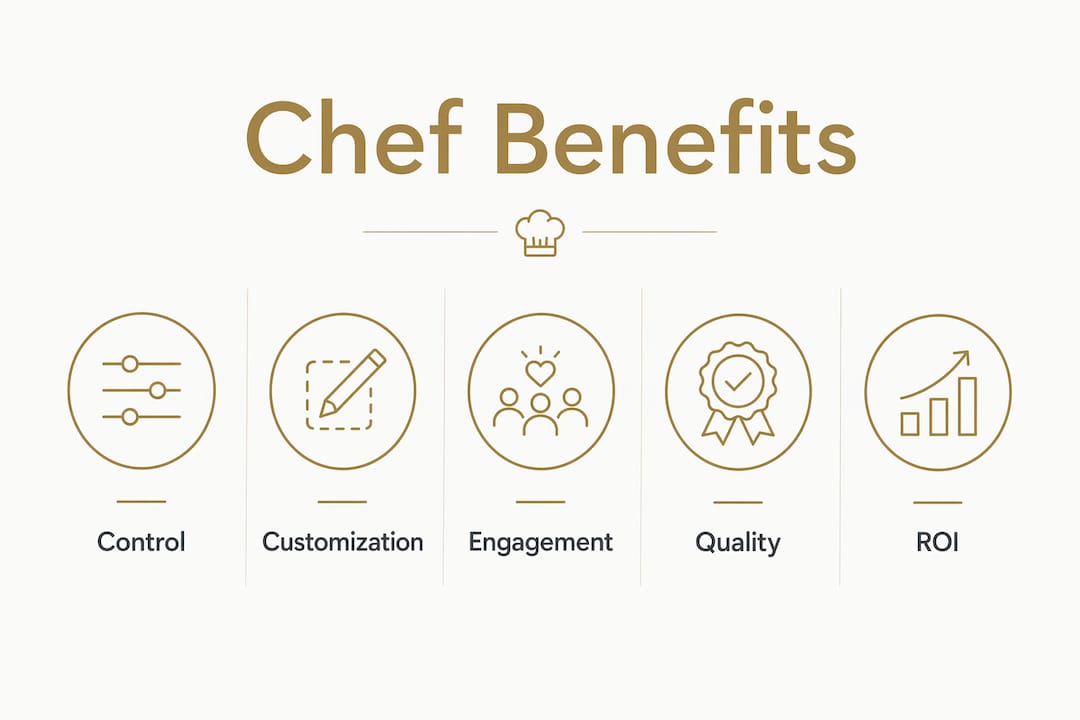
Food quality is the most visible difference. Same-day ingredient sourcing is the most significant driver of perceived food quality by guests, far ahead of menu variety or portion size. This matters because guests at corporate events form opinions about your organisation through every sensory detail, including what they eat.
The benefits of hiring a chef for business functions extend well beyond the plate:
-
Personalised menus. A private chef builds the menu around your guests’ dietary requirements, allergies, and event theme. There is no fixed set menu, no compromise, and no generic buffet.
-
Freshness and flavour. Professional chefs source ingredients on the morning of the event, replacing the pre-portioned, bulk-frozen items typical of large-scale catering operations.
-
Reduced organiser stress. The chef manages food preparation, cooking, service, and timing. You focus on your guests and your agenda.
-
Elevated presentation. Plating is treated as part of the experience, not an afterthought. Each course arrives with the visual care of a fine-dining restaurant. Thesensorychef’s food presentation approach reflects over 13 years of professional kitchen experience.
-
Brand perception uplift. Hiring a private chef for executive retreats signals intentionality and positions your company as high-end and genuinely invested in its guests.
Pro Tip: Brief your chef on the professional backgrounds and cultural mix of your guests before menu planning begins. A chef who understands your audience will build a menu that sparks conversation, not just appetite.
The return on investment from professional chef services at corporate gatherings is real. Guests remember how an event made them feel, and food is one of the most direct routes to that feeling.
How does a private chef build team engagement at corporate events?
Food acts as a universal connector, and a skilled chef uses that fact deliberately. Food-led experiences managed by professional chefs reduce team-building friction and bridge departmental silos more effectively than traditional lectures or structured workshops. The reason is simple: shared sensory experience drops professional guards in a way that a slide deck cannot.
A private chef contributes to team engagement in four distinct ways:
-
Storytelling through ingredients. A chef who works with local or native produce can explain the provenance of each ingredient, sparking curiosity and cross-team conversation. Thesensorychef draws on Spanish, Mediterranean, and French gastronomic traditions to bring genuine culinary narrative to every course.
-
Interactive cooking activities. Chef-led activities, such as pasta-making, sauce preparation, or guided tasting sessions, give colleagues a shared task with no hierarchy. Everyone is equally out of their comfort zone, which builds authentic rapport.
-
Course-by-course pacing. Cooking on-site and serving progressively creates natural pauses for conversation. Guests are not simply eating; they are anticipating, discussing, and reacting together.
-
Sensory facilitation. Professional chefs act as silent facilitators, creating a sensory environment through aroma, texture, and presentation that changes the atmosphere of the room without a single word of formal facilitation.
“Food should be the anchor of any corporate event. When guests share a genuinely crafted meal, professional barriers dissolve and real connection follows. That is something no conference agenda can manufacture.”
The contrast with passive catering is stark. A buffet invites guests to fill a plate and return to their seats. A private chef invites them into an experience. For corporate event planners whose goal is authentic engagement rather than simply feeding a room, the cooking services for corporate gatherings provided by a private chef represent a qualitatively different proposition. You can read more about what this looks like in practice through Thesensorychef’s signature culinary experience.
What event types and guest counts suit a private chef?

Private chef services are best suited for intimate corporate events. The optimal guest count for a private chef is under 20 people; traditional catering becomes the more practical choice for events exceeding 100 guests. That threshold matters because it defines where personalisation is genuinely possible and where it becomes logistically unworkable.
| Event type | Ideal guest count | Why a private chef works |
|---|---|---|
| Executive dinner | 6–12 | Intimate setting, high-stakes impression, bespoke menu |
| Networking event | 10–20 | Conversation-friendly pacing, curated food as talking point |
| Product launch | 8–16 | Menu can reflect brand identity and product narrative |
| Team away-day | 6–14 | Interactive cooking activities, shared experience |
| Board retreat | 4–10 | Discretion, quality, and total menu control |
For groups of 6–12 guests, hiring a private chef is often more cost-effective than booking a private dining room at a restaurant, while offering significantly greater menu customisation. That cost advantage disappears at scale, which is why the guest count question is the first one to answer when deciding between a private chef and a catering company.
Venue suitability is the second factor. A private chef requires a functional kitchen with adequate workspace, refrigeration, and ventilation. Most corporate venues, private villas, and office spaces with a kitchen meet this requirement. If your venue has no kitchen at all, discuss this with your chef during the initial consultation.
Pro Tip: For product launches, ask your chef to incorporate ingredients or flavour profiles that reflect the product’s identity. A technology brand might request clean, minimal Japanese-inspired dishes; a lifestyle brand might lean towards vibrant Mediterranean flavours. The menu becomes part of the brand story.
What should event planners consider before hiring a private chef?
Careful preparation before the event is what separates a flawless dining experience from a stressful one. The importance of a chef at events is matched only by the importance of the planning that precedes their arrival.
-
Dietary requirements and allergies. Collect this information from all guests at least two weeks before the event. Share it with your chef in writing. A professional chef will build the menu around these constraints, not around them.
-
Menu collaboration. The best results come from a genuine dialogue between planner and chef. Share the event’s purpose, the guest profile, and any brand or cultural considerations. Thesensorychef specialises in bespoke private dining experiences built entirely around the client’s brief.
-
Venue and kitchen assessment. Visit the venue kitchen before confirming the booking. Confirm the availability of hobs, ovens, refrigeration, and adequate counter space. Your chef can advise on minimum requirements.
-
Timing and scheduling. Agree on a precise arrival time for the chef, a preparation window, and a service schedule. For a three-course dinner starting at 7:30 PM, most private chefs require access from 4:00 PM.
-
Full service scope. A private chef typically manages preparation, cooking, plating, service, and cleanup. Private chefs leave the kitchen cleaner than they found it, handling all waste and disposal on-site. Confirm this scope in writing before the event.
-
Chef selection. Look for a chef with demonstrable corporate event experience, not just private dining. Ask for references from similar events and review their approach to dietary accommodation and menu flexibility.
The planning process is also where you establish trust with your chef. A chef who asks detailed questions about your guests and your objectives is a chef who will deliver a genuinely tailored experience.
Key takeaways
Hiring a private chef for a corporate event delivers measurably better food quality, stronger guest engagement, and a clearer signal of organisational care than standard catering can provide.
| Point | Details |
|---|---|
| Guest count determines suitability | Private chefs work best for groups under 20; traditional catering suits events over 100 guests. |
| Same-day sourcing drives quality | Ingredients sourced on the morning of the event produce noticeably better flavour and freshness. |
| Chefs act as silent facilitators | On-site cooking creates sensory anticipation and natural conversation that passive catering cannot replicate. |
| Planning detail is non-negotiable | Dietary requirements, venue kitchen suitability, and timing must be confirmed in writing before the event. |
| Brand perception is a real benefit | Hiring a private chef for executive events signals intentionality and positions your company as genuinely invested in its guests. |
What I have learned from cooking at corporate events
After more than 13 years in professional kitchens, I have noticed one consistent pattern: the planners who get the most from a private chef are the ones who treat the food as part of the event’s purpose, not as a logistical necessity to tick off the list.
The most common mistake I see is a planner booking a chef and then stepping back entirely. The best events happen when there is a real conversation before the day. Tell me who your guests are, what you want them to feel, and what the event is trying to achieve. That information shapes every decision I make, from the first amuse-bouche to the final petit four.
I have also seen how a well-crafted sensory experience changes the atmosphere of a room in ways that no agenda item can. Guests who were strangers at the start of a meal are often deep in conversation by the second course. That is not accidental. It is the result of deliberate choices about aroma, texture, pacing, and presentation working together. As a deaf chef, I have developed a particularly acute sensitivity to those non-verbal elements of dining, and I bring that awareness to every corporate event I cook for.
The planners who understand this get events that guests talk about for months. The ones who treat food as an afterthought get events that are forgotten by the following morning.
— Joseph
Thesensorychef: bespoke culinary experiences for corporate events
Thesensorychef brings over 13 years of professional culinary experience to corporate events across Granada and Andalusia, with a background spanning traditional French gastronomy, Spanish, Mediterranean, and Italian cuisine.
Every corporate event begins with a detailed consultation to understand your guests, your objectives, and your venue. Menus are built from scratch, ingredients are sourced fresh on the day, and the kitchen is left spotless after service. From intimate executive dinners to product launches and team away-days, Thesensorychef delivers a private dining experience that reflects your brand and genuinely engages your guests. Explore the full range of corporate culinary experiences or get in touch to discuss your next event.
FAQ
What is the ideal guest count for a private chef at a corporate event?
Private chef services work best for groups of under 20 guests. For events exceeding 100 guests, traditional catering is the more practical and cost-effective choice.
Is hiring a private chef more expensive than booking a restaurant?
For groups of 6–12 guests, hiring a private chef is often more cost-effective than a private restaurant room, and offers significantly greater menu customisation.
How does a private chef handle dietary requirements and allergies?
A professional private chef builds the menu around confirmed dietary requirements and allergies, collected from guests in advance and shared in writing before the event.
What does a private chef include in their service at a corporate event?
A private chef typically manages preparation, cooking, plating, service, and full kitchen cleanup, leaving the venue in the same condition as they found it.
Why use a chef for events rather than a catering company?
A private chef provides same-day sourced ingredients, a fully personalised menu, and on-site cooking that creates a sensory experience and genuine guest engagement that pre-prepared catering cannot match.