A curated dining experience is a bespoke culinary event where every detail, from menu to ambience, is thoughtfully tailored to the individual guest. Unlike a standard restaurant visit, it is built around your preferences, memories, and cultural background, creating a fully personalised story on the plate. The concept sits at the intersection of gastronomy and emotional storytelling, and it is redefining what luxury dining means for food enthusiasts today. Thesensorychef, founded by Joseph Warner with over 13 years of professional culinary experience, has placed this philosophy at the heart of every private dining event across Granada and Andalusia.
What is a curated dining experience, and what defines it?
A curated dining experience is defined as a fully personalised, multisensory culinary event designed around the individual guest rather than a fixed menu. The industry term for this broader category is experiential dining, which prioritises engaging all five senses through cohesive storytelling and a dynamic environment that evolves with each course. Curated dining sits within that category but goes further, placing the guest’s personal narrative at the centre of every decision.
The process begins before a single ingredient is sourced. A consultation incorporating guest preferences, memories, and cultural background shapes the entire menu and itinerary. This is what separates a curated experience from even the finest à la carte restaurant: the meal is built for you specifically, not for a general audience.
Thesensorychef applies this principle across every private event, from villa dinners to anniversary celebrations. The chef consults with guests in advance, weaving personal context into flavour choices, textures, aromas, and presentation. The result is a meal that feels genuinely intimate rather than rehearsed.
What are the defining characteristics of a curated dining experience?
Several specific features distinguish a curated dining experience from other high-end formats.
-
Bespoke menu design. Every dish is created around the guest’s tastes, dietary needs, and personal history. Nothing is pulled from a standard rotation.
-
Pre-meal consultation. The chef holds an in-depth conversation with guests before the event. The best experiences start weeks ahead with detailed discussions about emotional and personal contexts, so the meal avoids feeling scripted.
-
Multisensory engagement. Sight, smell, sound, and texture are all considered alongside flavour. Plating, aroma, and the physical feel of a dish each carry narrative weight.
-
Controlled pacing and storytelling. Curated tasting menus typically include 5–20 courses, paced by the kitchen to maintain a coherent narrative. The sequence, portion size, and timing are all deliberate choices, not defaults.
-
Chef-diner dialogue. The chef explains each course, its inspiration, and its place in the story. This transforms eating into active participation.
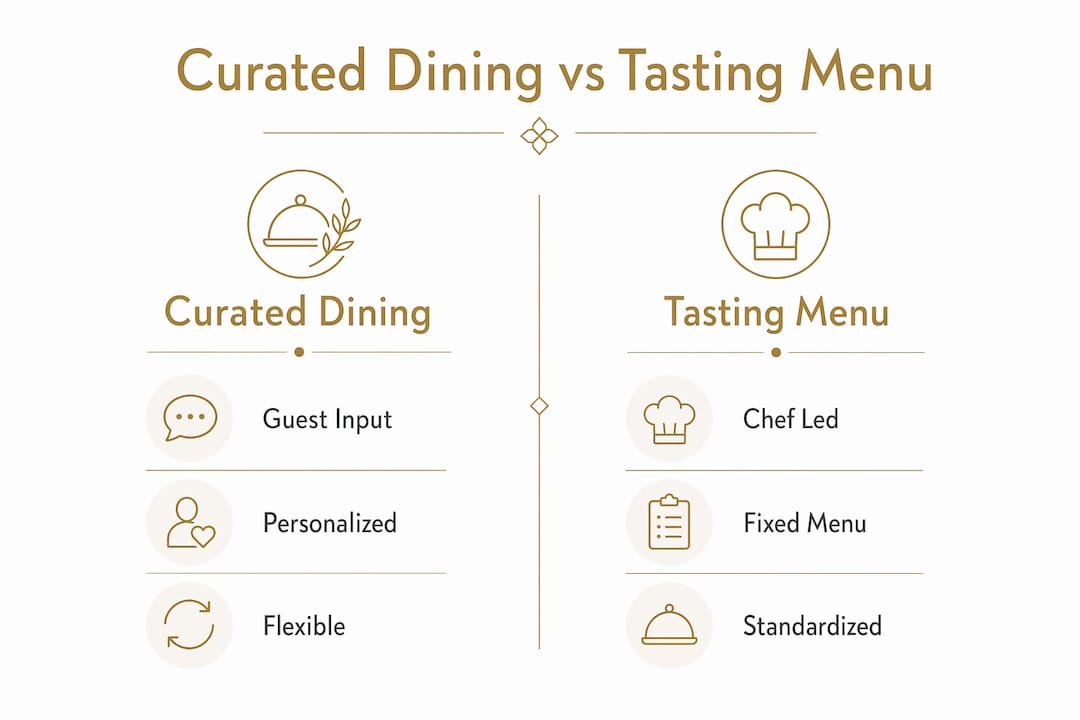
The distinction between a curated experience and a standard tasting menu is meaningful. A tasting menu is a chef’s creative statement. A curated experience is a conversation made edible.
Pro Tip: When booking a curated dining experience, share as much personal context as possible during the consultation. A favourite childhood ingredient, a significant travel memory, or even a disliked texture can become the most memorable moment of the evening.
How does curated dining enhance the culinary and emotional experience?
Personalisation produces measurable results in guest satisfaction. Personalised luxury dining increases customer satisfaction scores by up to 30%, and that figure reflects something deeper than a positive review. It signals that guests feel genuinely seen and considered, which is the foundation of emotional connection in hospitality.
“Curated dining is about anticipating guest needs and crafting immersive narratives that unite interaction, flavour, and presentation into a single, coherent experience.” — Chef Marcus Rivera
That philosophy captures why experiential dining has grown so significantly among affluent diners. 48% of affluent diners pay more for personalised culinary experiences, and 72% of high-end restaurants now incorporate experiential elements. The appetite for something more than a good meal is clear and growing.
The emotional dimension is what elevates curated dining beyond technical excellence. A perfectly cooked dish satisfies. A dish that references your grandmother’s kitchen, or the spice market you visited in Marrakech, creates a memory. Thesensorychef’s sensory approach, developed through years of cooking as a deaf chef with a heightened focus on flavour, texture, and aroma, is built precisely to reach that emotional register.
Curated dining also shifts the diner from passive consumer to active participant. You are not simply eating a chef’s vision. You are co-authoring it through the consultation, your reactions, and the story you bring to the table.
How does curated dining differ from tasting menus and themed dining?
These three formats are often confused, but they operate on fundamentally different principles.
| Format | Who controls the narrative | Guest input | Sensory approach |
|---|---|---|---|
| Tasting menu | Chef’s creative vision | Minimal, dietary only | Flavour and presentation focused |
| Themed restaurant | Static decor and concept | None | Primarily visual and atmospheric |
| Curated dining experience | Shared between chef and guest | Central to design | Full multisensory storytelling |
A tasting menu is a chef-controlled sequence, typically 5–20 courses, designed to express a culinary philosophy. It is excellent, but it is the same for every table. A themed restaurant uses static decor and a fixed concept to create atmosphere. The environment is curated, but the food rarely is.
A curated dining experience treats the guest’s personal context as the primary ingredient. Experiential dining prioritises cohesive storytelling and a dynamic environment that evolves with each course, distinguishing it from the fixed atmosphere of themed restaurants. The narrative changes because the guest changes.
Flexibility is another defining difference. True curated dining allows wine pairings and dishes to be negotiated early, maintaining the chef’s artistic intent while accommodating guest needs. A standard tasting menu rarely offers this. A themed restaurant never does.
The pre-experience dialogue is the clearest marker. If a format begins with a conversation about who you are, it is curated. If it begins with a printed menu, it is not.
How can diners engage with or organise a curated dining experience?
Commissioning a curated dining experience is more straightforward than most diners expect. Curiosity and willingness to be guided matter far more than prior fine dining expertise. The process follows a clear structure.
-
Reach out early. Contact the chef or private dining service well in advance. The best experiences are planned weeks ahead, not days.
-
Prepare for the consultation. Think about your food memories, flavour preferences, cultural influences, and any ingredients that carry personal significance. The more you share, the richer the result.
-
Communicate dietary needs clearly. Allergies, intolerances, and strong dislikes should be shared at the outset. A skilled chef will accommodate these without compromising the experience’s integrity.
-
Discuss pairings openly. Wine, non-alcoholic alternatives, and beverage preferences can be woven into the narrative. Raise these early so the chef can plan accordingly.
-
Trust the pacing. The kitchen controls meal pacing, and guests should resist the urge to rush. Each pause between courses is part of the story.
-
Stay present. Put devices away during the meal. The experience is designed to be absorbed through all your senses, not documented through a screen.
The chef-diner collaboration is the engine of the whole experience. Your openness in the consultation directly determines the depth of what arrives at the table.
Pro Tip: If you are organising a curated dining experience for a group, ask each guest to share one food memory or preference in advance. Weaving multiple personal threads into a single coherent menu is one of the most impressive things a skilled chef can do.
Key takeaways
A curated dining experience is the most personalised form of gastronomy available, defined by pre-meal consultation, multisensory storytelling, and a narrative built specifically around the individual guest.
| Point | Details |
|---|---|
| Definition | A curated dining experience is a fully personalised, multisensory culinary event built around the guest’s preferences and personal context. |
| Satisfaction impact | Personalised luxury dining increases customer satisfaction scores by up to 30%, reflecting genuine emotional connection. |
| Key differentiator | Pre-meal consultation separates curated dining from tasting menus and themed restaurants, which offer no guest input into the narrative. |
| Pacing matters | The kitchen controls sequence and timing deliberately; trusting that pacing is central to the experience. |
| Flexibility | Wine pairings and dishes can be negotiated early, maintaining artistic intent while accommodating individual needs. |
My perspective on curated dining and why it matters
The modern trend toward curated dining is motivated by a desire for human connection and active participation in an immersive story, rather than passive consumption. I have watched this shift happen over 13 years of professional cooking, and I believe it reflects something important about what people actually want from a meal.
Most diners do not lack access to excellent food. What they lack is a meal that feels made for them. A tasting menu at a celebrated restaurant can be technically flawless and still feel impersonal. Curated dining solves that problem by starting with the person, not the plate.
What I find most compelling is the multisensory dimension. As a deaf chef, I developed my cooking through heightened attention to flavour, texture, aroma, and visual presentation. That approach is not a workaround. It is a richer way to cook. Every sense carries information, and a meal that speaks to all of them leaves a deeper impression than one that only tastes good.
The future of gastronomy is personal. Diners are increasingly unwilling to be passive recipients of someone else’s vision. They want to participate, to be known, and to leave with a memory that belongs specifically to them. Curated dining is the format that delivers that. If you receive an invitation to one, accept it without hesitation.
— Joseph
Private dining experiences by Thesensorychef
Thesensorychef offers bespoke private dining experiences across Granada and Andalusia, each built around a detailed consultation with Joseph Warner. Every menu is designed from scratch around your preferences, dietary needs, and the occasion you are marking.
Whether you are planning an intimate anniversary dinner, a family celebration, or an exclusive villa event, the process begins with a conversation. From that conversation, Joseph crafts a fully personalised menu that engages every sense. For a signature curated event, the Thesensorychef signature experience brings together French gastronomy, Mediterranean ingredients, and personal storytelling in a single, memorable evening. Reach out to begin planning your experience.
FAQ
What is a curated dining experience in simple terms?
A curated dining experience is a personalised meal designed specifically around the individual guest, built through a pre-meal consultation that incorporates preferences, memories, and dietary needs. Every detail, from menu to pacing, is tailored rather than fixed.
How does a curated dining experience differ from a tasting menu?
A tasting menu expresses the chef’s creative vision and is the same for every guest. A curated dining experience is co-created with the guest, using personal context as the primary ingredient.
How many courses does a curated dining experience typically include?
Curated tasting menus typically include 5–20 courses, paced by the kitchen to maintain a coherent narrative and allow each dish to land with full sensory impact.
Do I need fine dining experience to enjoy a curated meal?
No prior fine dining expertise is needed. Curiosity and a willingness to be guided by the chef are the only requirements for a rewarding curated dining experience.
How far in advance should I book a curated dining experience?
Booking several weeks ahead is advisable. The best curated experiences begin with in-depth conversations about personal and emotional contexts, and that preparation takes time to translate into a truly personalised menu.