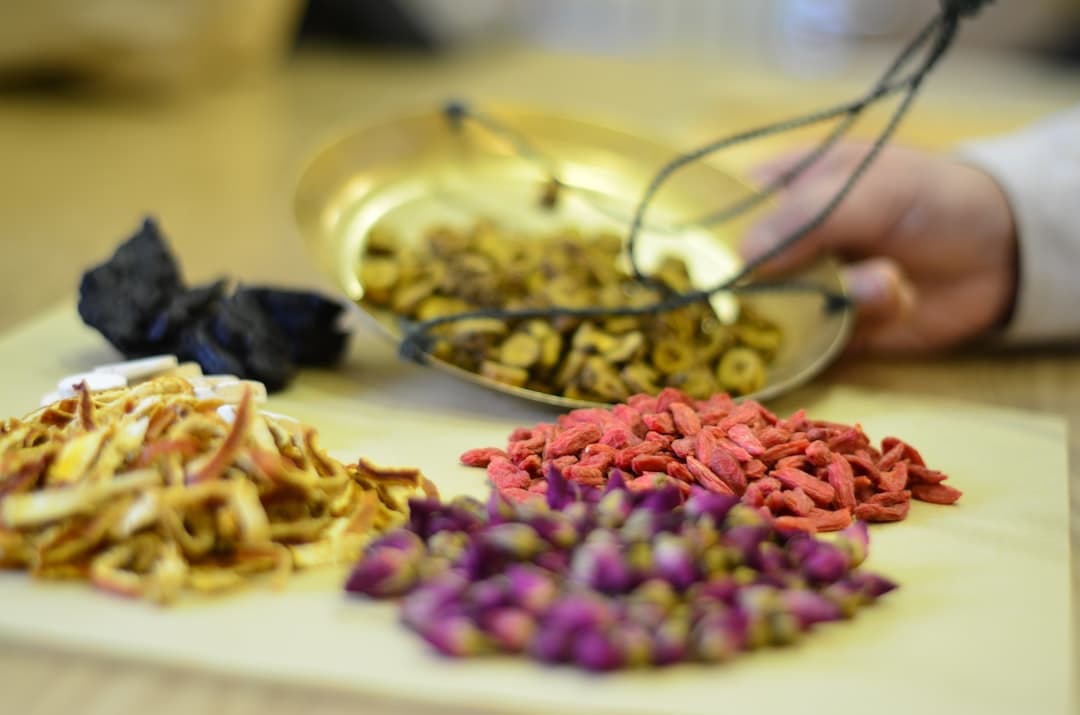
A culinary experience is defined as an immersive event where food engages all five senses to connect diners with culture, history, and place. It goes far beyond eating a meal. The recognised industry term for this broader field is gastronomy, which encompasses the relationship between food, culture, and the human senses. Food enthusiasts who understand what a culinary experience truly involves gain access to a richer world of flavour, meaning, and memory. Thesensorychef, with over 13 years of professional culinary expertise rooted in French gastronomy and Andalusian tradition, has built its entire practice around this principle. From private villa dining in Granada to bespoke tasting menus, every dish tells a story worth savouring.
What is a culinary experience made of?
A culinary experience is built from five interlocking elements: sensory engagement, culinary storytelling, cultural immersion, skilled technique, and the quality of local ingredients. Remove any one of these, and the meal becomes ordinary. Keep all five, and it becomes unforgettable.
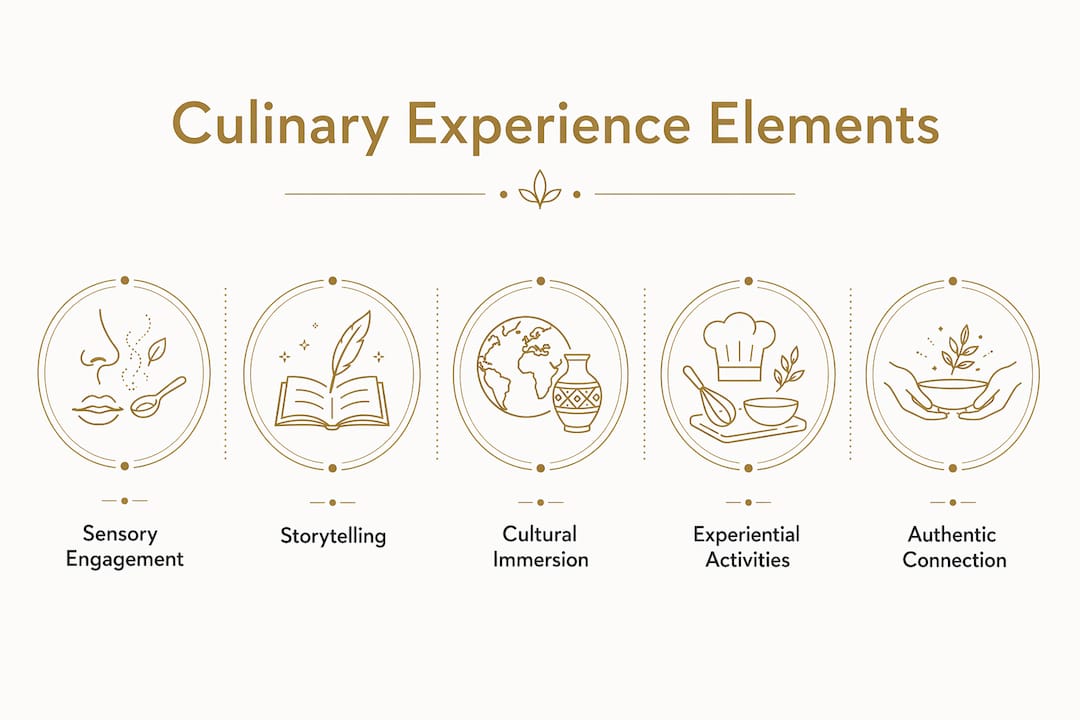
Sensory engagement
Every great gastronomic experience begins with the senses. Taste and aroma are the most obvious, but texture, temperature, and visual presentation shape how a diner perceives flavour before the first bite. A dish plated with care signals intention. That signal primes the palate and raises expectation in a way that a carelessly presented plate never can.
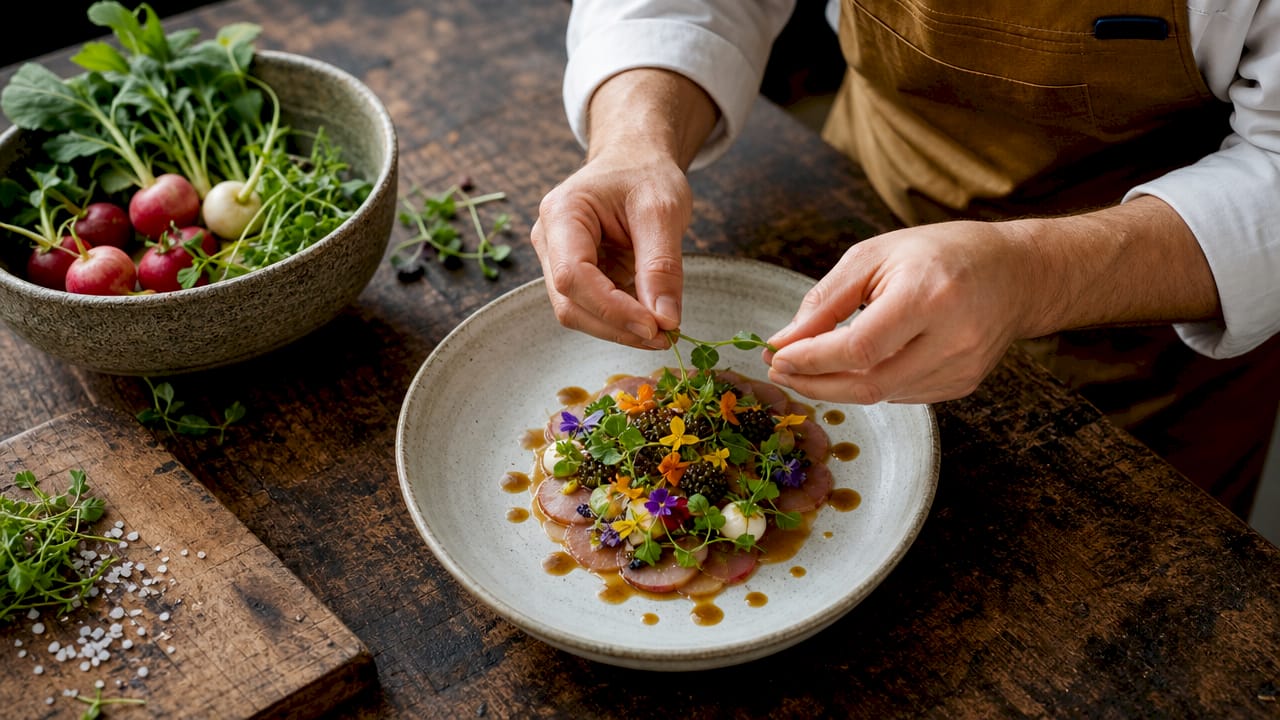
Culinary storytelling
Culinary storytelling is a strategic framework that communicates a dish’s origin, technique, and meaning to enhance its perceived value. When a chef explains that a slow-braised lamb shoulder draws on a 200-year-old Andalusian shepherd’s tradition, the diner tastes history alongside protein. That context is not decoration. It is part of the dish itself.
Cultural immersion
Food connects diners to geography, agriculture, and the people who shaped a region’s identity. A plate of paella made with locally grown Valencian rice and fresh Andalusian seafood carries the landscape of Spain within it. Thesensorychef’s market to table experience makes this connection explicit by sourcing ingredients from local markets and weaving their provenance into every course.
Experiential activities
The culinary journey concept extends well beyond the dining table. Cooking classes led by local chefs foster cultural understanding and give participants hands-on skills that transform their perception of food. Food tasting events, market tours, and culinary festivals all serve the same purpose: they turn a passive diner into an active participant.
-
Attend a cooking class focused on regional technique, not just recipes.
-
Visit a local market before dining to understand seasonal availability.
-
Ask your chef about the origin of each key ingredient on the menu.
-
Pair wine or local beverages with dishes to deepen sensory contrast.
-
Seek food tasting events that include a narrative component, not just samples.
Pro Tip: Before attending any food tasting event or private dining experience, research the region’s agricultural calendar. Knowing which ingredients are in peak season sharpens your ability to appreciate what the chef has chosen and why.
How does culinary storytelling shape the value of a meal?
Narrative-driven dishes reduce consumer price resistance and shift the diner’s focus from cost to meaning. This is one of the most powerful and least discussed dynamics in fine dining. A dish priced at £85 feels expensive when judged purely on portion size. The same dish feels like a bargain when the diner understands it took three days to prepare using a technique passed down through four generations.
Menu engineering uses storytelling to justify premium pricing before the first bite is taken. Restaurants that describe provenance, technique, and cultural context on their menus consistently outperform those that list ingredients alone. The story does not replace quality. It amplifies it.
Authentic culinary storytelling reveals meaning that is already present in the kitchen, building emotional connection and brand loyalty. The key word is authentic. Invented stories collapse under scrutiny. Real ones, rooted in genuine technique and heritage, create a powerful emotional loop that diners return to again and again.
Culinary storytelling rests on four pillars: origin, craftsmanship, community, and sustainability. A chef who sources from a specific farm, uses a traditional preservation method, supports a local fishing cooperative, and minimises waste is already living all four. The story writes itself.
“Authentic stories create powerful emotional loops that increase perceived value and memorability. When a diner understands the meaning behind a dish, they are no longer just eating. They are participating in something larger than themselves.”
Authentic narratives increase trust, differentiate menus, and drive bookings. For food enthusiasts seeking depth rather than spectacle, a chef who can articulate the meaning behind each course offers something no price list can replicate.
In what ways does culinary tourism embody experiential travel?
Culinary tourism transforms travellers into active explorers immersed in geographic and cultural realities through food. The traveller who eats a bowl of gazpacho in a Granada kitchen, made with tomatoes grown twenty kilometres away, understands Andalusia differently from the traveller who orders it from a hotel menu. The food becomes a lens.
Culinary tourism encompasses all food and drink experiences, from gourmet tasting menus to street food stalls and local beverages. This breadth is deliberate. The field recognises that cultural knowledge lives in a grandmother’s kitchen as much as in a Michelin-starred restaurant. Both are valid entry points into a region’s identity.
The activities that define culinary tourism are varied and deliberately immersive:
-
Market tours connect diners with producers, seasonal rhythms, and the economics of local food systems.
-
Cooking classes with local chefs provide technique and cultural context in equal measure.
-
Food festivals offer concentrated exposure to regional specialities and the communities that celebrate them.
-
Family-run restaurant visits reveal how recipes evolve across generations and adapt to changing ingredients.
-
Farm and vineyard visits show the full arc from soil to plate, deepening respect for the craft.
| Activity | Cultural insight gained |
|---|---|
| Market tour | Seasonal produce, producer relationships, regional pricing |
| Cooking class | Traditional technique, ingredient sourcing, cultural significance |
| Food festival | Regional identity, communal celebration, recipe diversity |
| Farm or vineyard visit | Agricultural heritage, terroir, sustainable practice |
Food becomes a medium for cultural immersion, not merely sustenance. This shift in perspective is the defining characteristic of culinary tourism. The diner stops asking “what does this taste like?” and starts asking “what does this mean?”
What practical steps help you seek meaningful culinary experiences?
Finding a genuinely meaningful gastronomic experience requires intention. The market is full of events that use the language of immersion without delivering the substance. Knowing what to look for protects your time and sharpens your palate.
-
Prioritise provenance. Choose dining experiences that name their suppliers and explain why those relationships matter. Vague references to “local ingredients” are not the same as a chef who can tell you which farm grew the courgettes.
-
Seek narrative menus. A menu that describes only ingredients offers half the picture. Look for menus that include technique, origin, or cultural context alongside the dish name.
-
Engage the chef directly. The most memorable culinary experiences happen when diners ask questions. A chef who welcomes conversation about their dishes is a chef who has something genuine to say.
-
Attend hands-on events. Thesensorychef’s seafood cooking experience is a strong example of how participation deepens understanding. Preparing a dish yourself changes how you taste it.
-
Pair food with context. Food and wine pairing is most rewarding when the wine comes from the same region as the food. The combination tells a coherent story about place.
Pro Tip: When booking a private dining or cooking class experience, ask the chef in advance which three ingredients define their cooking philosophy. The answer reveals whether their approach is genuinely rooted in place and tradition or simply decorative.
Understanding what a private culinary event involves helps you ask better questions and arrive with sharper expectations. The more prepared you are as a diner, the more the chef can give you.
Key takeaways
A culinary experience is defined by sensory engagement, authentic storytelling, and cultural immersion working together to transform a meal into a lasting memory.
| Point | Details |
|---|---|
| Sensory engagement is foundational | Taste, aroma, texture, and presentation combine to shape how diners perceive and remember a meal. |
| Storytelling shifts perceived value | Narrative-driven dishes reduce price resistance by connecting diners to origin, technique, and meaning. |
| Culinary tourism broadens the concept | From market tours to cooking classes, food becomes a medium for genuine cultural exploration. |
| Authenticity is non-negotiable | Real stories rooted in technique and heritage build trust and emotional loyalty that invented narratives cannot replicate. |
| Participation deepens understanding | Hands-on experiences, such as cooking classes and market visits, transform passive diners into active learners. |
Why the best culinary experiences are never really about the food
After 13 years in professional kitchens, I have noticed a consistent pattern. The diners who leave most satisfied are rarely the ones who arrived most focused on the food itself. They are the ones who arrived curious about the story behind it.
I have seen guests dismiss a beautifully crafted dish because the portion seemed modest, and I have seen the same guests become completely absorbed when I explained that the technique required two days of preparation and draws on a French classical tradition I trained in for years. The dish did not change. Their relationship to it did.
The mistake most food enthusiasts make is treating price and quantity as proxies for quality. A meaningful gastronomic experience cannot be measured in grams or euros. It is measured in what you carry away from the table. A technique you now understand. A flavour combination you had never considered. A conversation with a chef that changed how you think about a region.
My own approach at Thesensorychef is built on sensory engagement as a discipline, not a marketing phrase. As a deaf chef, I developed an unusually acute sensitivity to texture, aroma, and visual presentation. Those senses became my primary language in the kitchen. Every dish I create is designed to speak through them. When you sit down to one of my tasting menus, I want you to feel the landscape of Andalusia in the plate in front of you, not just taste it.
The culinary journey concept, at its best, is about becoming a more attentive human being. Food is the most democratic art form on earth. Everyone eats. Not everyone pays attention.
— Joseph
Bespoke culinary experiences with Thesensorychef
Thesensorychef offers a range of curated dining and cooking experiences across Granada and Andalusia, each designed to engage the senses and tell a genuine story about place and craft.
Whether you are planning an intimate anniversary dinner, a private villa celebration, or a hands-on cooking class rooted in French and Mediterranean tradition, every experience is built around fresh, local ingredients and a narrative that gives each dish its full meaning. The signature dining experience brings together aroma, texture, flavour, and presentation in a format that rewards curiosity as much as appetite. For those ready to book a private dining experience tailored to your occasion, Thesensorychef creates menus that reflect your tastes, your setting, and the season.
FAQ
What is a culinary experience in simple terms?
A culinary experience is an immersive dining event that engages the senses and connects diners to the culture, history, and technique behind the food. It goes beyond eating to create lasting memory and meaning.
What is culinary storytelling?
Culinary storytelling is the practice of communicating a dish’s origin, technique, and cultural meaning to enhance its perceived value and emotional impact. Authentic narratives build trust and reduce price resistance.
How does a culinary experience enhance celebrations?
A culinary experience enhances celebrations by adding layers of meaning, personalisation, and sensory delight that a standard restaurant meal cannot provide. Bespoke menus, narrative dishes, and attentive presentation make occasions genuinely memorable.
What is the difference between fine dining and a culinary experience?
Fine dining refers to a style of restaurant service characterised by formal presentation and premium ingredients. A culinary experience is broader and includes storytelling, cultural immersion, and sensory engagement, which may or may not occur in a fine dining setting.
What activities count as culinary tourism?
Culinary tourism includes food tours, cooking classes, market visits, food festivals, and farm visits. All of these use food as a medium for cultural understanding rather than simple sustenance.