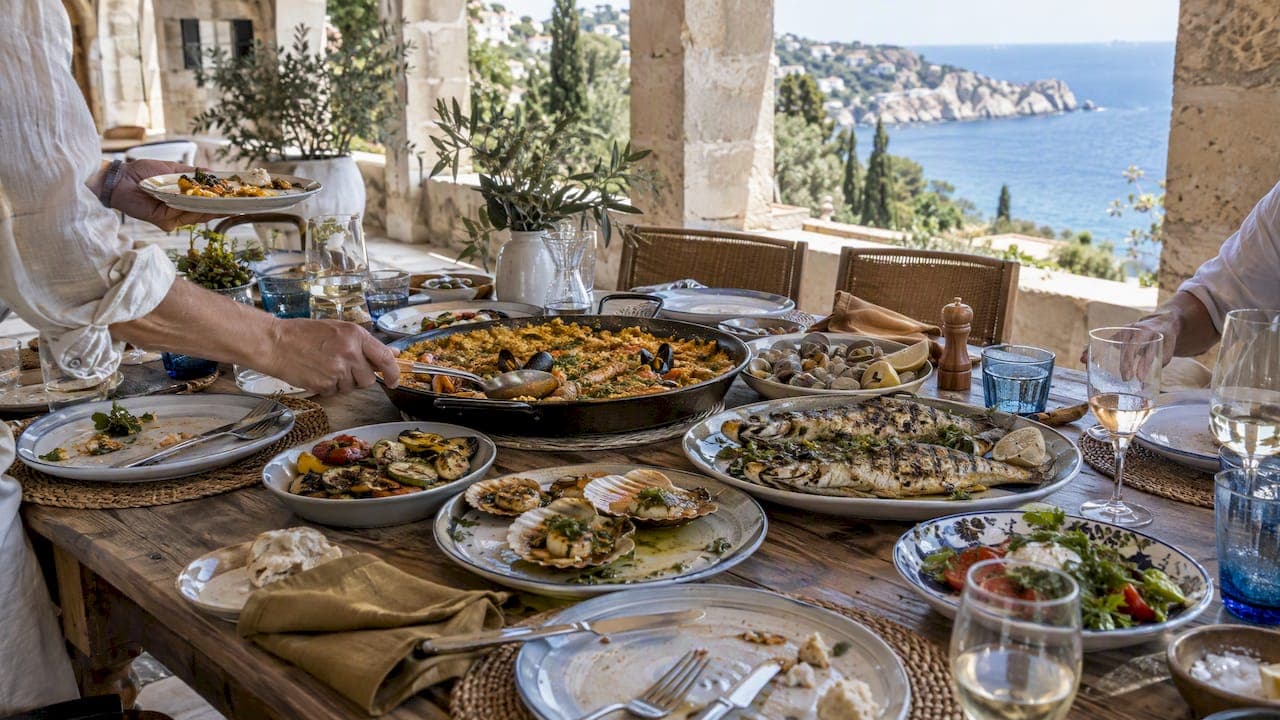
A good pescatarian menu is not a meat menu with the meat taken out. It is built around what the sea, the market and the season offer, and it should feel like the main idea rather than the alternative. Below you will find complete menus for a dinner party, a wedding and a romantic evening, the Andalusian fish worth asking for, and the practical points that decide whether the night runs smoothly.
TL;DR
- Build the menu in four movements: a cold or raw starter, a light warm course, one hero main, and a dessert that does not rely on gelatine or lard.
- Along the Granada and Málaga coast, favour sardines, anchovies (boquerones), mackerel, mussels, clams, hake and prawns. They are local, and AESAN points to oily fish as a healthy choice.
- Pregnant guests and young children need different fish: Spain's food safety agency asks them to avoid swordfish, bluefin tuna, shark and pike.
- Ask every guest about shellfish allergies, not just dietary preferences, before the menu is fixed.
- A chef cooking in your villa can handle a pescatarian wedding or dinner party start to finish, so you host rather than cook.
Table of Contents
- What pescatarian dining really means at the table
- Choosing fish in Andalucía
- A pescatarian dinner party menu, course by course
- Pescatarian wedding menu ideas
- A romantic dinner for two or a small celebration
- Paella and tapas: the easiest pescatarian crowd-pleasers
- Eggs, weight and other common questions
- Our view as a private chef
- How to plan your menu with a chef
- Book a pescatarian evening with The Sensory Chef
- FAQ
- Sources
What pescatarian dining really means at the table
Pescatarians eat fish and shellfish, usually alongside eggs, dairy, vegetables, pulses and grains, but no meat or poultry. For a host, the practical questions are narrower than the definition suggests. Does the stock contain meat? Is there jamón hiding in the croquetas? Is the paella cooked on a chicken broth? Spanish cuisine is generous with cured pork, so a pescatarian menu in Andalucía takes more attention than it would elsewhere.
The upside is real. Fish cooks quickly, shows off fresh ingredients and suits the Mediterranean habit of eating in small, shared courses. The pairing of plants, olive oil and seafood is also well studied: a JACC review describes a Pesco-Mediterranean pattern of plants, nuts, extra virgin olive oil and seafood as having strong cardioprotective evidence. That makes it an easy menu to serve to mixed groups, because it is generous rather than restrictive.
Choosing fish in Andalucía
The coast between Málaga, Nerja, Almuñécar and Motril gives you plenty to work with. Sardines, mackerel and boquerones are the oily, flavourful classics, and their best moment comes in the warm months, when they carry more fat and stay juicier. Mussels and clams are reliable all year, and hake, prawns and squid cover the white fish and shellfish side.
There is a health argument for variety too. AESAN's dietary recommendations suggest three to four servings of fish a week, with a preference for oily species. For a one-off celebration, that guidance matters less than flavour, but it is a useful reminder to mix white and oily fish across the courses rather than serving five versions of the same thing.
A note for pregnant guests and children
If anyone at the table is pregnant, planning a pregnancy, breastfeeding, or is a child under ten, tell your chef in advance. AESAN's guidance on fish and mercury asks these groups to avoid swordfish, bluefin tuna, shark and pike. Hake, salmon, sardines and anchovies are lower-mercury choices. For specific advice about a pregnancy or a child's diet, a midwife, GP or paediatrician is the right person to ask. A good chef will simply swap the species on those plates without fuss.

A pescatarian dinner party menu, course by course
The aim at a dinner party is a menu that lets you sit down with your guests. The best structure balances cold starters with quick-cooking mains, so very little happens at the last minute. Here is a five-course sequence for eight guests that works in a villa kitchen.
- To begin: chilled almond and garlic soup (ajo blanco) with marinated anchovies and a few green grapes. Cold, sharp and made ahead.
- Raw or cured: cured salmon or sea bream ceviche with citrus, coriander and a little green chilli. Nothing to cook, everything to taste.
- Warm course: steamed mussels with white wine, fennel and saffron, served with good bread for the juices.
- Main: pan-seared hake or sea bass on a bed of crushed potatoes and wilted greens, with a lemon and olive oil sauce. It takes minutes in the pan.
- To finish: orange blossom panna cotta set with agar rather than gelatine, or a dark chocolate and olive oil mousse with sea salt.
A few reasons this works. The first two courses are completely prepared before guests arrive. The third is a single pot. The main is the only dish that needs a hot pan at the table's pace. Dessert is set hours earlier. Nobody is trapped in the kitchen, and that includes the person cooking.
The umami trick that replaces meat
Pescatarian menus can taste thin if they lack depth, and the fix is pantry-based. Cured anchovies melted into a sauce, a reduction of fish stock, or good tinned mussels add the savoury weight that stock made from meat would otherwise give. Epicurious makes the same point in a pescatarian meal plan built around canned anchovies and fish sauce. In a French-trained kitchen, this is simply good technique: a fumet made from fish bones, reduced slowly, becomes the base of sauces that nobody guesses are meat-free.

Pescatarian wedding menu ideas
A wedding menu has to satisfy a wider range of guests than a dinner party, and a fish-led menu can do it if it is planned with care. The most successful ones offer a fish-and-vegetable core with a clear option for those who do not eat shellfish, rather than a separate, forgotten vegetarian plate.
| Moment | Idea | Why it works |
|---|---|---|
| Welcome drinks | Boquerones on toasted bread with tomato, prawn and saffron croquetas, olive tapenade | Passed by hand, easy to serve outdoors |
| Starter | Cured sea bream with melon and mint, or a heritage tomato salad with burrata | One fish option, one without fish |
| Main | Baked sea bass with fennel and citrus, or saffron risotto with prawns | Plated quickly for large groups |
| Vegetable main | Wild mushroom and artichoke rice with aïoli | A proper main for guests who avoid fish |
| Dessert | Lemon tart with olive oil, or a Granada-style almond cake with orange | Seasonal, no animal fat needed |
| Late night | Small paellas of seafood, served at the table | A show as well as a meal |
Two cautions for weddings. First, shellfish allergy is more common than hosts expect, so keep shellfish on separate dishes rather than hidden in sauces. Second, outdoor summer heat is hard on raw fish. Cured, marinated and cooked dishes are safer than long-standing raw bars unless you have proper refrigeration. If you are planning a wedding in Granada or on the coast, tell your chef about the venue's kitchen facilities early, because they shape what is possible.
A romantic dinner for two or a small celebration
For an anniversary or birthday for two to six people, think smaller and more precise. Three or four courses is enough, with a focus on texture and aroma.
- Amuse-bouche: a single oyster or a spoon of tuna tartare with avocado. For anyone in the pregnancy group mentioned earlier, swap in a cooked alternative.
- First course: seared scallops on cauliflower purée with a hazelnut crumb.
- Main: sole meunière, the French classic, with new potatoes and green beans, or roast monkfish with saffron and white beans.
- Pre-dessert: a small cup of lemon sorbet with basil.
- Dessert: warm chocolate fondant with sea salt and olive oil.
This kind of menu sits well with a sunset on a villa terrace in Nerja, Almuñécar or La Herradura. For more ideas on that format, see our guide to chef-led anniversary menus for villas.
Paella and tapas: the easiest pescatarian crowd-pleasers
Paella is the obvious answer for a pescatarian group, and it is also the easiest to get wrong. A proper seafood paella needs a fish or shellfish stock, not a chicken one, and a good socarrat, the toasted layer at the bottom. If one guest avoids shellfish, a vegetable and artichoke paella made alongside it solves the problem without a compromise.
Tapas work equally well for informal gatherings. A spread might include:
- Fried boquerones or grilled sardines with lemon
- Gambas al ajillo
- Tortilla de patatas, made with eggs and potato only
- Roasted peppers with anchovy
- Mussels in a light tomato sauce
- Marinated artichokes and good olives
Check the small details with whoever supplies your food. Many Spanish classics, such as lentil stews, croquetas and beans, are often finished with ham or cooked in a meat stock. A pescatarian guest will not know unless someone asks.
Eggs, weight and other common questions
Pescatarians often wonder where eggs fit. AESAN's recommendations suggest two to four eggs a week as part of a healthy, sustainable pattern, so a frittata, tortilla or poached egg course is perfectly in keeping with the guidance.
On weight, a review in Nutrition Research Reviews found that including lean seafood in an energy-restricted diet can help weight loss in overweight adults. That is a finding about diets, not about party menus, and nobody should plan a celebration around it. For personal weight or health goals, a registered dietitian can give advice that fits you.
Our view as a private chef
We cook for villa guests, couples and families across Granada and the Costa Tropical, and pescatarian requests have a particular character. Guests rarely want a meal that feels like a concession. They want the dish people at the table will remember, and it happens to contain fish.
We start with the market. What looks best that morning decides the main course, and the rest of the menu is written around it. As a deaf chef, I rely on flavour, texture, aroma and presentation more than on conversation in a busy kitchen, and that discipline shapes how we cook fish: gentle heat, careful seasoning, and a plate that explains itself without a long speech from the cook.
The second thing we insist on is the unglamorous detail. Is the stock free of meat? Does anyone have a shellfish allergy, a nut allergy or an egg intolerance? Who is pregnant? These questions take five minutes and prevent the one problem that spoils an evening. Our guide to accommodating dietary needs explains how we handle them.
— Joseph Warner
How to plan your menu with a chef
- Count and ask. Share the guest list and note every preference, allergy and pregnancy.
- Choose the format. Seated courses, shared tapas, paella at the table, or a hands-on cooking evening.
- Pick the hero. Decide the main fish with your chef the week of the event, once the market is known.
- Check the kitchen. Tell us what equipment, oven space and outdoor cooking area the villa has.
- Fix the timing. Cold starters and desserts go first; the hot courses are timed to your pace.
If you want to see how a tasting format is built, our piece on why a tasting menu at home needs a private chef walks through it. For a Costa del Sol villa, there is also a guide to planning a Mediterranean tasting menu.
Book a pescatarian evening with The Sensory Chef
Our menus page lists per-person experiences, including Tapas Of Andalusia from €65 per person, the Andalusian Paella Experience from €75 per person and The Sensory Journey from €85 per person. The Celebration Experience starts from €110 per person, and the Villa Chef Experiance is from €350 per service. Each can be shaped around a pescatarian table. If you would rather cook alongside the chef, the Mediterranean Cooking Class is €85, and our seafood cooking experience is a good fit for fish lovers. When you are ready, book your experience and tell us who is coming and what they eat.
FAQ
What can I serve a pescatarian guest at a dinner party?
A fish-led menu with cold starters and a quick-cooking main is easiest: cured salmon or ceviche, steamed mussels, then pan-seared hake or sea bass. Add a vegetable-led dish so that guests who avoid shellfish still have a full course. Dessert should be free of gelatine, which is usually animal-derived.
Are eggs and dairy part of a pescatarian diet?
Yes, in most definitions. Pescatarians usually eat eggs, dairy, vegetables, pulses and grains alongside fish and shellfish. AESAN's general guidance suggests two to four eggs a week, so egg dishes fit comfortably into a menu.
Which fish should pregnant guests and children avoid?
Spain's food safety agency, AESAN, asks pregnant women, those planning pregnancy, breastfeeding mothers and children under ten to avoid swordfish, bluefin tuna, shark and pike. Hake, salmon, sardines and anchovies are lower-mercury choices. Ask your midwife or doctor for advice on your own situation.
Can a pescatarian wedding menu still feel special?
Absolutely. Seafood suits weddings well: passed canapés, a baked sea bass or saffron prawn risotto, a proper vegetable main for those who avoid fish, and small paellas late in the evening. Keep shellfish on separate dishes in case of allergies, and plan the menu around the venue's kitchen and the heat.
Do you cook pescatarian menus in my villa?
Yes. We cook in villas across Granada, the Costa Tropical, Málaga and the Costa del Sol, and we accommodate dietary requirements and allergies. Tell us your guest numbers and preferences when you book, and we will build the menu around them.
Sources
- AESAN: healthy and sustainable dietary recommendations
- AESAN: recommendations on fish consumption and mercury
- AESAN: Spanish Agency for Food Safety and Nutrition
- JACC review on the Pesco-Mediterranean diet
- Seafood intake and obesity, Nutrition Research Reviews
- Epicurious: pescatarian comfort food meal plan
- Canarias7: sardines, mackerel and anchovies in summer