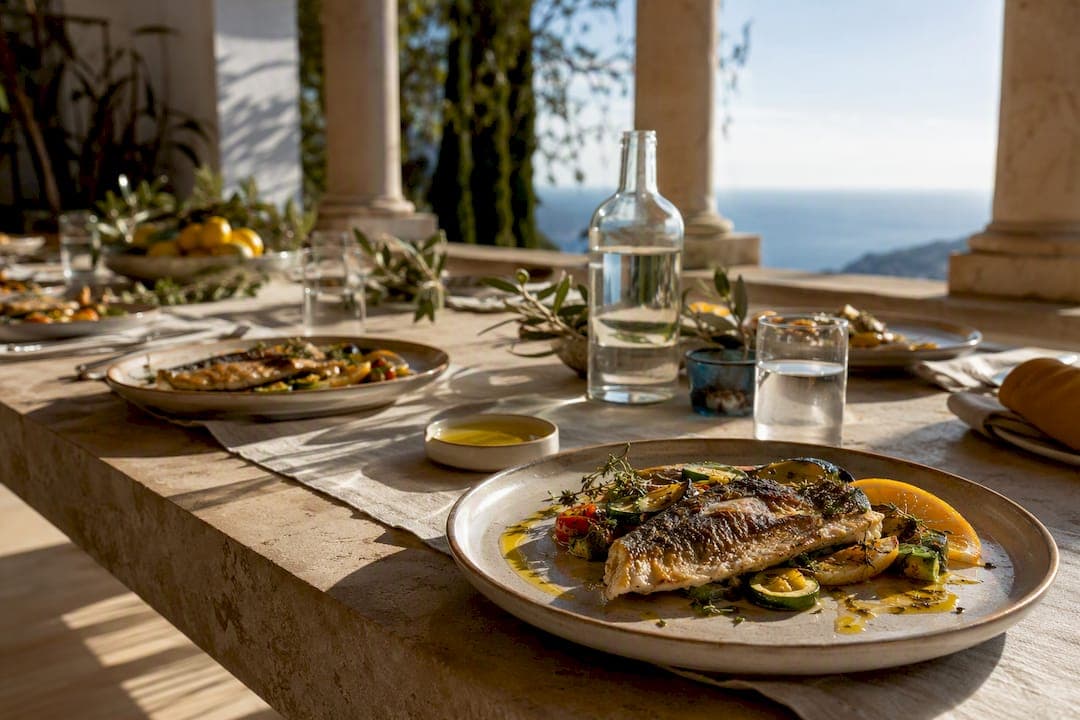
Most Costa del Sol yoga retreats run on full board, or pensión completa, built around Mediterranean, seasonal cooking that stays light enough to support daily practice. A proper menú retiro de yoga Costa del Sol will flag dietary accommodation upfront and usually invites guests to declare allergies or preferences before arrival. Bespoke private-chef menus sit above the standard package for anyone wanting more control over the table.
TL;DR:
- Costa del Sol retreats typically include breakfast, lunch, and dinner, with some offering optional extras like snacks, drinks packages, or specialty menus at additional costs.
- Declaring specific dietary needs and allergies upfront, especially for severe allergies, ensures proper preparation and reduces cross-contamination risks.
- Menus are heavily influenced by seasonal, local produce like citrus, tomatoes, and fresh fish, which results in lighter, flavoursome dishes aligned with the slow pace of retreat days.
- Communal dining is common for social bonding, but private chef services offer personalized, allergen-sensitive meals suited for smaller or villa-based retreats.
- Fasting or detox days usually involve lighter, broth-driven menus that are carefully timed to avoid fatigue and should be confirmed with the organizer if medical concerns exist.
Table of Contents
- Understanding pensión completa and other retreat board types
- How do retreats handle dietary requirements and allergies?
- What does a sample yoga retreat menu actually look like?
- Why Costa del Sol produce shapes the menu
- How to brief a retreat organiser or private chef
- Organic and wellness-focused choices on retreat menus
- Fasting and detox days: what actually changes on the plate
- Communal tables or private dining: which suits your retreat?
- A chef's perspective: balancing flavour, energy and calm for retreat menus
- Book a bespoke retreat menu with The Sensory Chef
- Sources
- FAQ
Understanding pensión completa and other retreat board types
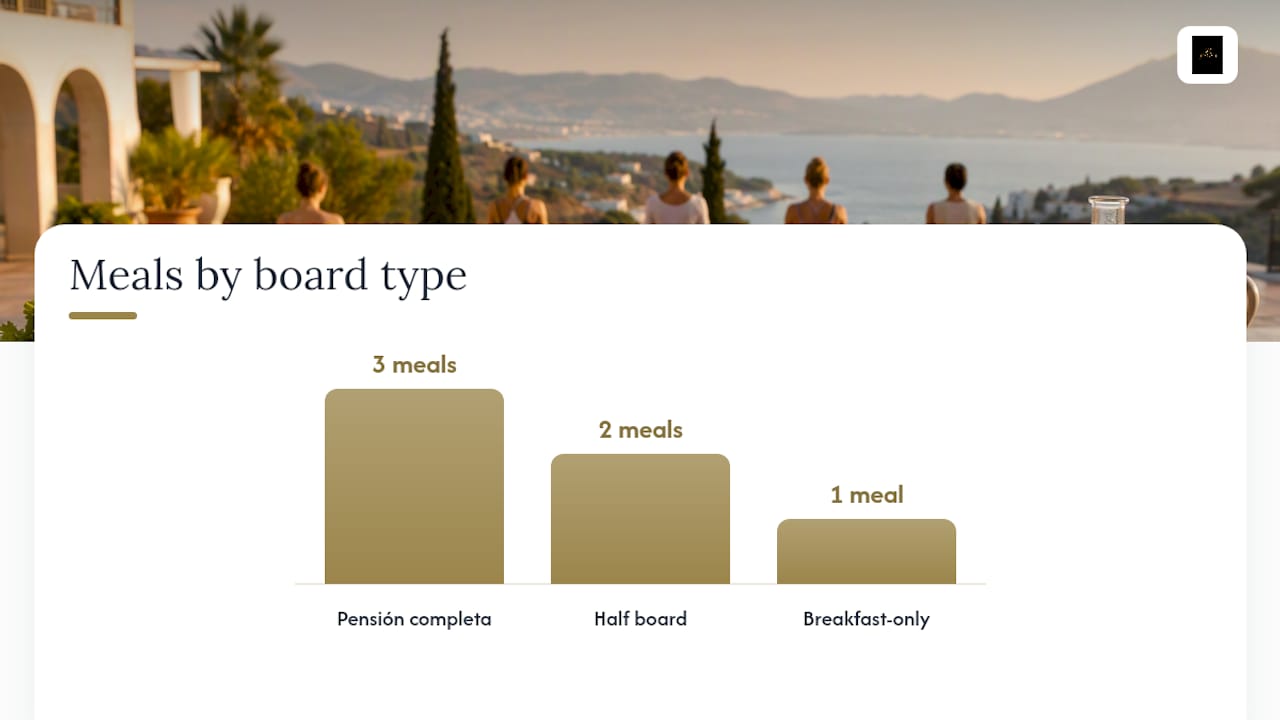
Retreat listings use a handful of standard terms, and knowing them saves confusion when you compare packages. Pensión completa (full board) covers breakfast, lunch and dinner, though drinks beyond water and coffee are often billed separately. Half board usually means breakfast and one main meal, leaving guests to arrange lunch or dinner independently, which suits retreats built around free afternoons or excursions. Breakfast-only packages appear at retreats that lean on nearby restaurants or self-catering villas.
Timing follows the rhythm of practice rather than a hotel schedule. Breakfast tends to be early and substantial enough to fuel a morning session, lunch stays lighter so nobody feels sluggish through an afternoon class, and the main meal of the day arrives in the evening once the final practice ends. One Marbella retreat listing describes a typical structure as breakfast buffet, lunch a la carte and a set dinner, with special-menu requests sometimes carrying a supplement.
Common extras worth checking before you book:
- Drinks packages (herbal teas, juices, wine with dinner) often cost extra on top of the board price.
- Special-diet menus, from gluten-free to raw, may attract a small surcharge.
- Nutritional consultations with a chef or nutritionist are sometimes offered as an add-on rather than included.
- Snacks between sessions vary hugely, so ask whether fruit, nuts, or energy bites are provided or need buying locally.
Always check whether lunch is plated, buffet, or a la carte, since that detail affects both flexibility and how easily dietary requests get handled on the day.
How do retreats handle dietary requirements and allergies?
Organisers on the Costa del Sol treat dietary accommodation as standard practice rather than a favour, provided guests declare their needs early. Personalised menus for vegan, vegetarian and common intolerances are a routine expectation for Andalusian retreat dining, and most booking forms include a dedicated dietary section for exactly this reason.
When you fill that form in, be specific rather than general:
- State the exact diet (vegan, coeliac, dairy-free) rather than a vague "healthy eating" note.
- List allergens by name and note severity, especially for anything that could trigger a serious reaction.
- Mention any texture or ingredient dislikes that affect enjoyment even if they are not medical.
- Ask how far in advance the kitchen needs notice for a fully separate meal.
Vegan, vegetarian, gluten-free and lactose-free requests are handled without much fuss almost everywhere. Anaphylactic allergies need a different level of care, and it is worth asking directly whether the kitchen has a separate preparation area, how buffet dishes are labelled, and what the emergency protocol looks like if a reaction occurs. Spanish event-catering guidance is blunt on this point: organisers should communicate specific dietary needs and allergies directly to the catering team well ahead of time to reduce cross-contamination risk.
Pro Tip: Send your dietary form the moment you book rather than waiting for a reminder email. Kitchens sourcing specialist ingredients from Málaga or Granada often need a week or more to plan around a genuinely rare allergen.
What does a sample yoga retreat menu actually look like?
A three-day snapshot shows how Andalusian produce and practice timing shape the plate. Portions shrink before a session and grow again once the day's movement is done.
- Day 1 breakfast: Greek yoghurt with local honey and figs; vegan swap uses coconut yoghurt and toasted almonds.
- Day 1 lunch: Grilled sea bream with roasted peppers and a citrus dressing; vegetarian version swaps the fish for grilled halloumi or chickpea patties.
- Day 1 dinner: Slow-cooked vegetable stew with saffron rice, naturally vegan.
- Day 2 breakfast: Wholegrain toast with avocado and tomato, plus fresh orange juice.
- Day 2 lunch: Chickpea and spinach salad with a light tahini dressing, served smaller than a standard lunch portion ahead of an afternoon class.
- Day 2 dinner: Baked chicken with courgette and thyme; the vegetarian option is baked aubergine stuffed with quinoa.
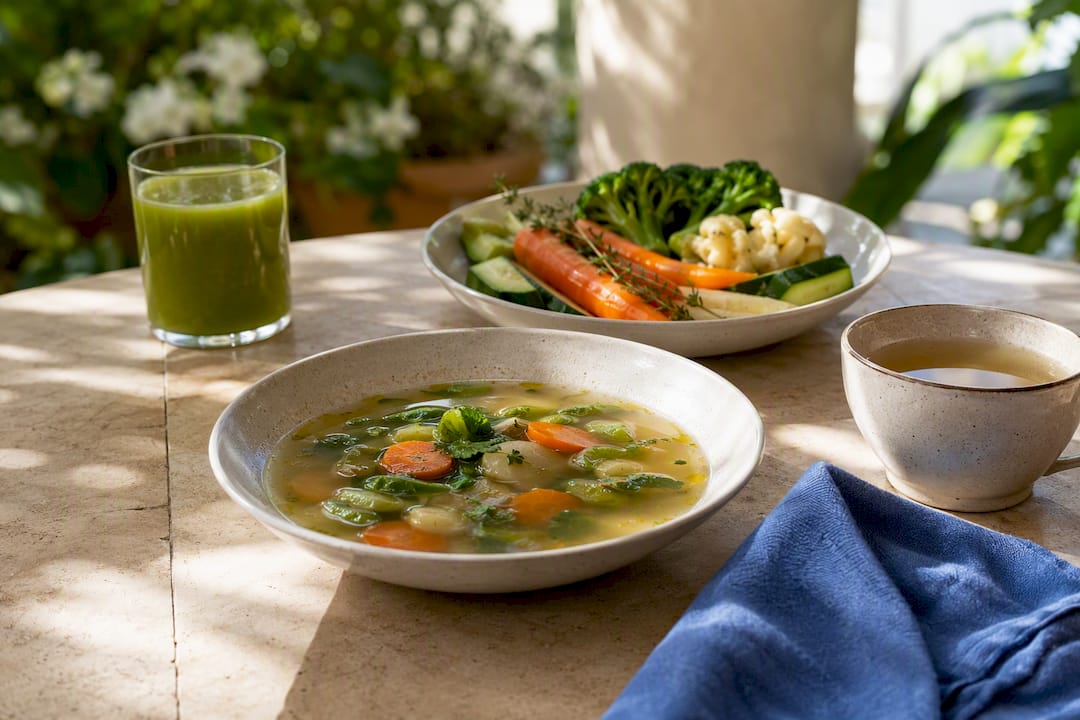
- Day 3: A "healing" or detox-style menu of clear vegetable broths, steamed greens and herbal infusions, which some retreats list as an optional add-on rather than the default. Real Costa del Sol programmes structure entire days around this kind of Mediterranean detox meal plan alongside daily practice.
Snacks between sessions tend to be simple: dates, almonds, seasonal fruit. Ask your organiser whether a detox day carries a supplement, since some retreats price it as a premium add-on rather than folding it into the standard board.
Why Costa del Sol produce shapes the menu
Local sourcing is not a marketing flourish here; it is a practical response to what grows well on this coast. Citrus, tomatoes, peppers, fresh fish and extra virgin olive oil dominate menus for most of the year, with herbs like rosemary and thyme appearing constantly in Andalusian cooking. Seasonal shifts matter too: winter menus lean on citrus and root vegetables, while summer brings gazpacho, stone fruit and lighter grilled fish.
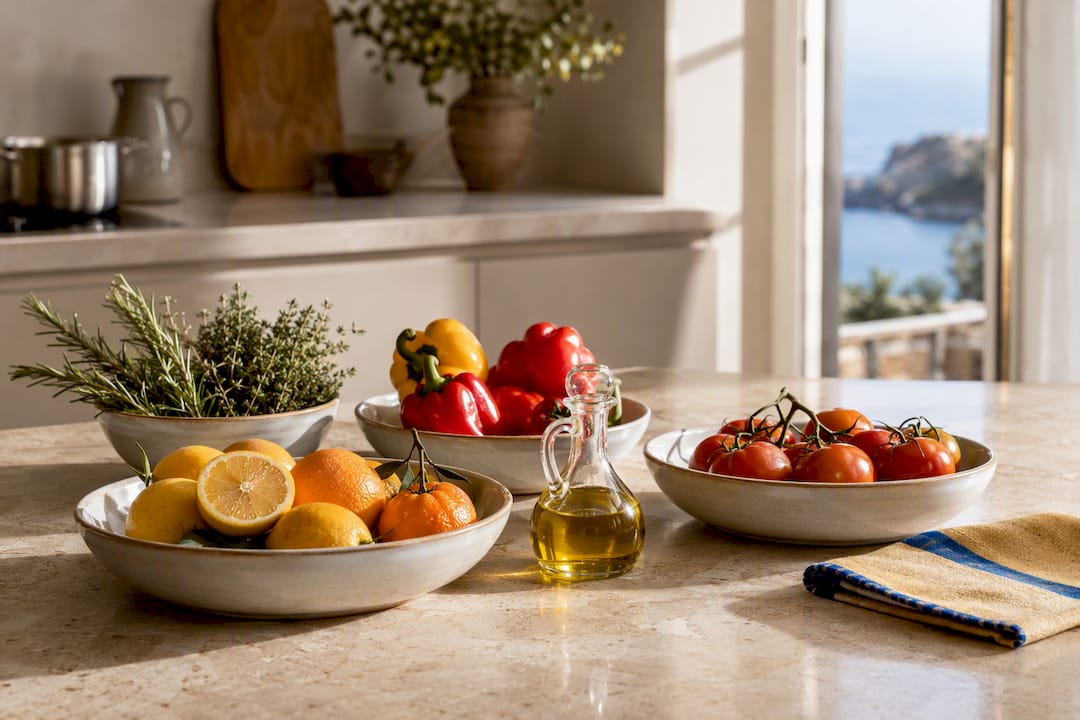
Fresh, seasonal ingredients generally mean lighter dishes, brighter flavour and less reliance on heavy sauces to carry a meal, which suits the slower pace of a retreat day. Seasonal produce also tends to travel a shorter distance from field to plate, which shows up in flavour more than most guests expect. Local caterers on the coast already build retreat-specific menus around healthy, plant-forward and seasonal choices, so it is entirely reasonable to ask your organiser directly where produce comes from and whether more local sourcing is possible.
How to brief a retreat organiser or private chef
A clear brief saves both sides time and avoids awkward surprises on day one. Whether you are working with a retreat centre's in-house kitchen or bringing in a private chef, cover the same ground each time.
- Confirm exact dates, arrival and departure times, and the number of guests per meal.
- State your food philosophy: Mediterranean, plant-forward, French-influenced, or a mix.
- List every allergy with severity noted, not just a general dietary category.
- Describe the service style you want: plated, family-style, or buffet.
- Share the daily schedule so meals land around practice rather than against it.
- Note the kitchen facilities available, including storage and refrigeration.
Budget signals help too. A tasting menu, a nutritional consultation, or a request for a rare ingredient typically carries a supplement on top of the base package, echoed in industry notes on special-menu surcharges for full board. Before confirming, settle staff access windows, meal service times, and the cancellation or late-change terms in writing.
Pro Tip: A genuinely useful brief names one single point of contact for last-minute dietary changes, so a new allergy declared on arrival day does not get lost between the villa manager and the kitchen.
Organic and wellness-focused choices on retreat menus
Some Costa del Sol retreats now list organic certification or wellness framing directly on their menus, though it is worth asking what that actually means in practice rather than assuming a blanket standard. Organic vegetables, free-range eggs and cold-pressed olive oil appear more often at retreats that lean into a health-first identity, and these ingredients tend to pair naturally with the seasonal, unprocessed cooking that already suits a yoga schedule.
Wellness framing on a menu usually signals a few concrete things: reduced sugar, minimal processed ingredients, and a preference for whole grains over refined ones. It does not automatically mean every dish is organic, so ask directly if certification matters to you. Some retreats work with small local farms rather than certified organic suppliers, which still delivers freshness and flavour without the paperwork behind the label. If a wellness claim matters to your decision, it is fair to ask the organiser for specifics rather than taking the word at face value.
Fasting and detox days: what actually changes on the plate
Many yoga retreats build in a lighter day, sometimes framed as a partial fast or detox day, and the kitchen adjusts accordingly rather than leaving guests to skip meals entirely. A typical detox day swaps heavier proteins and grains for clear broths, steamed vegetables, herbal teas and fresh juices, keeping guests fuelled without the heaviness of a full dinner service.
This is not usually a true fast in the medical sense. Most retreats design it as a lighter eating day rather than zero food, precisely because intense yoga practice on an empty stomach carries real risk of dizziness or fatigue. If a retreat programme includes a stricter fasting protocol, treat that as something to confirm directly with the organiser beforehand, particularly if you have a medical condition, are pregnant, or take regular medication, since fasting recommendations should always be checked with a health professional first regardless of how mild the retreat's version sounds.
Ask specifically what a "detox day" includes before you book if this matters to you. Some retreats charge it as a premium add-on rather than folding it into the standard board, echoing the same supplement pattern seen with other special menus.
Communal tables or private dining: which suits your retreat?
Communal dining dominates the Costa del Sol retreat scene, and for good reason. Shared long tables under a pergola or by a pool encourage the kind of connection many guests come on retreat specifically to find, and they simplify service for the kitchen since everyone eats roughly the same menu at the same time.
Private dining exists as a genuine alternative, particularly for smaller groups, couples, or villa-based retreats where guests have booked the whole property. A private chef service allows meals to be plated individually, timed around a couple's own schedule rather than a group's, and adjusted dish by dish for one person's allergy without affecting anyone else's plate. This suits anniversary stays, small family groups, or organisers running a boutique retreat for six to eight guests rather than twenty.
Neither format is inherently better; they solve different problems. A large group retreat benefits from the shared-table energy of communal dining, while a villa celebration or an intimate group often gets more value from a private chef who can build the entire menu around the people actually at the table.
A chef's perspective: balancing flavour, energy and calm for retreat menus
French training teaches restraint before it teaches flair, and that restraint matters enormously when cooking for people who will roll out a mat two hours after eating. A heavy sauce or a rich dessert has its place at a celebration dinner, but on a retreat day it works against the very thing guests came for.
The details that matter most are often invisible ones: a broth seasoned gently enough not to overstimulate, a portion sized for movement rather than indulgence, spice kept warm rather than sharp so digestion stays easy through an afternoon session. Timing the heavier dishes for evening, once practice is done, respects the body's own rhythm rather than fighting it.
If you are planning a retreat menu and want that balance built in from the first conversation, The Sensory Chef is glad to talk it through.
— Joseph Warner
Book a bespoke retreat menu with The Sensory Chef
The Sensory Chef is the alternative to a standard retreat kitchen for anyone hosting a smaller group or a villa-based retreat on the Costa del Sol: instead of a fixed set menu shared by everyone, Joseph Warner builds Mediterranean tasting menus around your group's actual dietary needs, practice schedule and food philosophy, then serves them on-site.
More than thirteen years of professional experience, including training in traditional French gastronomy alongside Spanish and Mediterranean cuisine, sits behind every menu Joseph designs. Dietary accommodation is built into the process from the first conversation, not bolted on afterwards, as explained on the page covering how private dining handles allergies and dietary needs. Retreat organisers wanting a fully bespoke approach can also look at how a Mediterranean tasting menu is planned for Costa del Sol villas for a sense of the process.
To move forward, Joseph will need your dates, group size, known allergies, preferred service style and daily schedule, broadly the same brief outlined above. Get in touch through the personalised menu booking page to arrange a menu tasting or consultation for your retreat.
Sources
- Andalucía tourism site
- Vida Nerja — 8 Days to Reconnect with Yourself on the Costa del Sol
- Meridional Events — catering for special diets in Spain
FAQ
What clothing should I pack for a yoga retreat?
Bring breathable, layered clothing suited to both practice and warm Andalusian evenings: leggings or loose trousers, a light long-sleeve top for early mornings, and swimwear if the retreat includes pool or sea access.
How much does a spiritual or wellness retreat typically cost?
Costs vary widely by board type, location and chef service, with full-board packages generally costing more than half-board or breakfast-only options; always check what meals, drinks and special-diet supplements are included before comparing prices.
What's the best spiritual retreat in Spain?
There is no single best retreat, since the right choice depends on group size, budget and dietary needs. Andalusia, including the Costa del Sol, is well established as a leading destination for retreats pairing yoga with Mediterranean detox meals.
Where can I find a yoga retreat in the Pyrenees?
The Pyrenees host mountain-based retreats distinct from Costa del Sol coastal ones, and are best found through dedicated retreat listing sites covering that region specifically, since this article focuses on Costa del Sol and Andalusian retreat dining.
How far ahead should I declare dietary needs for a retreat?
Declare dietary requirements and allergies as soon as you book, ideally weeks ahead for rare allergens, since kitchens sourcing specialist ingredients need lead time to plan safely.
Can I get a private chef instead of a shared retreat menu?
Yes. Smaller groups and villa-based retreats can book a private chef, such as The Sensory Chef, for individually plated meals built around the group's own schedule and dietary needs.