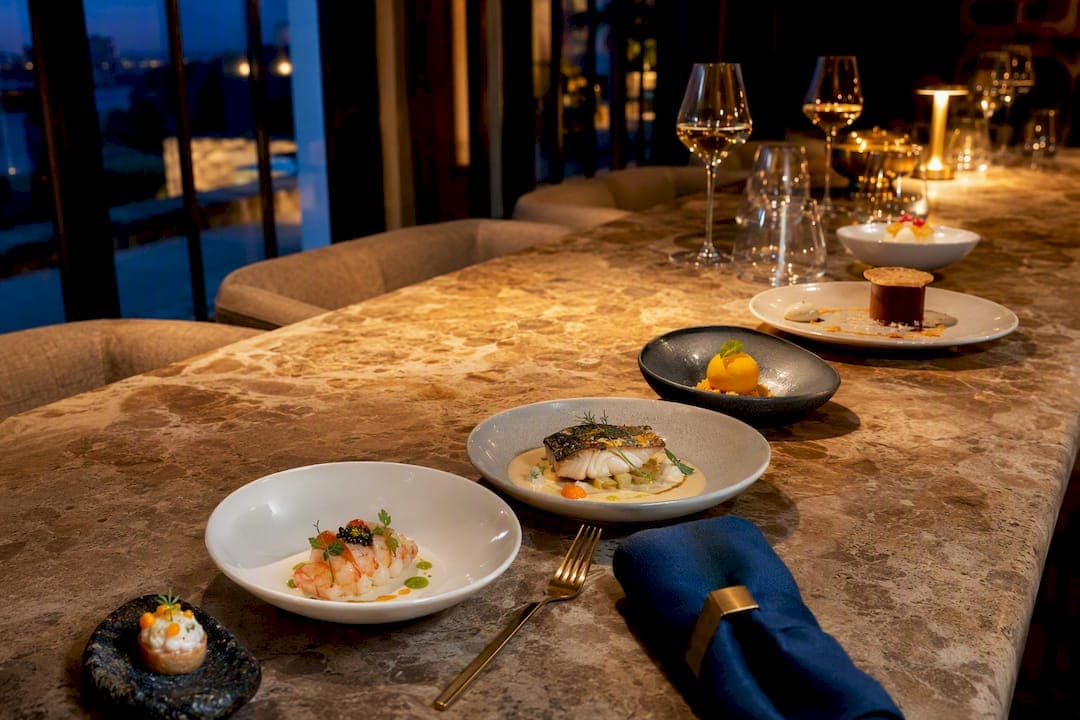
A private chef designs and cooks a complete New Year's menu inside your villa, handling shopping, timing, dietary needs and cleanup so you spend the evening as a guest at your own table. This suits villa hosts and travellers who want a proper celebration without spending New Year's Eve chained to the hob. Because 31 December is a very busy night for private dining, enquiries need to be made well before the holiday rush.
TL;DR:
- Booking a private chef for New Year's requires six to ten weeks' notice due to high demand and early availability fill-up.
- A six-course tasting menu takes around two to three hours, with small portions designed to maintain curiosity until dessert.
- Disclosing specific allergies, intolerances, and dietary preferences early ensures safe, tailored menu options for all guests.
- Family-style service is better suited for larger groups or mixed generations, while tasting menus cater to smaller, attentive parties.
- The chef typically arrives two to four hours before service and stays for four to five hours, including setup, cooking, and cleanup.
Table of Contents
- What does a New Year's menu at home actually include?
- How far ahead should you book a New Year's chef?
- Getting dietary needs right before the chef arrives
- What drinks and pacing suit a New Year's dinner?
- Preparing your kitchen before the chef arrives
- What does a private chef cost for New Year's Eve?
- Decorating the table for a New Year's atmosphere
- Bringing regional traditions into the menu
- Matching menu complexity to your kitchen and your evening
- A chef's view on what actually makes New Year's dinner memorable
- Book your New Year's menu with The Sensory Chef
- Useful resources for planning your booking
- Sources
- FAQ
What does a New Year's menu at home actually include?
Booking a menú año nuevo casa, a New Year's menu prepared and served inside your own home, means the chef arrives with a plan already built around your guests, not a fixed restaurant sitting. Three menu formats cover most requests The Sensory Chef receives around New Year's. Each can be adjusted once dietary details come in.
The six-course tasting menu. A slow, structured sequence: an amuse-bouche, a chilled seafood or vegetable starter, a warm fish course, a palate-refresher (often a citrus or herb sorbet), a meat or fish main, and a dessert built around dark chocolate or seasonal fruit. Portions run small and precise, roughly two to three bites per course before the main, which keeps guests curious rather than full by course three. Expect around two and a half to three hours from first plate to dessert, with natural pauses for the countdown to midnight.
The family-style festive spread. Shared starters (croquetas, a cured-fish board, roasted vegetables with romesco) land on the table together, followed by a centrepiece such as paella or a slow-roasted joint carved tableside. This format suits larger groups and mixed generations better than the tasting menu, since everyone serves themselves at their own pace and conversation doesn't stop for plate changes.
The vegetarian or pescatarian celebration menu. Built around seasonal roots, wild mushrooms, and citrus, with a seafood course (grilled langoustines or a fish tartare) as the pescatarian bridge for mixed tables where not every guest follows the same diet.
- Seasonal touches for New Year's dates include pomegranate, persimmon, chestnuts, and root vegetables at their sweetest in December.
- Gluten-free swaps (rice-based sides instead of bread, cornflour-thickened sauces) are straightforward when flagged early, and gluten-free menu examples show how a full course can be reworked without losing texture.
- A tasting menu built around the occasion works best when the chef treats each course as part of one narrative rather than a random sequence of good dishes.
How far ahead should you book a New Year's chef?
New Year's Eve is the single busiest date in private dining, and lead times reflect that. General private-chef bookings usually need two to five weeks' notice, but holiday-season dates typically require six to ten weeks to secure a chef with availability and the right ingredients on order.
- Enquire six to ten weeks ahead with your date, guest count and any dietary flags.
- Expect a menu proposal within two to three days of your initial brief, as most chefs use this window to shop around your requests rather than send a generic template.
- Confirm a deposit to hold the date; cancellation terms are worth reading carefully given how tight holiday scheduling is.
- On the day, most chefs arrive two to four hours before service for setup, prep and plating, staying on-site around four to five hours in total for a full multi-course dinner.
- Three to seven days out, reconfirm guest numbers, final dietary changes, kitchen access and parking.
Getting dietary needs right before the chef arrives
Vague guidance produces vague menus. Chefs need specifics on every guest, not just a general sense of the table.
- Confirm allergies, intolerances and diagnosed conditions (coeliac, shellfish, nut allergy) by name.
- List dietary patterns: vegetarian, pescatarian, vegan, low-carb, or religious dietary observance.
- Note strong dislikes separately from allergies. A guest who "can't stand" coriander still needs the dish redesigned.
- Flag any severity level, since a mild intolerance and a medical allergy call for different kitchen precautions.
Chefs across the industry agree on this point: dietary needs should be disclosed early because they shape the menu itself rather than being handled as last-minute substitutions. The Sensory Chef's dietary guidance page sets out how allergies are typically built into the original plan.
Pro Tip: Send dietary details in writing, even a short list in an email, rather than mentioning them verbally on the night. A written note gets checked against every course; a verbal aside gets forgotten by the third glass of cava.
What drinks and pacing suit a New Year's dinner?
Pairing doesn't need to be complicated to feel considered. Sparkling wine opens the evening and returns for the midnight toast; a crisp white or dry sherry suits the fish course; a fuller red carries the main; and something sweet, a moscatel or a short digestif, closes the meal.
- Budget roughly half a bottle of wine per guest across the whole evening, adjusting for longer aperitif hours.
- Chefs commonly advise on pairings and note whether guests should bring their own wine or let the chef source it, so ask early which applies to your booking.
- Leave 15 to 20 minutes between courses during the tasting format; family-style service moves faster since dishes sit on the table.
- Build the midnight toast into the menu itself, timing dessert or a light palate-cleanser to land just before the countdown so nobody is mid-course when the clock strikes twelve.
A practical wine pairing guide for hosts covers bottle quantities in more detail if you're planning drinks yourself rather than leaving it to the chef.
Preparing your kitchen before the chef arrives
Clearing counters and freeing a fridge shelf matters more than owning professional equipment. Most private chefs adapt comfortably to an ordinary villa kitchen, provided a few basics are sorted beforehand.
- Clear worktop space and reserve a shelf in the fridge for deliveries.
- Test the oven and hob in advance. Rented villas sometimes have appliances nobody has used in months.
- Share parking details, gate or alarm codes, and where coats and bags should go.
- Confirm you have enough glasses, plates and cutlery for the full guest count, plus unscented candles rather than heavily perfumed ones that compete with the food's aroma.
- Agree a guest arrival window with your chef so the first course doesn't go out before everyone's seated.
What does a private chef cost for New Year's Eve?
Private-chef pricing runs per guest, with a minimum spend attached to most bookings. Pricing bands vary from casual dinners through to premium tasting menus and full luxury experiences, and New Year's dates typically sit at the higher end of a chef's calendar with earlier booking required and a holiday surcharge on top of standard rates.
When a proposal lands in your inbox, check it answers these questions before you sign anything:
- What's included: groceries, staffing, travel, and cleanup, or are any of these billed separately?
- Is there a minimum guest count or minimum spend attached to the New Year's date?
- What's the cancellation policy given how tight the holiday season books up?
- Is wine sourced by the chef or expected to be supplied by the host?
Tipping isn't obligatory but is appreciated for exceptional service, and it's worth setting aside a separate wine budget rather than folding it into the per-guest quote, since chef-sourced bottles are usually priced apart from the cooking fee.
Decorating the table for a New Year's atmosphere
The food carries the evening, but the table sets the mood before the first course even arrives. Warm, low lighting does more for atmosphere than any single decoration: dim overhead lights and let candlelight (unscented, so it doesn't clash with the chef's aromas) do the work.
Gold, deep green and midnight blue read as festive without tipping into cliché, and a runner in one of those tones down the centre of the table anchors everything else. Fresh greenery, eucalyptus, bay leaves, or a few sprigs of rosemary, adds texture without needing florist-level arranging, and pairs naturally with a Mediterranean or French-leaning menu.
Keep the centrepiece low. Tall arrangements block sightlines across the table exactly when you want guests talking to each other before midnight. A cluster of short candles and a small bowl of pomegranates or clementines does more for the table than a single tall vase.
Place cards are a small touch that pays off at mixed gatherings, families combining, friends meeting friends, since they save the host from directing traffic once the first course is ready. If you're serving the family-style menu, leave the centre of the table clear enough for shared platters to land without guests having to shuffle glasses out of the way.
Bringing regional traditions into the menu
New Year's food carries meaning well beyond taste, and a chef can weave those traditions into a menu without making the evening feel like a re-enactment. Spanish custom includes eating twelve grapes at the twelve strokes of midnight, one wish per grape, and that ritual slots easily into the dessert course or the transition into the toast.
Lentils appear in several European New Year traditions as a symbol of prosperity, their round shape read as coins, and a small lentil dish works well as a starter component rather than a main. Pomegranate seeds, associated with luck and abundance in Mediterranean and Middle Eastern custom, scatter beautifully over a dessert or a cheese course.
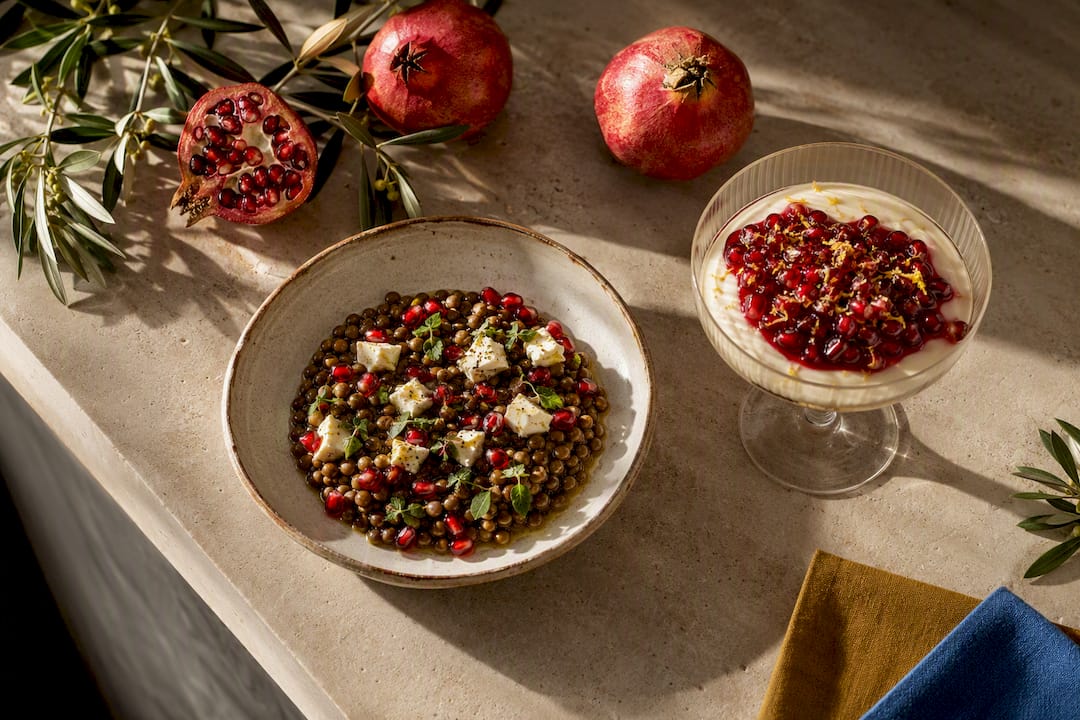
For a table with international guests, a chef trained across French and Mediterranean cuisine can build a menu that nods to more than one tradition at once, a French-style dessert finished with pomegranate, or a Mediterranean starter that echoes the "coins for luck" symbolism guests from different backgrounds will recognise. The point isn't to recreate every custom on the table. It's choosing two or three that mean something to your specific guests and letting the chef build them into courses that already belong on the menu.
Matching menu complexity to your kitchen and your evening
A six-course tasting menu and a family-style paella spread ask very different things of a kitchen, and matching the right format to your villa's setup is important. A compact villa kitchen with one oven and limited counter space suits family-style service far better than an elaborate tasting sequence with multiple hot and cold elements running at once.
Guest count matters just as much as kitchen size. Six guests can comfortably work through a slow-paced tasting menu; sixteen guests are usually better served by shared plates and a centrepiece dish that scales without needing constant replating. Ask your chef directly which format suits your kitchen before settling on a menu, since an experienced chef will flag a mismatch before it becomes a problem on the night rather than after.
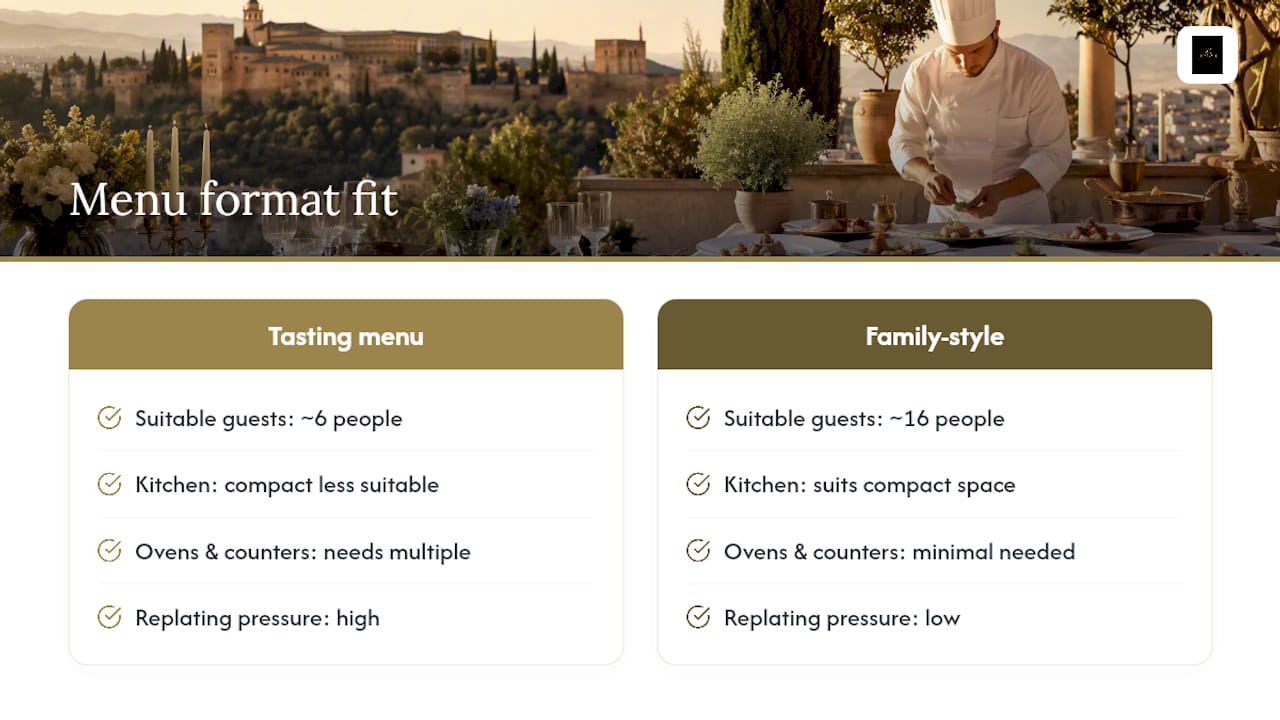
Time available on the day plays into this too. If your chef only has two to three hours before guests arrive, a tasting menu with delicate, last-minute plating adds pressure that a family-style spread, largely finished ahead of time and served together, avoids. None of this limits how memorable the evening feels. It simply means the format should fit the room and the clock, not the other way round.
A chef's view on what actually makes New Year's dinner memorable
Most of what makes a private dinner feel special has nothing to do with how elaborate the menu is. Introducing the chef at the table, even briefly, changes how guests experience the meal. A dish that arrives with no context is catering. The same dish, introduced by the person who cooked it, becomes part of the evening's story.
Lighting and small sensory details do more work than most hosts expect. Dimmed lights, a few unscented candles, fresh flowers that don't compete with the food's aroma, these cost little but shift the whole atmosphere of a room. Hosts who get the most out of a private chef tend to share one habit: they don't hover in the kitchen. The chef's job is to manage the food; the host's job is to manage the guests, keep conversation moving, and let the kitchen work without an audience checking on it every ten minutes.
That division of labour is what separates a private chef booking from simply having someone cook in your kitchen. It's the difference between a meal you attended and one you actually enjoyed.
— Joseph Warner
Book your New Year's menu with The Sensory Chef
The Sensory Chef gives you a bespoke New Year's menu built around your guests, not a set restaurant sitting you have to travel to. Joseph Warner, French-trained with more than thirteen years of professional kitchen experience across French, Spanish, Mediterranean and international cuisine, designs each menu around your date, your guest list and any dietary needs, then arrives to cook, serve and clean up so you're free to enjoy your own party.
Getting a fast, accurate quote is straightforward: send your date, guest count, villa location, and any allergies or dietary preferences when you enquire. Given how quickly New Year's dates fill across Granada, Almuñécar, the Costa Tropical, Málaga and Andalucía, earlier enquiries get first pick of both dates and menu options. Whether you want the full six-course tasting experience, a family-style paella spread, or a vegetarian celebration menu for a mixed table, the personalised New Year's menu with Chef Joseph Warner starts with a short conversation about what you have in mind. Check availability now and lock in your date before the holiday calendar fills.
Useful resources for planning your booking
For dietary planning, see accommodating dietary needs; for the full service overview, visit The Sensory Chef's private dining experience.
Sources
- What Is an In-Home Private Chef Experience Like? A Complete Guide for First-Time Hosts (2026)
- Food & Wine: Private chef behind the scenes (2023)
- Private Chef Event Planning: From First Call to Final Cleanup (2026 Guide)
FAQ
How much notice do I need to book a private chef for New Year's Eve?
Book six to ten weeks ahead for New Year's dates, since holiday-season demand runs well above regular weekend bookings and the best chefs fill their calendars early.
What's included in a private chef's New Year's package?
Most bookings cover menu planning, shopping, cooking, plating, service and kitchen cleanup, with the chef typically on-site for four to five hours for a full multi-course dinner.
Can a private chef handle allergies and multiple diets at one table?
Yes. Disclosing every allergy, intolerance and dietary pattern before the menu is finalised lets the chef design safe alternatives from the start rather than swapping dishes on the night, and The Sensory Chef builds these into the original dietary planning.
Should I choose a tasting menu or a family-style New Year's dinner?
A tasting menu suits smaller, slower-paced groups of six to ten guests, while family-style service with shared platters and a centrepiece dish works better for larger or mixed-generation tables.
Do I need to buy wine myself, or does the chef arrange it?
Both are common. Some chefs advise on pairings while hosts source the bottles; others arrange wine directly, so confirm which applies when you receive your proposal.