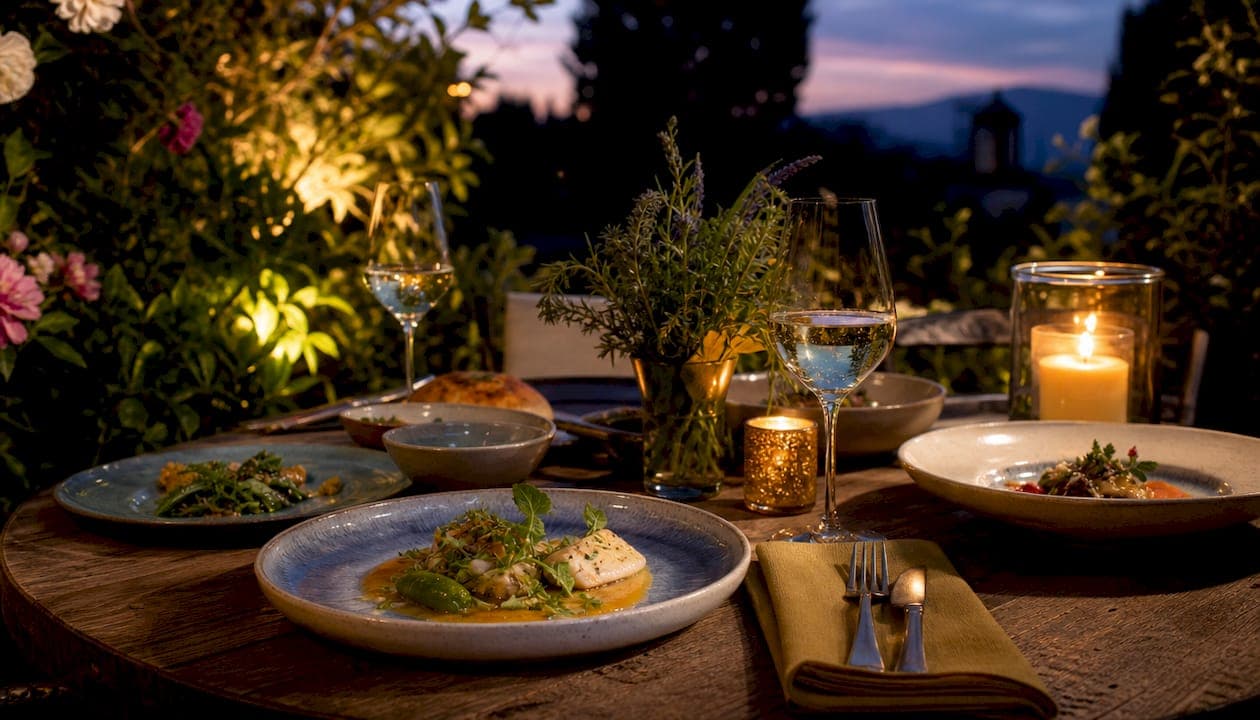
A sensory dining experience is defined as a meal designed to engage all five senses simultaneously through flavour, texture, aroma, visual presentation, and sound. Granada is one of the finest settings in Europe for this kind of immersive dining, where Moorish architecture, Andalusian botanicals, and a living flamenco tradition give every course a cultural dimension that no other city quite matches. Thesensorychef, founded by French-trained private chef Joseph Warner, has spent more than 13 years refining this approach across Granada and Andalusia, building bespoke menus that connect guests to the city's layered culinary heritage. Whether you want to plan your own private dinner or understand what makes these experiences so memorable, this guide covers every element you need.
What makes a sensory dining experience in Granada distinct?
Sensory dining in Granada draws on a culinary history that most cities simply do not possess. Luxury sensory packages in the city pair multi-course Nasrid-era tastings with private Alhambra tours, demonstrating how deeply food and place are intertwined here. That connection between palate and history is the defining quality of the Granada approach.
The Nasrid dynasty left behind a botanical and spice legacy that still shapes local cooking. Saffron, cumin, coriander, and dried rose petals appear in dishes that trace directly back to 13th-century recipes. Linking flavour to that history turns a meal into an educational event, engaging guests intellectually as well as physically. That intellectual layer is what separates a sensory dinner from a merely excellent one.
Structured sensory dining events in Granada typically last around 2.5 hours, combining dinner with cultural performances such as live flamenco. That duration is long enough to build a genuine narrative arc across courses without exhausting guests.
Key sensory elements to build into your Granada dinner
Every successful sensory dinner rests on five pillars: flavour, texture, aroma, sight, and sound. Each one requires deliberate planning.
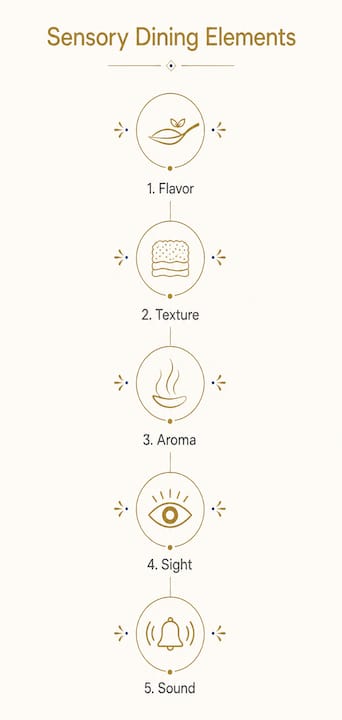
Flavour is the foundation. Andalusian ingredients such as Poquillo peppers, Alpujarras mountain herbs, local olive oil from the Vega de Granada, and fresh seafood from the Costa Tropical give your menu an authentic regional identity. Nasrid-influenced spice combinations, particularly warm spices balanced with citrus, create flavour profiles that feel both ancient and alive.
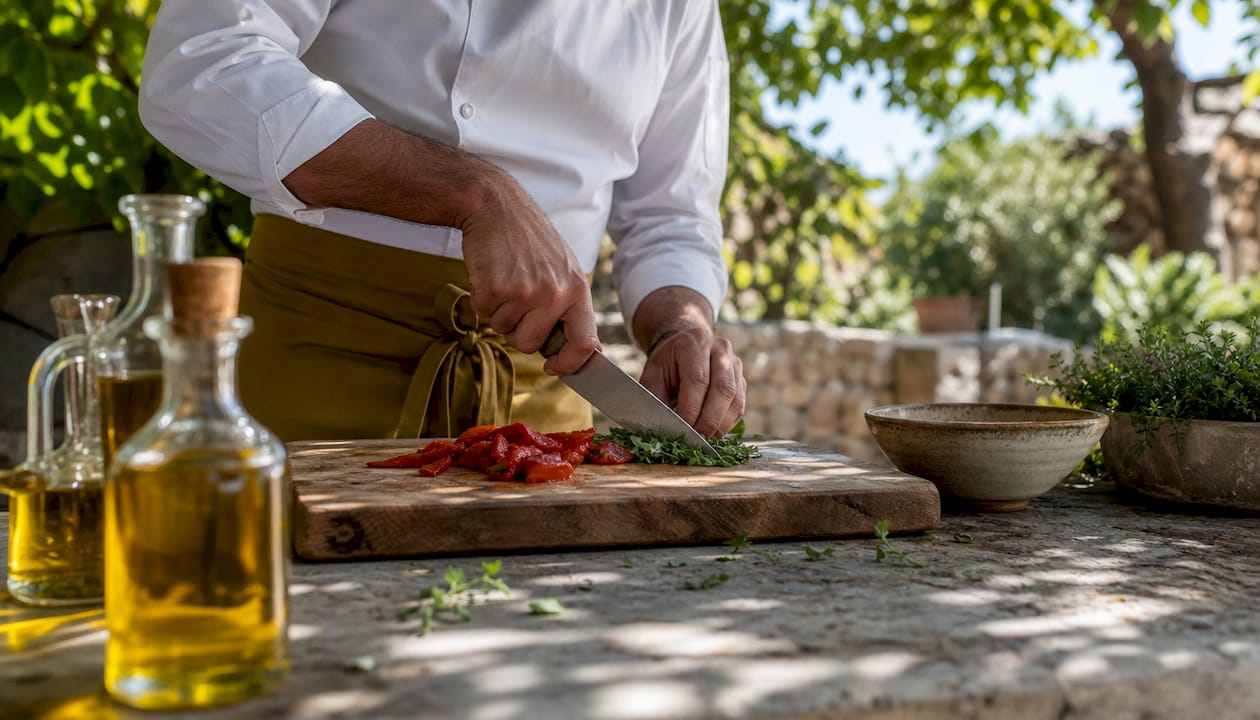
Texture is often underestimated. A dish that contrasts crisp with yielding, or silky with granular, holds attention far longer than one with a uniform mouthfeel. Think of a chilled gazpacho topped with a crouton of toasted sourdough, or a slow-braised lamb shoulder finished with a pomegranate molasses glaze that cracks slightly on the spoon.
Aroma reaches guests before the first bite. Burning a small amount of dried rosemary or orange peel at the table just before a course arrives primes the palate and creates anticipation. Andalusian botanicals, including lavender, thyme, and myrtle, are all locally sourced and carry an immediate sense of place.
Sight shapes expectation. Moorish geometric patterns, the terracotta and cobalt palette of Granada's tilework, and the warm golds of saffron rice all translate naturally into plating decisions. A visually coherent table tells guests where they are before they taste anything.
Sound is the most overlooked element. Integrating Moorish musical heritage and Andalusian musical traditions creates a spatial narrative that deepens the dining atmosphere. A low-volume flamenco guitar recording or a live performance between courses transforms the room.
- Use flavour profiles rooted in Nasrid-era spice combinations.
- Build textural contrast into every dish, not just the main course.
- Release aroma cues just before each course arrives.
- Plate with Granada's visual heritage as your reference point.
- Choose ambient sound that complements rather than competes with conversation.
Pro Tip: Balance is everything. Introducing all five sensory elements at full intensity simultaneously causes overload. Stagger them: lead with aroma, follow with sight, then let flavour and texture do the work mid-course, and bring sound forward between courses.
Sensory dining checklist for Granada: tools and ingredients
Practical preparation separates a memorable evening from a chaotic one. The table below outlines what is genuinely necessary versus what adds polish.
| Sensory element | Essential | Nice to have |
|---|---|---|
| Flavour | Fresh local herbs, Andalusian olive oil, regional spices | Nasrid-recipe spice blends, aged sherry vinegar |
| Texture | Varied cooking methods (braised, raw, roasted) | Specialist serving ware (slate, terracotta) |
| Aroma | Dried botanicals for table release | Handcrafted ceramic diffusers |
| Sight | Considered plating, natural lighting | Moorish-patterned tableware, candles |
| Sound | Curated playlist or live flamenco | Professional musician between courses |
For ingredients, Granada's Mercado San Agustín and the weekly markets in the Albaicín offer the freshest local produce. Sourcing from these markets rather than supermarkets gives your menu genuine provenance, and guests notice the difference in flavour.
Serving ware matters more than most hosts expect. Terracotta bowls retain heat and carry a visual warmth that white porcelain cannot replicate. Slate boards work well for cheese and charcuterie courses because they ground the presentation in the landscape of Andalusia.
For ambience, warm candlelight or low-wattage filament bulbs suit the ochre and terracotta tones of a Granada interior far better than cool white lighting. A small arrangement of dried lavender or fresh orange blossom on the table costs almost nothing and contributes significantly to the aroma layer.
Pro Tip: Source your spices from specialist shops in the Alcaicería, Granada's historic silk market. The quality and provenance are far superior to supermarket alternatives, and the act of buying there becomes part of the story you tell guests at the table.
How to plan and execute a sensory dinner step by step
A well-executed sensory dinner follows a clear sequence. Rushing any stage undermines the whole experience.
- Define your sensory theme. Choose a cultural anchor, such as Nasrid Granada, the Alpujarras villages, or the Costa Tropical coastline. Every course, aroma, and ambient detail should connect back to that theme.
- Plan the menu with multi-sensory balance. A five or six-course format works well. Alternate lighter, aroma-led courses with richer, texture-forward dishes. A tapas-style progression of smaller plates also works, particularly for groups who prefer a more social pace.
- Write ingredient provenance notes. For each course, prepare two or three sentences about where the key ingredient comes from and why it matters. Guests engage far more deeply when they understand what they are eating.
- Set the table before guests arrive. Lighting, music, and aroma should all be in place when guests walk in. First impressions are formed in seconds and are very difficult to revise.
- Welcome guests with a sensory introduction. A short verbal introduction to the evening's theme, lasting no more than two minutes, frames the experience and signals that this dinner is different from an ordinary meal.
- Pace each course unhurriedly. Unhurried pacing with clear articulation of ingredient provenance prevents sensory overload and deepens guest connection. Allow at least 15 minutes between courses for conversation and reflection.
- Address dietary needs in advance. Collect dietary requirements at least 48 hours before the dinner. A well-handled dietary adaptation, such as a gluten-free version of a traditional Andalusian pastry, demonstrates care and maintains the sensory integrity of the menu.
The table below compares the two most common formats for sensory dining in Granada.
| Format | Best for | Sensory strengths | Considerations |
|---|---|---|---|
| Multi-course tasting menu | Intimate groups, celebrations | Controlled pacing, strong narrative arc | Requires more preparation time |
| Tapas-style progression | Social groups, exploratory diners | Variety, flexibility, shared textures | Harder to control sensory sequencing |
Professional private dining in Granada draws on both formats depending on the occasion. The right choice depends on your group size, the occasion, and how much control you want over the sensory sequence.
Common challenges and how to avoid them
Sensory overload is the most frequent mistake in immersive dining. It happens when too many strong elements compete at once: heavy incense, loud music, and intensely spiced food all arriving together. The solution is sequencing. Introduce each sensory layer at a different moment in the evening.
Timing between courses is the second most common issue. Successful sensory dining pace is unhurried, allowing time for conversation and reflection. Fast pacing causes guests to feel processed rather than hosted.
Dietary restrictions require particular care in a sensory context. Substituting an ingredient without considering its textural or aromatic role can flatten a dish entirely. Plan adaptations as full sensory alternatives, not afterthoughts. Thesensorychef builds dietary accommodations into the original menu design rather than adding them at the end.
Ambient distractions, such as street noise in the Albaicín or a neighbour's television, are harder to control. A well-chosen playlist at a consistent volume masks most external noise without dominating the room.
"Cooking is an act of care. The goal is to make guests feel at home, not impressed. When warmth and culinary artistry work together, the sensory experience becomes genuinely moving rather than merely theatrical."
Storytelling is the element that ties everything together. Guests remember the story of a dish long after they have forgotten its flavour. Practise your provenance notes aloud before the evening so they feel natural rather than rehearsed.
Pro Tip: Run a full sensory rehearsal the day before. Plate one course, release the aroma cue, and play the ambient sound simultaneously. You will immediately identify any element that feels too strong or out of place.
Key takeaways
A sensory dining experience in Granada succeeds when flavour, texture, aroma, sight, and sound are sequenced deliberately around a clear cultural theme rooted in the city's Nasrid and Andalusian heritage.
| Point | Details |
|---|---|
| Lead with cultural theme | Anchor every sensory element to a specific aspect of Granada's history or landscape. |
| Sequence sensory layers | Introduce aroma first, then sight, then flavour and texture, and bring sound forward between courses. |
| Pace unhurriedly | Allow at least 15 minutes between courses to prevent overload and encourage conversation. |
| Source ingredients locally | Granada's markets and the Alcaicería provide provenance and quality that supermarkets cannot match. |
| Plan dietary adaptations fully | Treat every dietary adaptation as a complete sensory alternative, not a substitution. |
What 13 years of sensory cooking in Andalusia has taught me
The most common misconception about sensory dining is that it requires theatrical props or expensive equipment. It does not. The most powerful sensory moments I have created at the table have come from the simplest gestures: a sprig of fresh thyme placed beside a plate, a single candle lit at the right moment, or a sentence about where an olive oil comes from that makes a guest pause mid-bite.
Granada teaches you something specific about hospitality. Professional Andalusian chefs understand that cooking is an act of care, and the goal is to make guests feel at home rather than formally entertained. That philosophy shapes everything I do. A sensory dinner should feel warm and personal, not like a performance.
Developing my sensory approach as a deaf chef changed how I think about food entirely. Without sound as a constant reference point, I learned to read texture, aroma, and visual cues with a depth that most chefs never need to develop. That experience is now the foundation of every menu I design, whether for a private villa dinner in Granada, a celebration on the Costa Tropical, or a tasting event in Málaga.
The guests who leave most moved are rarely those who came expecting the most. They are the ones who arrived curious and left with a story. That is the real measure of a sensory dinner done well.
— Joseph
Private sensory dining in Granada with Thesensorychef
Thesensorychef offers bespoke private dining experiences across Granada and Andalusia, designed around the sensory principles covered in this guide. Joseph Warner brings more than 13 years of French-trained culinary expertise to every event, from intimate villa dinners to anniversary celebrations and group tasting evenings.
Every menu is built around fresh, local Andalusian ingredients, with full accommodation for dietary requirements and allergies. Whether you are planning a romantic dinner in the Albaicín, a family gathering on the Costa Tropical, or a private tasting event in Málaga, Thesensorychef creates the kind of evening that guests talk about long after the last course. Explore the signature sensory experience or get in touch directly to discuss a bespoke menu for your occasion.
FAQ
What is a sensory dining experience?
A sensory dining experience is a meal designed to engage all five senses through flavour, texture, aroma, visual presentation, and sound. The goal is to create a memorable, immersive event rather than a standard restaurant dinner.
How long does a sensory dining experience in Granada typically last?
Structured sensory dining events in Granada typically last around 2.5 hours, often combining dinner with a cultural element such as live flamenco. Drinks are usually billed separately from the base price.
What local ingredients work best for sensory dining in Granada?
Andalusian olive oil from the Vega de Granada, Alpujarras mountain herbs, saffron, cumin, and fresh seafood from the Costa Tropical all carry strong sensory identities. Sourcing from Granada's local markets adds provenance that guests can taste and hear about at the table.
How do I avoid sensory overload at a dinner party?
Sequence your sensory elements rather than introducing them all at once. Lead with aroma, follow with visual presentation, and allow flavour and texture to carry the middle of the meal. Unhurried pacing between courses gives guests time to absorb each layer.
Can Thesensorychef accommodate dietary requirements in a sensory menu?
Thesensorychef builds dietary accommodations into the original menu design, treating each adaptation as a full sensory alternative. Guests with allergies or specific dietary needs receive a menu with the same depth of flavour, texture, and aroma as the standard courses.