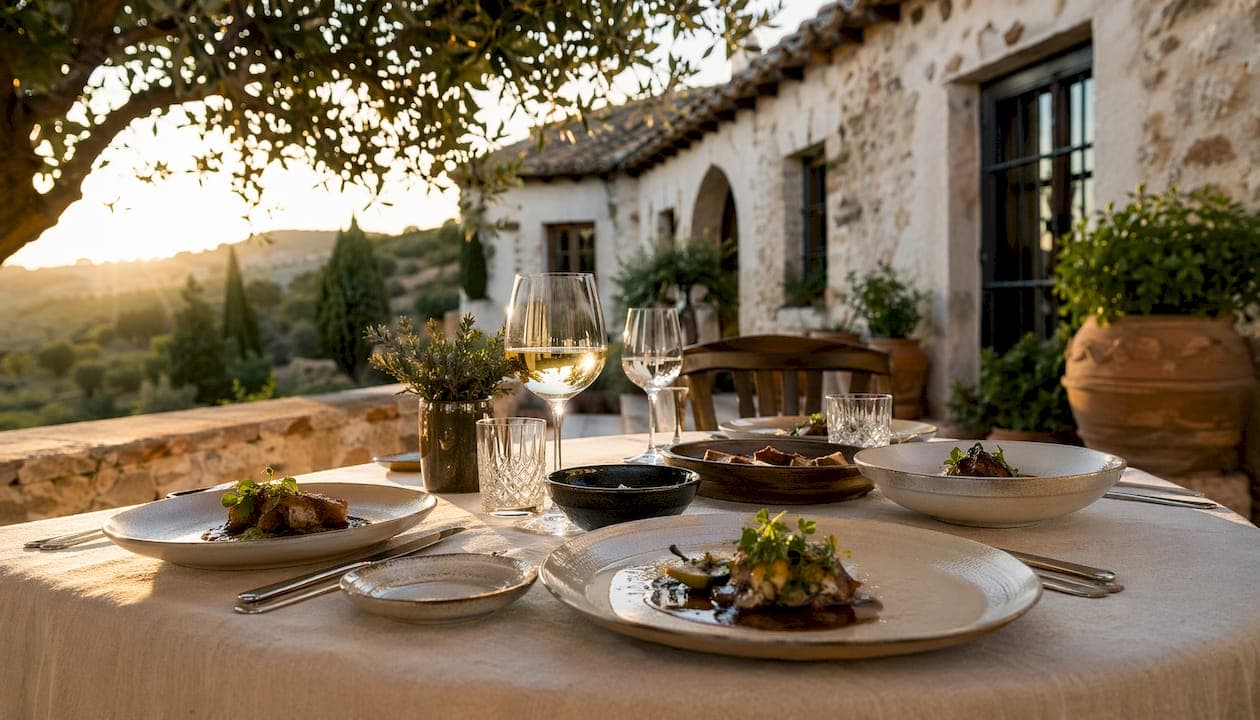
Private villa dining is defined as a structured, chef-led dining experience delivered entirely within a rented villa, tailored to the specific preferences, schedules, and dietary needs of each group of guests. Unlike a restaurant booking or hotel buffet, the entire experience is built around you. Research shows that 78% of high-net-worth individuals prioritise privacy and personalisation in luxury villa dining. That figure reflects a broader shift: villa dining has moved from niche indulgence to the preferred format for milestone celebrations, family gatherings, and private events. Understanding how private villa dining is organised means understanding four core pillars: staffing, budgeting, menu planning, and daily service coordination.
How is private villa dining organised from the start?
The organisation begins well before you arrive at the villa. A professional private chef, such as Joseph Warner of Thesensorychef, will typically make contact several weeks in advance to gather the information needed to build your experience from scratch. This initial stage is where the bespoke catering service takes shape: cuisine preferences, allergies, special occasions, and group size are all documented and used to draft a provisional menu.
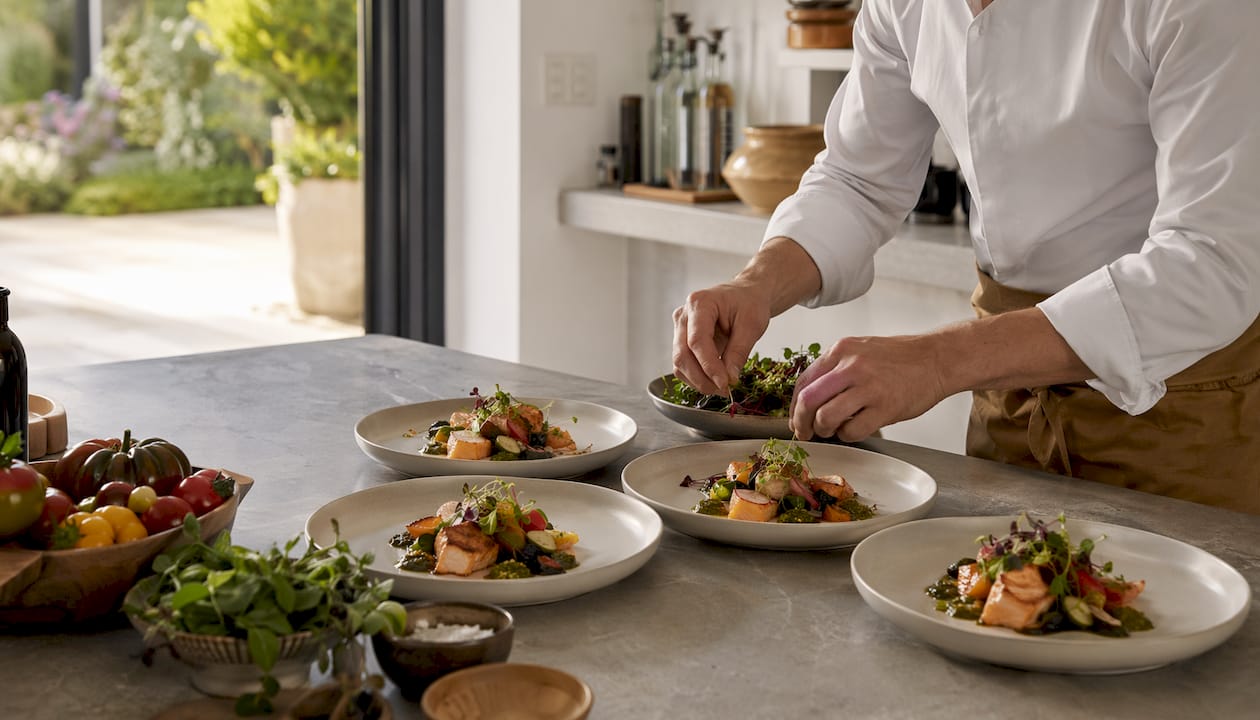
Villa dining has evolved from a luxury niche into a mainstream, preferred way to host milestone celebrations, with clear cost and privacy advantages over restaurant buyouts. That shift matters because it means the organisational frameworks around villa dining are now well established, and guests can expect a clear, professional process rather than an ad hoc arrangement.
The bespoke dining experience meaning, in this context, is straightforward: every element of the meal is created specifically for your group. Nothing is pre-set or generic. The chef designs the menu around your tastes, sources ingredients locally where possible, and adapts the service style to suit your villa's layout and your group's rhythm.
What staffing and chef arrangements are involved?
Chef arrangements vary significantly between villas, and clarifying them upfront prevents confusion later. The three most common models are:
- Resident villa cook: A cook employed directly by the villa, typically included in the rental fee. This person handles everyday meals but may not offer the full range of a trained private chef.
- Private chef add-on: A professional chef hired separately for your stay, either for specific meals or the full duration. Fees are quoted independently from the villa rental.
- No chef included: The villa provides a kitchen, and guests either self-cater or arrange their own chef through a service like Thesensorychef.
Understanding how private chef service works is the single most important step before confirming your villa booking. Butlers or front-of-house staff may also be present to assist with table service, wine, and guest communication during meals. Their role is distinct from the chef's and should be confirmed separately.
Pro Tip: Ask the villa directly whether the chef fee covers all meals or only dinner. Breakfast and lunch are often excluded, and assuming otherwise leads to unexpected gaps in your catering.
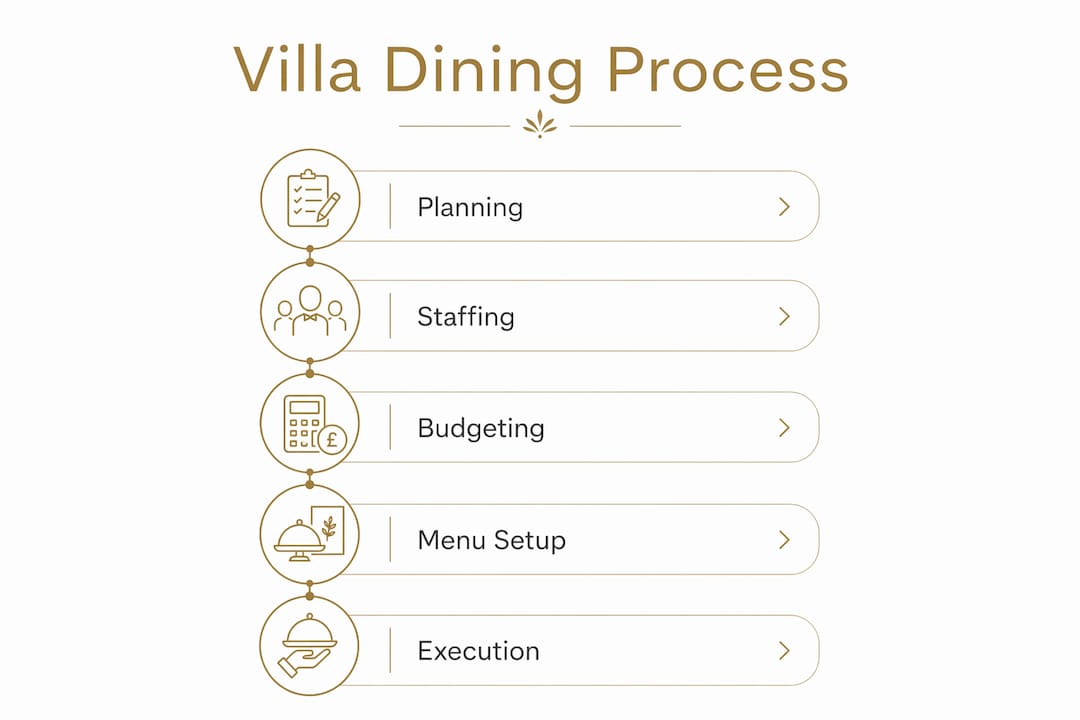
When Joseph Warner works with a villa group, he confirms his role, meal coverage, and any planned nights off in writing before the stay begins. That clarity protects both the guest and the chef, and it sets the tone for a well-organised experience throughout.
How is budgeting and provisioning for food managed?
Budgeting for villa dining has two entirely separate components, and confusing them is the most common financial mistake guests make. Chef fees and grocery costs are distinct; quotes should state them separately to avoid hidden markups. The chef's daily labour fee covers their time, skill, and expertise. The provisioning budget covers the actual cost of ingredients.
For a group of around ten people, weekly grocery costs can exceed £4,000 before chef fees are added, with a provisioning margin of 10–20% applied on top. That margin covers the chef's time spent shopping, sourcing, and managing suppliers. It is standard practice, but guests should know it exists.
The two main provisioning models work as follows:
| Model | How it works | Best suited for |
|---|---|---|
| Chef shops with margin | Chef sources all ingredients and adds 10–20% to the grocery total | Groups who want full hands-off service |
| Guest-set daily budget | Guests agree a fixed daily food spend; chef works within it | Groups with tighter cost control needs |
Both models are legitimate. The key is agreeing the model in writing before the stay begins. Request an itemised quote that separates chef fees, provisioning costs, and any premium ingredient requests such as fresh seafood, aged cheese, or fine wine pairings.
Pro Tip: If you are planning a special occasion dinner with premium ingredients, flag it at the planning stage. Last-minute requests for lobster or truffle in a rural Andalusian villa can be difficult to source and will affect the budget.
Thesensorychef provides clear, itemised quotes for every engagement, with chef fees and food costs presented separately. That transparency is not a luxury. It is the standard every guest should expect.
How are menus, dietary needs, and meal scheduling organised?
Menu planning and dietary management follow a two-stage process that professional chefs treat as non-negotiable. Final details including dietary needs should be submitted at least one week before arrival. That lead time allows the chef to source specialist ingredients, adapt recipes, and confirm that every guest can eat safely and well.
The pre-arrival stage typically involves a written form or direct conversation covering:
- Allergies and intolerances: Gluten, nuts, shellfish, dairy, and other common triggers must be documented precisely, not mentioned casually.
- Dietary preferences: Vegetarian, vegan, pescatarian, or low-carb preferences shape the entire menu structure.
- Cuisine preferences: Whether your group favours Mediterranean, French, Spanish, or international dishes guides the chef's creative direction.
- Special occasions: Birthdays, anniversaries, and celebrations call for specific dishes, presentation styles, or themed menus.
- Children's meals: Younger guests often need simpler, earlier meals served separately from the adult dining schedule.
Successful villa dining relies on a two-stage briefing process: pre-arrival preferences followed by daily menu and timing confirmation. The daily briefing, typically a short conversation between the chef and the front-of-house staff or guests, allows the menu to flex around the day's activities. If the group returns late from a day trip to the Sierra Nevada, dinner can be pushed back. If a guest develops an unexpected intolerance during the stay, the menu adapts immediately.
In-villa dining allows separate dining schedules for children and adults, something impossible in a traditional hotel setting. That flexibility is one of the most practical advantages of the format, particularly for multi-generational family gatherings. Thesensorychef regularly manages dual dining schedules within a single villa stay, serving children's pasta at 6:30 PM and a four-course Mediterranean tasting menu for adults at 9:00 PM.
For guests planning a Nerja villa dining experience, this level of scheduling detail is especially relevant. The coastal setting lends itself to relaxed, long lunches and late evening dinners, and a good chef will build the menu around that rhythm rather than imposing a fixed timetable.
What are the logistics and service style considerations?
The physical setting of a villa creates dining possibilities that no restaurant can replicate. Service style and location are chosen to suit the occasion and the group's mood, not a fixed floor plan. Common formats include:
- Terrace dining: Long tables set under the stars, suited to warm Andalusian evenings and larger family groups.
- Poolside service: Informal, relaxed, and ideal for lunches or casual evening meals.
- Formal dining room: White tablecloths, candles, and a multi-course tasting menu for anniversaries or intimate celebrations.
- Barbecue evenings: The chef manages the grill, sourcing local cuts and fresh fish, while guests gather around in a social setting.
- Themed dinners: Villa staff can organise themed dinners, barbecues, and personalised events creating exclusive, flexible dining atmospheres tailored to the occasion.
Coordination between the chef and any service staff is managed through brief daily check-ins. Daily 15-minute briefings between chef and front-of-house staff are critical for adapting menus and meal timings dynamically during the stay. This is the operational detail that separates a well-run villa dining experience from a chaotic one.
Guest privacy is a structural benefit of the format. Villa dining avoids venue hire fees and minimum spends, making it more economical for groups than restaurant buyouts, while delivering a level of exclusivity no public venue can match. For a birthday dinner in Málaga or a family reunion near Granada, the villa setting means the event belongs entirely to you.
How do you avoid common pitfalls in villa dining organisation?
The most frequent problems in villa dining organisation come from assumptions rather than agreements. Guests assume the chef is included when they are not. They assume the food budget is unlimited when it is capped. They assume dietary needs mentioned verbally will be remembered when they need to be written down.
Written confirmation of chef coverage, meal counts, food budgets, and gratuities protects guests from misunderstandings and unexpected charges. Request this documentation before your stay begins, not after a dispute arises. A professional chef will always provide it willingly.
Gratuity norms vary by region and by arrangement. In Andalucía, a tip of 10–15% of the chef's total fee is customary for a full-week engagement, though it is never obligatory. Confirm whether gratuity is included in the quoted price or expected separately.
Check villa listings carefully. The phrase "chef included" does not always mean what it implies. Read the small print to confirm whether the chef covers all meals, dinner only, or a set number of evenings per week.
Pro Tip: Send your dietary requirements, special occasion details, and preferred cuisine styles in a single written message at least ten days before arrival. This gives the chef time to plan, source, and confirm without last-minute pressure on either side.
Key takeaways
Successful private villa dining is organised through clear pre-arrival communication, separate budgeting for chef fees and food costs, and daily coordination between the chef and guests throughout the stay.
| Point | Details |
|---|---|
| Separate costs clearly | Always request quotes that distinguish chef labour fees from provisioning and grocery costs. |
| Submit dietary needs early | Send all allergies, intolerances, and preferences in writing at least one week before arrival. |
| Confirm chef coverage in writing | Clarify which meals, which evenings, and any nights off before the stay begins. |
| Use daily briefings | A short daily check-in between chef and guests keeps menus and timings flexible throughout the stay. |
| Choose your service style | Terrace, poolside, formal dining room, or themed events: agree the format in advance for each occasion. |
What I have learned from organising villa dining for over a decade
The most common misunderstanding I encounter is the belief that "chef included" means all costs are covered. It almost never does. Chef labour and food provisioning are two separate things, and conflating them leads to awkward conversations mid-stay that nobody wants. I always present these as two distinct line items from the very first conversation, and I encourage every guest to insist on the same clarity from any chef they work with.
What genuinely makes villa dining exceptional is not the food alone. It is the daily rhythm of the experience. When I sit down with a family on the first evening to understand how they want the week to feel, what they ate last night, whether the children are tired of pasta, and whether someone wants a surprise birthday cake on Thursday, the whole stay shifts. The bespoke menu creation process is not a form you fill in once. It is a living conversation.
I also think villa dining is genuinely underrated as a format for celebrations. A restaurant buyout in Granada or Málaga costs significantly more, removes your privacy, and locks you into a fixed menu and timetable. A villa gives you the terrace, the stars, the kitchen, and a chef who is entirely focused on your group. That combination is very difficult to replicate anywhere else.
— Joseph
Thesensorychef: bespoke private villa dining in Andalucía
Joseph Warner brings more than 13 years of professional culinary experience to every villa engagement, trained in traditional French gastronomy and deeply versed in Spanish, Mediterranean, and international cuisine. Whether you are planning a family gathering in the hills above Granada, a romantic anniversary dinner on the Costa Tropical, or a celebration in Nerja, Thesensorychef organises every detail around your group.
From the initial private dining experience consultation through to the final evening's dessert, dietary needs, themed menus, and multi-generational scheduling are all handled with care and precision. Every menu is built from scratch using fresh, local Andalusian ingredients. To arrange your villa dining experience, visit The Sensory Chef signature experience and get in touch directly.
FAQ
What is private villa dining?
Private villa dining is a chef-led dining service delivered within a rented villa, with menus, schedules, and service styles tailored entirely to the guest group. It differs from hotel or restaurant dining by offering full privacy, flexible timing, and bespoke menu creation.
How far in advance should I submit dietary requirements?
Dietary needs, allergies, and cuisine preferences should be submitted in writing at least one week before arrival. This lead time allows the chef to source specialist ingredients and adapt every dish safely.
Are chef fees and food costs the same thing in villa dining?
No. Chef fees cover the chef's daily labour and expertise. Food provisioning costs cover ingredients and groceries, often with a 10–20% sourcing margin added. Always request a quote that separates these two figures.
Can a private villa chef accommodate multiple dining schedules?
Yes. In-villa dining allows separate meal times for children and adults, which is one of its key practical advantages over hotel dining. A professional chef will confirm these schedules during the pre-arrival planning stage.
What is a bespoke catering service in the context of villa dining?
A bespoke catering service means every element of the dining experience, from the menu and ingredients to the service style and timing, is designed specifically for your group. Nothing is pre-set or taken from a standard template.