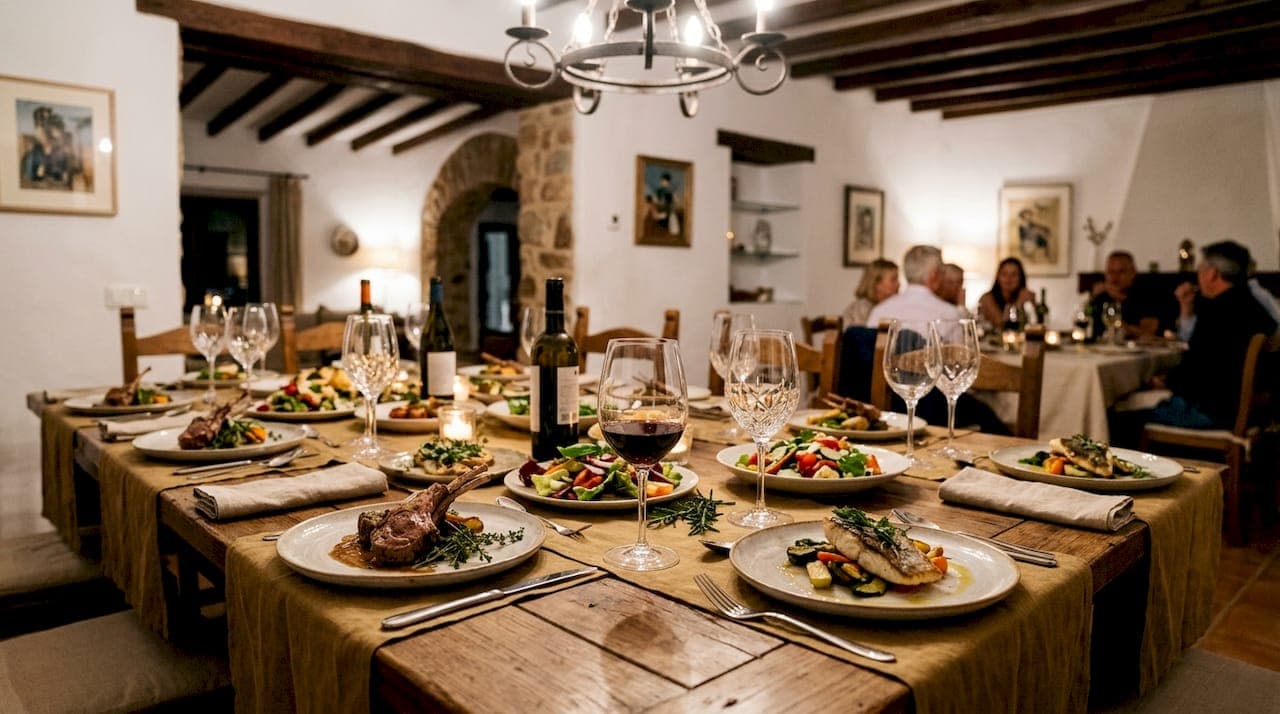
Private chefs handle large groups by scaling their staffing, adapting their menus, and shifting their service style to match the demands of the occasion. A solo chef manages beautifully for six to ten guests. Beyond that, the operation changes in ways that are worth understanding before you book.
Here is what that looks like in practice:
- Staffing scales with headcount. A single chef handles small gatherings; larger events bring in sous chefs, kitchen assistants, and dedicated servers.
- Menus are built for the venue and the volume. Dishes that work for eight may not translate to thirty without adjustment in technique or presentation.
- Service style adapts. Plated courses suit intimate dinners; family-style sharing or buffet formats suit larger, more social gatherings.
- Planning begins weeks in advance. Guest counts, dietary needs, kitchen capacity, and timing are all confirmed before a chef arrives on site.
- Food quality is protected through workflow. Timing blueprints, labelled mise en place, and station organisation keep every course arriving hot and on time.
What does a private chef actually do at a large group event?
The role extends well beyond cooking. At a large gathering, a private chef acts as the operational lead for everything that happens in and around the kitchen, from the first delivery of ingredients to the final wipe-down of the worktops.
Concretely, that means:
- Menu design tailored to the event's formality, the guest profile, and the practical limits of the venue kitchen.
- Ingredient sourcing, often from trusted local producers and artisan suppliers, to guarantee freshness and flavour at scale.
- On-site cooking and plating adapted for volume, so that thirty plates leave the kitchen at the same temperature as eight would.
- Coordinating service staff to maintain a smooth, unhurried guest experience throughout each course.
- Adapting to kitchen constraints, whether that means working around a compact villa hob or arranging supplemental equipment when the space demands it.
For hosts planning private dining for groups, understanding this scope helps set realistic expectations and leads to a far better event.
How do private chefs plan and prepare for large group dining?
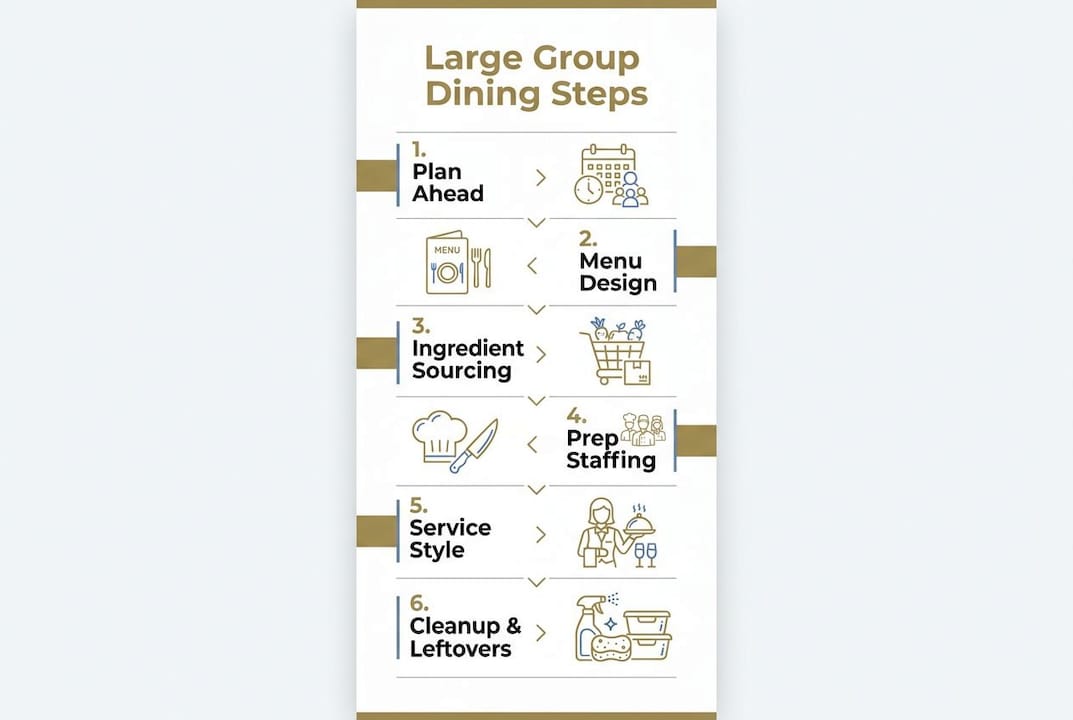
The visible part of a private chef's work, the cooking and service, represents only a fraction of the total effort. For a four-course dinner of ten guests, total preparation typically runs six to eight hours spread across the day before and the morning of the event. For larger gatherings, that figure rises considerably.
Planning for a large group event follows a clear sequence:
- Initial consultation. The chef discusses guest count, dietary requirements, allergies, event formality, and the host's vision for the evening.
- Venue kitchen walkthrough. Oven capacity, burner count, counter space, and refrigeration are all assessed. If the kitchen is limited, supplemental equipment such as portable burners or outdoor grills is arranged in advance.
- Menu drafting. Dishes are chosen not only for flavour but for logistical viability, avoiding preparations that are impossible to execute at volume without compromising quality.
- Timing blueprint. Working backward from the first course, the chef maps every preparation step, from braises started the day before to sauces finished seconds before plating.
- Contingency planning. Ingredient substitutions, equipment backups, and service adjustments are considered before the event, not during it.
Pro Tip: Book your private chef several weeks ahead for larger groups to allow ample planning time. Peak periods in Andalucía, particularly summer villa stays and holiday weekends, fill quickly. Earlier booking gives the chef time to source the best seasonal produce and confirm all logistics without pressure.
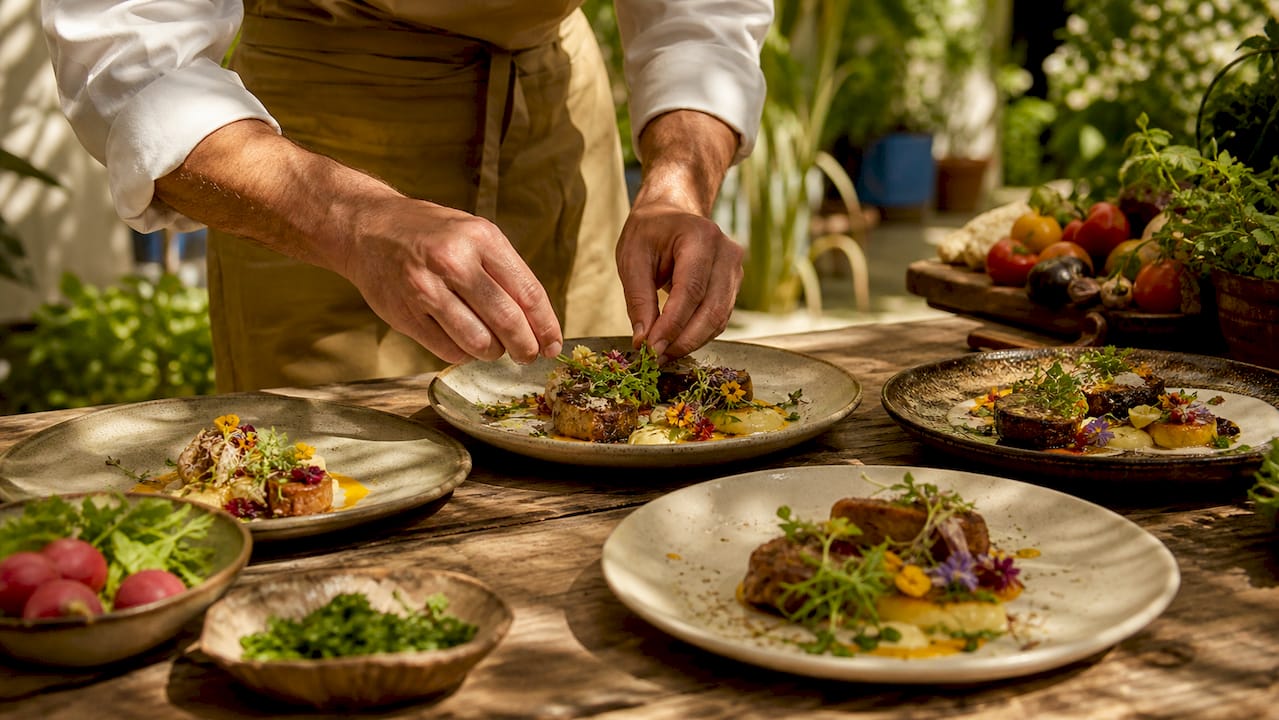
How staffing and service style change as your group grows
Staffing scales directly with guest count, and the shift in how a meal is delivered is just as significant as the shift in who is delivering it.
- Up to ten guests. One chef handles preparation, cooking, plating, and service. The experience is personal and conversational; the chef often engages directly with guests between courses.
- Ten to twenty guests. Two chefs, or one chef and a dedicated server. One person focuses on cooking and timing while the other manages plating, service, and guest interaction. Courses are plated in batches, and timing becomes more structured.
- Twenty to thirty guests. A team of two to three chefs plus service staff. The kitchen operates more like a restaurant's back-of-house, with clear role divisions and a lead chef managing quality control. A staging area is often used to plate multiple dishes simultaneously before synchronised delivery to the table.
- Thirty or more guests. Chef roles shift from hands-on cooking to managing a team and synchronising course delivery. Buffet-style or family-style service becomes more practical, though plated service remains possible with the right staffing and kitchen setup.
Service style choices reflect both practicality and atmosphere:
- Plated service suits formal milestone dinners where presentation and pacing matter as much as the food itself.
- Family-style sharing works well for groups of 15–30, encouraging conversation and a warm, communal feel.
- Buffet suits larger gatherings and cocktail receptions where guests move freely and eat at their own pace.
- Stations add a theatrical element, with live cooking points that keep guests engaged and mingling.
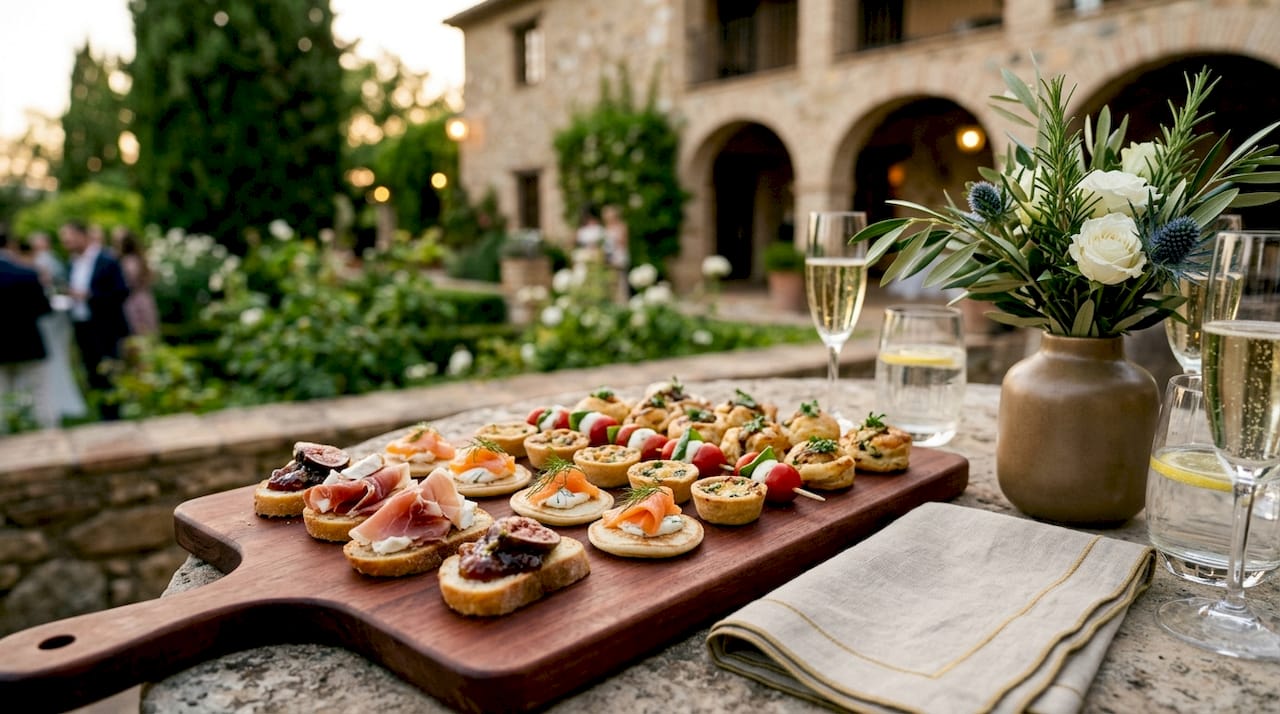
For ideas on what works well as passed appetisers or finger food at larger gatherings, party finger food formats offer a useful reference for hosts planning the reception portion of an event.
What does a private chef cost for a large group in the UK?
Private chef pricing for large groups generally decreases on a per-person basis as guest count rises, because the chef's fixed costs, including travel, sourcing logistics, setup, and clean-up, are distributed across more guests. The total event cost, however, increases with group size due to additional staffing and equipment requirements.
Key cost factors to understand:
- Base per-person rate. This covers menu planning, ingredient sourcing, on-site cooking, service, and kitchen clean-up. Rates vary by menu complexity and service style.
- Additional staffing. Events of twenty or more guests almost always benefit from at least one kitchen assistant. Chefs handling thirty or more guests typically coordinate with dedicated servers.
- Equipment. When venue kitchens are limited, supplemental equipment such as portable burners or coolers carries an additional charge.
- Menu complexity. A plated five-course tasting menu requires more simultaneous kitchen processes than a family-style dinner, and is priced accordingly.
For booking, four to eight weeks ahead is the recommended minimum for groups of twenty or more. Very large events, or those falling during peak season, benefit from two to three months' notice. A reputable chef will provide a transparent, all-inclusive quote covering every element, so there are no surprises on the day.
Hosting tips that make a real difference for large group events
The host's preparation shapes the chef's ability to deliver. A well-briefed chef can focus entirely on the food; an under-briefed one spends valuable time resolving avoidable gaps.
- Share guest information early. Allergies, intolerances, and strong preferences should be communicated at the consultation stage, not on the evening itself.
- Clarify your timeline. When do you want the first course served? Are there speeches, toasts, or activities the chef needs to work around? Precise timing information allows the chef to build an accurate service plan.
- Prepare the kitchen and dining areas. Clear counter space, confirm oven functionality, and arrange dining furniture as the chef advises. Small adjustments made in advance prevent delays during service.
- Communicate openly about last-minute changes. Guest count adjustments or late dietary requests are manageable when flagged early; they become disruptive when raised on the day.
- Trust the chef's kitchen management. Once service begins, the kitchen is the chef's domain. Hosts who step back from the kitchen find the evening far more enjoyable, and the food far better for it.
Pro Tip: If you are hosting at a villa or holiday rental, send the chef photographs of the kitchen and dining area before the walkthrough. Joseph Warner at Thesensorychef uses this information to plan equipment needs and service logistics well in advance, which means fewer surprises and a calmer event day for everyone.
Expert insights from Thesensorychef on large private dining events
Joseph Warner has spent more than thirteen years working across professional kitchens, from classical French gastronomy training to Head Chef roles managing full kitchen brigades. His work with Thesensorychef across Granada, Almuñécar, and the Costa Tropical has given him a particular understanding of what large private dining events require in villa and residential settings.
Several principles shape his approach:
- The chef's role becomes operational at scale. For groups above twenty, the priority shifts from individual dish execution to managing a team, controlling timing, and maintaining quality across every plate simultaneously. The chef as operational leader is what separates a well-run large event from a chaotic one.
- Supplier relationships determine ingredient quality. Joseph builds long-term relationships with local artisan producers across Andalucía, which gives access to seasonal and rare ingredients that general market sourcing simply cannot match. That rapport is particularly valuable for exclusive villa events where the menu needs to reflect the place as much as the occasion.
- Menu design balances creativity with realism. A dish that looks extraordinary on paper but cannot be plated for thirty guests without losing temperature or texture is not the right dish for that event. Every menu Thesensorychef designs for a large gathering is tested against the venue's real kitchen capacity.
- Timing blueprints are non-negotiable. Precise scheduling, working backward from the first course, ensures that sauces are finished at the right moment, proteins rest correctly, and every guest receives their plate at the same time.
- Villa kitchens require specific adaptation. Private rental kitchens across the Costa Tropical and Málaga vary enormously in equipment and layout. Joseph assesses each space in advance and brings supplemental tools when needed, so the kitchen's limitations never become the guest's problem.
For those considering a corporate or group event in Andalucía, Thesensorychef's approach to large-scale private dining reflects this same operational discipline, applied to every gathering regardless of size.
Book your large group dining experience with Thesensorychef
Whether you are planning a birthday celebration for twenty guests at a Granada villa, a family reunion on the Costa Tropical, or a formal dinner for a private group in Málaga, Thesensorychef brings the same level of care and culinary craft to every table.
Joseph Warner designs each menu around your guests, your venue, and the occasion itself, drawing on French gastronomy training, Mediterranean and Spanish technique, and more than thirteen years of professional experience. Dietary requirements, allergies, and personal preferences are built into the menu from the start, not treated as afterthoughts.
Explore the full range of private dining experiences or go straight to booking your event to discuss dates, group size, and your vision for the evening.
Key takeaways
Private chefs handle large groups by scaling their staffing, adapting their service style, and building every menu around the real constraints of the venue and the occasion.
| Point | Details |
|---|---|
| Staffing scales with guest count | Solo chefs suit up to ten guests; groups above ten require at least one more chef or dedicated server, and groups of twenty or more require additional chefs and dedicated servers. |
| Preparation runs six to eight hours | For a ten-guest dinner, total prep spans six to eight hours; larger events require proportionally more. |
| Service style adapts to group size | Family-style suits 15–30 guests; buffet and stations work better for larger, more social gatherings. |
| Book four to eight weeks ahead | Groups of twenty or more need at least four to eight weeks' notice; peak periods require two to three months. |
| Menus are built for logistical viability | Dishes are chosen for flavour and for what the venue kitchen can realistically execute at volume. |
FAQ
Do private chefs work alone for large groups?
Not typically. Most private chefs handle groups of up to twenty guests independently, but larger events require additional chefs, kitchen assistants, and dedicated servers to maintain food quality and timing across all plates.
Can a private chef have multiple clients at the same time?
A private chef hired for your event works exclusively for your group during that booking. They may serve multiple clients across different dates, but on the day of your event, their full attention is on your guests.
How do private chefs handle leftovers?
Leftovers are typically labelled and left with the host along with reheating instructions. The kitchen is cleaned, sanitised, and reset before the chef leaves, so the space is returned to the same condition it was found in.
How do you calculate food for a large group?
Private chefs calculate quantities based on guest count, the number of courses, service style, and dietary requirements. Family-style and buffet formats require more total volume than plated service, since guests serve themselves and often return for more.
How far in advance should you book a private chef for a large event?
For groups of twenty or more, booking four to eight weeks ahead is recommended as a minimum. Very large events or those during peak summer and holiday periods benefit from two to three months' notice.