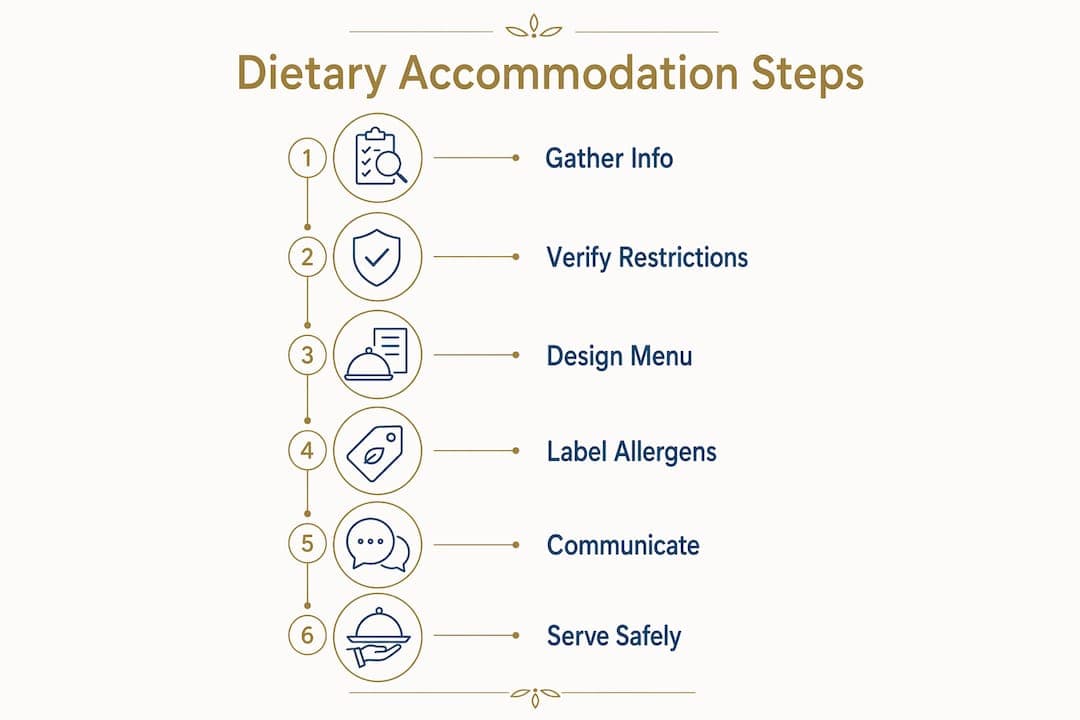
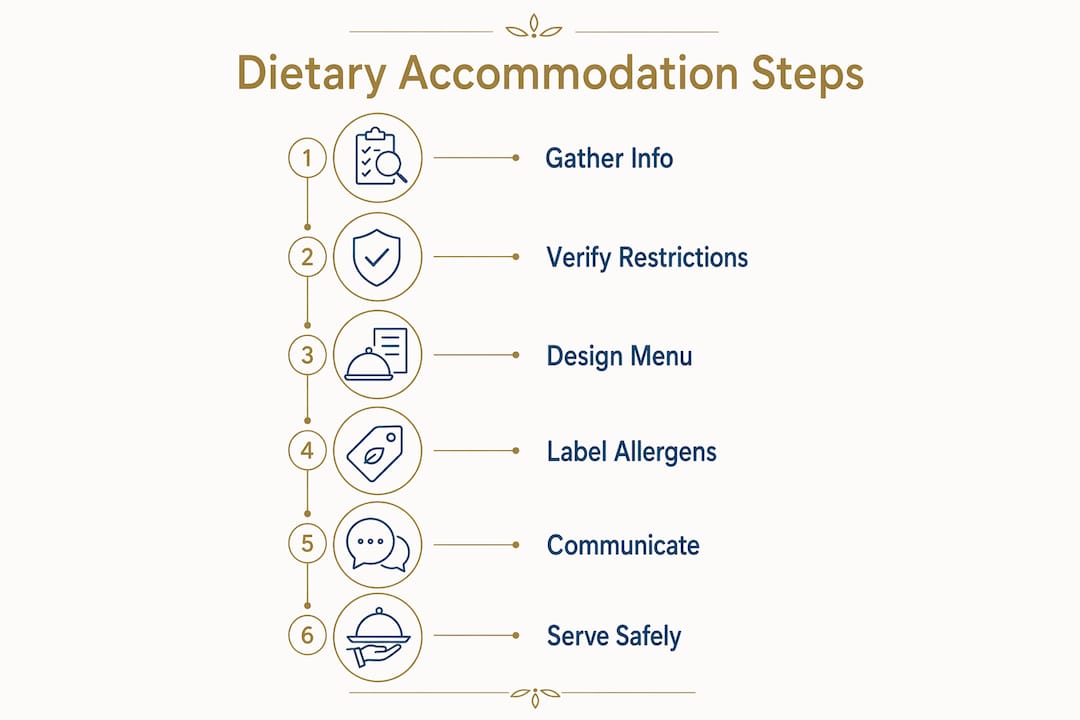
Accommodating dietary needs in private dining is defined as the practice of designing menus and kitchen protocols that keep every guest safe, satisfied, and included. The Food Standards Agency recognises 14 major allergens that caterers must declare, making allergen management a legal obligation, not merely a courtesy. Thesensorychef, with over 13 years of professional culinary experience across French, Mediterranean, and international gastronomy, builds every private event menu around this principle from the first conversation. The result is a table where nobody feels like an afterthought.
How to accommodate dietary needs in private dining events
Successful dietary accommodation begins weeks before the event, not the day before. Dietary management starts weeks ahead of menu finalisation, with guest needs categorised into three distinct groups: allergies, intolerances, and ethical or religious preferences. Each category demands a different response. A nut allergy requires strict allergen separation; a lactose intolerance may allow trace amounts; a vegan preference shapes the entire ingredient philosophy.

Collecting accurate information from your guests
The most reliable method is a structured pre-event intake form sent at the time of invitation. Ask guests to specify:
-
Allergies (with severity, where known)
-
Intolerances (gluten, lactose, fructose, and similar)
-
Ethical or religious requirements (vegan, halal, kosher, Jain)
-
Strong dislikes (not a safety issue, but worth noting for guest comfort)
Direct follow-up by phone or message works well for complex cases. A written record protects both the planner and the chef if a dispute arises later.
Timing matters significantly. Dietary restrictions should be notified at least 48 hours before the event to avoid surcharges, with some venues applying a 50% surcharge for last-minute changes. That window exists because sourcing specialist ingredients, adjusting recipes, and briefing kitchen staff all take real time. Build your guest communication timeline around this constraint.
Pro Tip: Send a simple digital form with tick-box categories alongside a free-text field. Tick boxes catch the common restrictions; the free-text field catches the unexpected ones, such as a guest with a rare fruit allergy or a religious combination you had not anticipated.
How do you design menus that work for everyone?
Intentional menu design is more effective than last-minute ingredient swapping. Menus built from the ground up around dietary needs produce higher guest satisfaction than those adapted at the last minute. The difference is felt in every bite: a dish conceived as naturally gluten-free tastes complete, whereas a gluten-free substitute often signals compromise.
Building modular, inclusive dishes
The most practical approach is to design dishes that are naturally free from the most common allergens, then add optional components for guests without restrictions. A roasted vegetable and chickpea dish with a tahini dressing, for example, is naturally vegan, gluten-free, and dairy-free. Grilled fish with a herb oil and seasonal vegetables satisfies pescatarians, those avoiding gluten, and those avoiding dairy simultaneously.
Key techniques for managing common allergens:
-
Gluten: Use rice, polenta, or legume-based bases rather than wheat. Label every dish clearly.
-
Dairy: Replace butter with high-quality olive oil; use coconut cream or cashew cream in sauces.
-
Nuts: Treat nut-free as a kitchen-wide protocol when any guest has a severe allergy.
-
Shellfish: Keep shellfish dishes entirely separate in service and preparation.
-
Eggs: Aquafaba (the liquid from tinned chickpeas) works as an egg replacement in many preparations.
Clear allergen labelling on every dish is industry best practice, covering gluten, dairy, nuts, and shellfish as a minimum. Labels reduce anxiety and allow guests to make confident choices without asking staff repeatedly.
Pro Tip: Print a small allergen card for each place setting alongside the menu. Guests with restrictions feel seen, and it removes the awkward moment of having to ask in front of other diners.
A useful comparison when planning your menu structure:
| Approach | Guest experience | Risk level |
|---|---|---|
| Last-minute substitutions | Inconsistent; guests feel secondary | High |
| Separate restricted meals | Isolating; highlights the restriction | Medium |
| Intentional inclusive design | Unified; all guests eat the same quality | Low |
What kitchen protocols keep guests safe?
Professional kitchens use colour-coded cutting boards and separate utensils to prevent allergen cross-contact. This approach is non-negotiable when any guest has a severe allergy. Cross-contamination is the most common cause of allergic reactions at catered events, and it is entirely preventable with the right systems in place.
The core protocols are straightforward:
-
Assign a dedicated preparation area for allergen-free dishes.
-
Use colour-coded boards: red for meat, green for vegetables, white for allergen-free preparation.
-
Wash hands and change gloves between handling different ingredient groups.
-
Store allergen-free ingredients separately, above other items in the refrigerator.
-
Plate allergen-free dishes first, before other dishes are prepared on the same surface.
Staff communication is equally critical. Every person involved in service needs to know which dishes contain which allergens and which guests have which restrictions. A briefing five minutes before service begins prevents the majority of errors.
Transparent communication with guests about how their food is prepared eliminates the anxiety that many guests with severe allergies carry to every social event. A simple conversation at the table, explaining that their dish was prepared on a separate surface with dedicated utensils, provides genuine reassurance. Guests who feel safe eat more freely and enjoy the occasion more fully.
Pro Tip: For larger groups of 20 or more, assign one member of staff as the dietary liaison. This person knows every restriction, tracks every plate, and is the single point of contact for guests with concerns.
How do you choose the right chef or venue for dietary accommodation?
The right chef or venue reduces your planning burden significantly. Specialised venues that operate under strict dietary standards, such as fully vegan or kosher-certified spaces, automate a large part of dietary compliance. Every ingredient that enters the kitchen already meets the standard. This removes the risk of accidental contamination from mixed-use kitchens.
When evaluating a private chef or catering service, ask these questions directly:
-
How do you collect and record guest dietary information before an event?
-
What cross-contamination protocols do you follow in the kitchen?
-
Can you provide a sample menu that accommodates gluten-free, vegan, and nut-free guests simultaneously?
-
Have you catered for guests with anaphylactic allergies before?
-
Do you carry allergen documentation for all ingredients you use?
A chef who answers these questions with specifics, not generalities, is a chef who has done this work before. Thesensorychef handles private dining dietary restrictions across intimate gatherings and larger villa events in Granada and Andalusia, with pre-event intake and custom menu creation built into every booking.
| What to assess | Why it matters |
|---|---|
| Pre-event intake process | Determines how thoroughly restrictions are captured |
| Kitchen allergen protocols | Directly affects guest safety |
| Menu flexibility | Shows whether the chef designs inclusively or substitutes reactively |
| Experience with severe allergies | Indicates genuine competence under pressure |
| Ingredient documentation | Provides legal and ethical protection for the planner |
Thorough pre-event intake that captures allergies, intolerances, and preferences forms the foundation for events that serve groups from small intimate dinners up to 50 or more guests without incident. The planning is invisible to guests. The experience feels effortless.
Key takeaways
Accommodating dietary needs in private dining requires three things done well: early information gathering, intentional menu design, and rigorous kitchen protocols.
| Point | Details |
|---|---|
| Start gathering information early | Collect guest dietary data weeks before the event, categorised by allergy, intolerance, and preference. |
| Design menus from the ground up | Build dishes that are naturally inclusive rather than adapting standard recipes at the last minute. |
| Apply strict kitchen protocols | Use colour-coded boards, separate utensils, and dedicated prep areas to prevent cross-contamination. |
| Label every dish clearly | Allergen labels on menus and place cards reduce guest anxiety and prevent errors during service. |
| Choose a chef with proven experience | Ask specific questions about intake processes, protocols, and experience with severe allergies before booking. |
What I have learned from years of inclusive private dining
The most common mistake I see event planners make is treating dietary restrictions as a problem to solve at the end of the planning process. They finalise the menu, then ask guests if they have any requirements. By that point, the menu is already built around ingredients that may not work, and the chef is left making reactive substitutions under pressure.
The planners who get this right treat dietary information as the starting point. They gather it before a single dish is conceived. That shift in sequence changes everything. A menu designed around a guest’s coeliac disease and another guest’s veganism does not feel restricted. It feels considered. Guests with dietary needs often tell me it is the first time they have attended a private event where their food felt as special as everyone else’s.
The other lesson I would share is that communication between the planner, the chef, and the guest is the single most important factor. Kitchen protocols matter. Menu design matters. But a guest who knows their needs have been understood and taken seriously arrives at the table relaxed. That relaxation is the foundation of a genuinely memorable meal. You can read more about how this philosophy shapes every event in the private culinary event guide on the Thesensorychef website.
— Joseph
Private dining with Thesensorychef: every guest considered
Planning a private dining event where every guest feels genuinely catered for takes expertise, preparation, and a chef who treats dietary needs as part of the creative brief, not an obstacle to it.
Thesensorychef brings over 13 years of professional culinary experience to bespoke private dining across Granada and Andalusia. Every event begins with a detailed pre-event intake, a custom menu built around your guests’ specific needs, and kitchen protocols that meet the highest allergen safety standards. Whether you are planning an intimate villa dinner, a family celebration, or an anniversary evening, the experience is designed to feel effortless for you and exceptional for every person at the table. Book your experience and receive a personalised menu consultation as part of the process.
FAQ
How far in advance should guests share dietary requirements?
Dietary restrictions should be shared at least 48 hours before the event. Earlier notice, ideally two to three weeks ahead, allows the chef to source specialist ingredients and design the menu properly.
Can a private chef accommodate multiple dietary needs at one event?
A well-prepared private chef can cater for multiple dietary restrictions simultaneously by designing modular, naturally inclusive dishes and applying strict allergen separation protocols throughout preparation and service.
What is the difference between a food allergy and an intolerance?
A food allergy triggers an immune response and can be life-threatening; an intolerance causes digestive discomfort but is not typically dangerous. Both require accommodation, but allergies demand stricter kitchen protocols.
How do allergen labels help at private dining events?
Clear allergen labels on menus and place cards allow guests to identify safe dishes without asking staff, reducing anxiety and the risk of accidental consumption of a restricted ingredient.
What questions should I ask a private chef about dietary accommodation?
Ask how they collect guest dietary information, what cross-contamination protocols they follow, whether they can design a menu that covers multiple restrictions simultaneously, and whether they carry allergen documentation for all ingredients.